The Neil Ashton Podcast
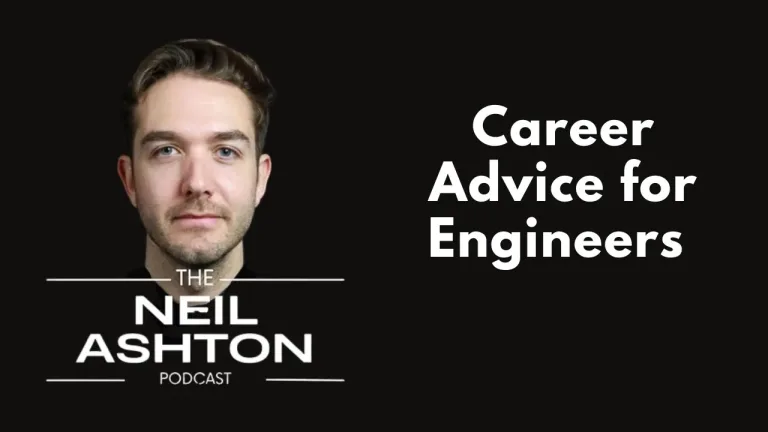
Neil Ashton — Career advice for engineers

Watch on YouTube
Neil Ashton — Career advice for engineers
YouTube video
Watch this episode
YouTube is contacted only after you choose to play the video, keeping this page fast and private by default.
Listen to the audio
Episode overview
In this episode of the Neil Ashton podcast, Neil discusses career advice for aspiring engineers, focusing on the differences between various types of companies, job roles, and the growing importance of software skills in the engineering field. The conversation highlights the pros and cons of working in large enterprises, startups, and consulting firms, as well as the diverse career paths available beyond traditional engineering roles. In this conversation, Neil discusses the evolving landscape of engineering careers, particularly focusing on the increasing relevance of software development and the tech sector.
He highlights the diverse career paths available within tech, including software development, product management, and solution architecture, as well as the growing importance of AI in engineering. Neil emphasizes the opportunities for engineers to transition into tech roles and the need for a strong understanding of the tech ecosystem to navigate career decisions effectively.
Chapters
- 00:00 Introduction to Engineering Careers
- 03:01 Exploring Company Types in Engineering
- 06:05 Understanding Job Roles in Engineering
- 09:00 The Shift Towards Software in Engineering
- 11:52 Diverse Career Paths Beyond Traditional Engineering
- 14:47 The Role of Consulting in Engineering
- 18:03 Navigating the Job Market in Engineering
- 20:57 The Importance of Software Skills in Engineering
- 24:03 Conclusion and Future Trends in Engineering Careers
- 30:08 The Rise of Software Development in Engineering
- 31:59 The Tech Sector's Growing Relevance to Engineers
- 36:41 Career Paths in Tech: Software Development and Management
- 44:27 Understanding Product Management in Tech
- 48:15 The Role of Solution Architects in Tech
- 52:04 Consulting and Support Roles in Tech
- 55:54 AI's Impact on Engineering and Software Development #careers #engineering #tech #sde #amazon #aws #google #jobs
Transcript
This transcript was created from the corrected YouTube captions, with names and technical terminology reviewed. Download the corrected SRT file.
Hi, and welcome to the Neil Ashton Podcast. In each episode, we explained some of the fascinating ways that science and engineering are changing the world around us. We talked to leading engineers from elite level sports like cycling and Formula One to some of the world's top academics to understand how fluid dynamics, machine learning and supercomputing are bringing in a new era of discovery. We also hear some of their life stories, their career advice, the lessons they've learned on the way that I hope will be helpful to you too. So sit back and enjoy this episode. Hi and welcome back to the Neil Ashton podcast. So I thought we'd do an episode
sort of career advice in a way episode for people who didn't see it already. I did one in the first season, which was essentially more of an academia versus industry question. I'll, if you're, if you're on YouTube, I'll, I'll try and put a, a link to it here. But if you're listening, you can just search for it. I think it was in the first season. I can't remember which episode now and but you know, I had pretty positive response that people find it useful, you know, at different career levels just to give some of my personal opinion and things that I've observed and learnt along the way. But I thought in this episode
maybe we would just focus purely on the industry as a non academic job, so not university or sort of classic research positions. Might do that one again, let me know if that would be interesting. But I thought just give some personal observations that and things that I've learnt along the way that maybe I wish I'd, you know, known in the past. So I'm going to try and cover maybe four or five things that I think would be useful to know for someone who is looking to get a job in engineering to understand about potentially different roles and options and the the different markets. So sort of companies, job roles, career progression. And then maybe a bit of a deep
dive on actually the tech sector, something that obviously I work in and some people have asked me, you know, to, to understand a little bit more about what sort of roles are, are available and, and what it's what it's like. Again, caveat, this is just my opinion. I'm living in the UK. I'm going to have a sort of UK slash US bias to, to all of this. So if you're listening from a different country, apologies if some of this isn't as relevant to you, but I, I think most of what I'm talking about hopefully, hopefully is. So we'll, we'll, we'll assume that we're basically that you have some form of degree or you're about to, to, to, to
finish a degree. I appreciate that there are routes without having a university degree, but maybe that's for for for another episode. So I'm going to assume that you have some sort of engineering degree. Well, it could be computer science, it could be a more pure engineering, it could be sort of more mathematical physics. But let's say you're sort of interested in something I would call related to engineering, Although to be honest, engineering is a very broad field though, and you could include software and mechanical and aerospace. But anyway, let's not get too much down a rabbit hole straight away. And so I'd say the first thing that you should consider is what
sort of company do you want to work for? And the way I would tend to split this up is you have large enterprise companies like a Rolls-Royce, an Airbus, a Siemens, an Ansys, companies that have tens of thousands maybe of, of employees. And then you have start-ups, which probably are the complete other end where you may only have 10 people, but often in a very fast moving, innovative sort of exciting way. I would say there's then what some people would call mid- market sort of smaller enterprise where you may be joining a company that has, you
know, a hundred 200 people. So quite a different sort of company like that. I'm trying to think of examples like, I guess even a Formula One team would be sort of considered like that. I mean, maximum 800 people. I wouldn't call that an enterprise. Could be, and I'll explain later why. And then you have what I would sort of call SMEs, sort of small and medium businesses. So these are sort of the catch. Anything in between I, I, I suppose where you're going to have something that is more than probably 10 people, but less than than sort of 500 people. And what I've observed is that they all have the sort of pros and cons.
If you're going into a large enterprise company, let's say like one of those big sort of engineering giants in, in, in the UK or the US or Europe, they often have graduate schemes. They often have schemes that help you to progress within the company and it's very common for someone to join one of those sort of companies and be able to move around a lot just within that single company. So if you join, let's say, doing aerodynamics or, or, or, or CFD or like a fluids person, usually they have the ability that if you wanted to move more into, let's say project management or, or into some other area, there may be options to do it because ultimately they want typically
to stay in that company. And so they're happy for you to move around. So in some ways the advantage of that is you have a lot of ability to move sideways and, and potentially upwards because it's such a large company and they typically have very mature schemes on training and development. So particularly if you're a sort of early career, you'll have a lot of help to, to progress a lot of continuous professional development and just, you know, lots of support because ultimately these companies want to keep you, they spent a lot of money, you know, employing you through the interview process and they're quite well set up
for that. So that's the sort of advantage of that. They, but maybe the disadvantage is that they can often be such a large company that they can be a little bit more sort of bureaucracy. And what I mean by that is there's a lot of sort of processes and, and tickets to file because they've had to scale out, you know, maybe they have 100,000 employees. So that can sometimes mean that it's harder to know face to face people because you may just be speaking through a, a ticketing system to speak to somebody at, you know, within HR or, or if you want to do something IT, you can't just go to someone's desk, you may have to file something. So they, it's sort of a
different vibe, I guess. But particularly at an early stage, they can be quite useful because, again, they're, they want to to help you. Now let's go to the complete other one, which is let's say a start up. And again, I'm probably thinking a little bit now, maybe we're starting off, if you're sort of more early career, the enterprise one, as it said, graduate schemes sort of safe. They, you know, will help to nurture you. They're looking more for your long term growth. Let's contrast that with the startup where you're essentially joining a company that has to work as quickly as possible to deliver something because of the way that they're funded, often
through venture capital money where they've got one to five years to to deliver something. And so that is the complete opposite side where the expectation is, you know, you're working night and day to deliver something, which actually can be quite exciting because you may only have 10 people working. You're all maybe in one, you know, location or getting on to it. There is no bureaucracy per se. If you need to go and get a laptop, you just buy one. If you need to do something, you just do it. It's complete opposite side. And often they do look for sort of hungry, excited graduates who have just come out. Let's say a PhD or maybe even just a normal bachelor's or
master's degree, but you're not going to get that sort of, you know, continual professional development that that sense of, you know, slowly helping you to do it, courses, training, you know, you may have three months to ramp up. That's, that's, that's not the way it's going to be. So you're going to be on the other end. But the positive thing is if the startup does well, you may have been given shares, you could financially do quite well out of it and you have a buzz of having, you know, delivered something. And in for some ways it can be a way to very quickly gain knowledge and reputation and can help you to then move on to other career paths because
you've had to, you know, so quickly do something and the startup is very exposed. So sometimes, particularly I see in the US going to join a startup can actually be quite a strong move for, for, for let's say an early career person because it gives them a, a sort of very rapid head start. And then I'd say, you know, the sort of mid-market, the companies that are sort of in the middle. I, I guess, you know, you're not joining such a massive enterprise company, but you're joining something that you know, will help you out, but maybe is the best of both worlds. You could sort of say that where it's small enough that you might
have a strong community of people. You would, you would know, you might have a, you know, a small team, but there's enough people within the organization and they still want to sort of look after you. And there is, you know, career progression either way. And I suppose the SMB business. It it's sort of again, a little bit closer to a start up that often the, the funding model and the career means that, you know, they can't afford to be having lots and lots of staff. But one thing I didn't mention is in terms of responsibility, sometimes, and I think people who work in Formula One would find this, that there's always a difference between ownership and
responsibility. And sometimes when you're a, let's say, you know, early graduate, you're quite happy to be given a very small piece of something to work on and that's yours. But the other time, sometimes you think I'd like to be working all of it. So as an example, you know, if you're working in some very large engineering company, you might be responsible just for a very, very small part of, let's say, that aircraft design or that car design, or that that that industrial a piece of equipment or whatever, whatever it is. Or in a software company, you could be a software development engineer just working on a very small part of an overall
product. But if you're in a smaller company, you may actually be responsible for, let's say, designing the whole car, or you may be responsible for writing the entire application. Now, probably by definition, it's not going to be as complicated because if one person can do it versus needing 500 people, it's obviously a different product. But there's a difference between sort of the ownership side of it. And that can often be something and, and one reason that people switch between sort of large companies and small companies because they feel they want to have, you know, more ownership or more, more scope to take over a whole thing rather than just a
narrow fix. So the classic example would be in Formula One, a lot of people that when they start, you know, they're working just on a front wing flap or maybe less so now with the new rules, but something very specific. Whereas if you join, let's say, a smaller engineering consultancy company that's been asked to develop an aero kit for a whole car, you may be asked, right, can you do the aerodynamics for the car? So it's a very different sort of job. Pros and cons on, on, on both sides. But then there's also an interesting one, and this is maybe where I see and probably not as well known, but this barrier between what some people
would call sort of traditional engineering companies. And that's some of the names I've mentioned then like, you know, your Rolls-Royce and your Airbus and all the others. And then what I would sort of call the sort of more slightly newer in a way, but commercial or tech companies that actually are increasingly doing more of the engineering that the traditional engineering companies would do. And what do I mean by that Is there are consulting companies, you know, like your Capgemini, PwC, I'm probably going to forget the names of these companies, but all these sort of large consulting companies that actually do. And, and I guess you could call companies like Arup as well in
that they have specialist teams and knowledge that help perhaps some of these big engineering companies to do some of this work and they either are essentially outsourced to that company or they provide expert sort of guidance into that company. And we could probably go into a bit of a deep dive into this and this whole idea that large companies are quite slow to innovate versus sort of smaller or, or companies that are focused on on that. So there's actually a lot of jobs for people to move into the more consulting space. And this is sometimes a little bit of a controversial topic, particularly the stereotype is
that some people when they finish their engineering degree will will not go into quote-unquote, a traditional engineering company and will instead go to one of these consulting companies because there is a perception of, you know, greater money and a bit more of a sort of commercial sort of environment. And, and to some extent that is probably true. Certainly in the UK it is, maybe it's less so in other countries, but there is this sense of these consulting companies that quite often, let's say they're based in London, again, sorry, bit of UK-centric view here. And they can be a bit more exciting because you may be paid
a bit more. You're living in the city, you're sort of working in a more commercial environment where the sort of stereotype of going into the engineering company might be, you know, you're in a factory in the middle of nowhere, which is sort of true. But there are, you know, lots of pros of, of working in those engineering companies, particularly if you really, really love sort of engineering. Now those companies are realizing that and they're obviously trying to change. So the engineering companies, the traditional engineering companies are trying to, you know, attract younger talent and they're trying to show that they're
more innovative. And I think that is certainly becoming the, the, the case. But I say it because from a career point of view, if you're looking, let's say on a job site or, or or for places, if you're into, let's say mechanical engineering or automotive or aerospace, there are there are other options than just the big traditional engineering companies or even some of those. And now we can get into what I would call this hierarchy maybe. And hierarchy doesn't mean good to bad. It's just in terms of the way that they do it, the there are many, many opportunities and companies that supply to the big companies. So, you know, Airbus may or Boeing may sort of
appear to be the aircraft manufacturer, but in fact there are hundreds or thousands of companies that develop sub components for them. And and actually the large companies outsource quite a lot to it. So it's very dependent on the company. But it's not the case that to work on aircraft design, you have to work maybe at a Boeing or Bombardier or or Embraer or or Airbus or whatever. But there are sort of Tier 2, Tier 3, et cetera, companies that will build the landing gear or the components or, or or again do consulting advice to those. So there's, there's far more of those companies and sometimes, and this depends on the sector, it can be a stepping stone a
little bit if if you wanted to get into the big company, but for whatever reason there wasn't a job available, then there are options to obviously go to these sort of smaller companies, sometimes smaller to gain that experience that you may then want to have the experience to go up. And, and that's certainly true sort of from a motorsport perspective, the classic example being people want to work in Formula One. There's only a certain number of jobs in Formula One, so either you just keep applying, but what do you do in the meantime? Well, actually then there are lots of companies that are sort of side auxiliary to to Formula
One, have a lower Formula One series or companies that provide things to the Formula One teams. And this is probably where the software side comes into it. So again, I suppose I'm, you know, maybe most people listening to this I assume are probably more engineering type people, but maybe some of you have also done a little bit of what I've done, which is appreciate that nowadays engineering is very much a software driven industry. It's very much a sort of digital industry. And that is of course why there are so many software companies, software companies doing a whole range of things that increasingly have much closer
links to engineering. And so for example, they have the very large companies, which I would still call them now an enterprise like Siemens or Ansys or Cadence or Dassault or or the others which I'm probably forgetting to mention. These are extremely large companies developing a whole range of software that has, you know, is explicitly designed to some extent for engineering. And so engineers are very attractive both from a software engineering point of view, so developing the software, but also we'll we'll come into this in a minute in terms of job roles, they want people with an engineering background to be able to either sell the product,
develop the product, research a product. So, and that is a very, I would say, growing industry to the point it's probably growing faster than the traditional engineering. And it's also true that many, you know, if you were to go back 40 years ago, those engineering companies would have probably developed their own software. So if you go back and look at the, you know, old school Lockheed Martin or. Or, or Boeing or BAE Systems or whatever that was before it was BAE Systems or, or certainly in Germany and France and, and, and probably in Asia as well. And all around the world, 40 years ago, you basically had to write your own code because there wasn't first of all, you
know, computing and software was far, far different and you had to do it really yourself. If you Fast forward to now, there's a whole multi billion or trillion dollar industry for software to the point that increasingly companies are making a decision not to develop their own software, but instead to buy the software. And increasingly also, and you know, people know that I, I used to work at a cloud computing company. It's, it's the same, it's the same for that, that increasingly now even in terms of buying your own hardware or data centres, you're looking to sort of outsource it to another company, which means some of those jobs
are being shifted to those other companies. So I would say the biggest thing is the idea that engineering is transitioning from the traditional companies to sort of the more digital or software companies. Now, that's also why many of these traditional engineering companies are trying to redefine themselves as software companies because they realize that that really they need to become more of a, a sort of software company than just a hardware company, particularly because of the way the the the world is working. And I've made a note down here that I'm going to definitely talk about AI because that is a certainly a big one when it
comes to the job market. But OK, so that's the companies and I'm I'm purposely not mentioning lots of specific names because it's just so country dependent and and industry dependent within, you know, the engineering sector. But hopefully that's given you at least what I would say is the sense of the different companies that that you could potentially join or work for. But what about job roles? And, and again, some of these people will know and be obvious. There's some stuff that I don't think I knew actually before. So I'm hoping maybe some of this might help. So you do obviously have your sort of traditional, quote-
unquote, engineering roles. But what really is an engineering role? It's actually, it's quite, it's quite different. I would, I would sort of split it that you have engineering roles, specialist engineering roles. And what do I mean by that? I mean domain-specific. So in quite a lot of companies you'll have a fluids group, a structures group, a sort of battery group, you know, sort of more maybe the, the chemistry side of it, sort of a noise group, maybe looking at water and, and, and soiling. They'll be a manufacturing group, they'll be composites group, there'll be a sort of physical testing group. They'll be and they would hire
specialists in to them and that's where you would typically find doing a PhD would be useful because they might want a fluid specialist in in that group. Now that is obviously dependent on sort of the company and a very large enterprise company may have hundreds of people in a dedicated fluid sort of group. And you know, Oh well, like a Formula One team in aerodynamics division where you maybe have hundreds of people just in aerodynamics. And that this is sort of linking to my first point about companies. And if you are in let's say one of those, you have sort of career progression within that, you know, oh, I could be a
junior aerodynamicist or senior aerodynamicist, principal aerodynamicist, et cetera. But if you then go into a, a smaller company, perhaps maybe there's only one aerodynamicist. So that aerodynamicist in some ways needs to be potentially more rounded and qualified and given much more responsibility because there's only one of them. So it there's a potential career move from, let's say one of these big companies where you were one of 100 to just being one because you may find that exciting because you're owning all of it. So this is where there's always a bit of movement between. So I think there's sort of specialist engineers and then some people find that, well, you
need engineering managers because somebody needs to manage it. And that actually is in itself its own sort of job role and skill. Managing people, lots of people is a full time job and is not just a a sort of thing you do on the side, at least for good companies. There's also a lot of sort of project management jobs and this is where some people find that they actually really enjoy organizing things and doing things, but don't want to be deep diving in one particular sort of sub domain of fluids or structures. They just they feel like they're an engineer. And some people like either become therefore more than engineering manager. There are in some large
companies that what they call some chief engineers or assistant engineers, but these are people and there's a borderline between I guess project management and engineering management. But certainly I see that in in some of the large sort of Rolls- Royce-type companies where these are the, these are the people who are supposed to look at the bigger picture. How do you deliver that product? How do you actually get that thing out and you need to manage or organize or direct, you know, some fluids analysis here, some structural analysis here, some some manufacturing analysis here, some maybe market analysis here and you're coordinating all
of it. And that actually is its own typical job family. They often the big companies are sometimes the ones to get that because they will train you up in how to do it and sort of move you between projects. Certainly that's the case that some of these large like the Rolls-Royce, Airbus and Boeing, well, they'll sometimes almost have like schemes to identify people like that. Then I think it's important to note that some people actually like to go in to more of a sort of cross in the middle, which I would sort of call maybe technical marketing where you it's a marketing role, but it's you've come from a technical background to do that marketing role.
And that's very common actually in software companies. So if you look in all the tech companies, there are hundreds or probably thousands of jobs or what they call like product marketing or technical marketing and they're looking to hire people with a technical background. It is not a pure marketing job. You need to understand the technical side. And often it's people even with PhDs or things. And that can actually be quite exciting for some people because they may like sort of a different side of, of, of work, not just pure engineering. And they may enjoy the sort of marketing and sales. And so that is actually something that is worth thinking
about. You can still stay technical, but go into these more technical marketing roles. And like I said, in the software world, that is increasingly becoming quite a big one. The other one, and I'm saying this because I feel like some people leave engineering because they think, well, I'm either just an engineer that has oil on my hands or I need to get out and do something else. And sort of what I'm saying is you can be an engineer but do many other things. And so a good example of that is sales. So some people may like the idea, they may be driven more by a sort of commercial mindset. And some of those may be for, you know, I just need to leave
engineering and go and work for a sort of financial institution or go and work just just outside or not even do engineering. But actually in many, many companies, and again, a lot software companies, certainly true, they need people to sell that software, but you need people who are technically minded to do it as well because often you're talking about complex stuff. If you're trying to sell a piece of software that can manage all the manufacturing components or some sort of, you know, fluid dynamic software, you, you sort of need to know the area. So there's a whole load of positions and jobs in sales. And some of that is what they
call business development. So it's more the strategy of how you would do it. I think what they call go-to- market, or GTM phrase I'd never heard before, but it's it's very common once you're sort of in the in the software or tech market. And then you also have pure sales, which often they're sort of quota driven. So it's, you know, I need to sell this this much a month. And some people really love that because it's sort of exciting because you're, you know, you're, you're trying to get to target and there are things like account managers. And you have this again at consulting companies or software companies where you're sort of managing a customer or a set of
customers. Now, one of the big job families obviously is software development engineers. And so they often call them SDEs. And that is something that has sort of blown up and something I definitely was not aware of when I did my sort of traditional engineering background. And what do I mean by that is again, because of the software need and they do have them. They do of course have these in these engineering companies, but definitely, definitely in the big tech companies. There are thousands, tens of thousands of SDEs software development engineers who are there to develop code. Now, some come from a computer science background, but many
also come from an engineering background because you need very strong programming skills. But also it's useful if you have some sort of mathematical or engineering background. And engineering tends to be a good thing for problem solving. And there is a huge market for this, whether you're talking in the the Googles, the Facebooks, the Amazons, the NVIDIAs, all those sort of tech companies and other ones like, you know, Netflix or, or or whoever else to write code. And there is—and I can talk about this maybe in the in the next section about the sort of tech sector. But this is really interesting for or career option for sort of
engineering graduates. And even I know people who have in some ways retrained to go into this. So even if you have a job, you may find it quite interesting career path to go down that route. You may have to retrain in terms of, you know, developing your coding skills or software skills. But it's a very interesting market that I think with the rise of AI is becoming one of the sort of dominant job type of positions to have. OK, so now maybe let's turn to something I mentioned before, which is the the tech sector and how I think this is actually increasingly becoming an area very relevant to to engineers and is only going to grow for
for two reasons really. One is that there is a move to digital engineering certification by analysis and that is true across the whole of the engineering sector. Whereas aerospace, automotive, defence, manufacturing, industrial, really any of those industries are increasingly using software to define, to develop, to test their their products. You've all heard of things like digital twins. And, of course, this is important: AI. Whether you are a big believer in AI or a bit of a sceptic, is becoming a huge thing for all engineering companies. And that is a great opportunity for for jobs. There are many opportunities,
whether you're in the large enterprise, I spoke about the the small ones, the start-ups, some will develop in house, some will buy in. So regardless of what they do, there are many opportunities for software jobs, which is typically developed by tech companies. Of course, tech companies do more than just develop software. They also sometimes develop hardware. And so there is a blurred line sometimes between that. But, and again, some of you listening will, will know this very well. And so apologies maybe to some of you, but there may be some of you are not so familiar with this. And so I'll, I'll say it anyway and, and hopefully it's useful. So what do I mean by the sort of
tech companies? Again, I was not aware of this. I will put my, my hand up. I was not fully aware of this probably, you know, 10 years ago or, or even 7 years ago, I wasn't fully aware of this whole sector actually. So, and, and that's probably because it's traditionally being a more US-centric industry. And you know, being in the UK myself, it maybe has only more recently become a bit more known. And still, though, I don't think it is that well known. And I think that's true for, for, for Europe and, and the rest of the world. So there are companies like Amazon, like Facebook or Meta, like NVIDIA, like Google, like Microsoft, Oracle, trying to
think of other companies, you know, those are the sort of big ones, I guess now, of course, OpenAI, etcetera. But if we take the, the, the, the big companies, what do they do? And, and by the way, there is a, there is an acronym FAANG, which I, I should have researched this actually, maybe let's, let's do some live Googling. So it was Facebook, Apple, Amazon, Netflix and Alphabet. That was the traditional one. Of course, now Meta, etcetera, but that's just sort of an acronym. And then I think they call it the is it Magnificent Seven?
I think I've heard that phrase used. But anyway, the, the point is there are these sort of big tech companies, but there's many, many others and the sort of start-ups increasingly that sort of blur the line between it. But what do they do? Well, of course, if you look at something like Meta, you know, obviously they develop Facebook, Instagram, WhatsApp, but they have a lot of research teams and they have products that they they make as well. And so physical products sometimes that's certainly true with, with Amazon and and Google, who obviously have devices. So they have to, you know, make devices, but they develop software.
And you know, I used to work at a cloud computing company, AWS, and of course they have a huge base of employees, you know, hundreds of thousands of people who develop software and you can use it through sort of a cloud interface. And that's the same with Google, the Microsoft and others. So the tech sector is massive. And let's focus why it's interesting for engineering. Well, a lot of and, and by the way, before I do that, I should say that is I would say that's that's called the tech sector. But I think it's probably worth also linking that particularly because we're talking about engineering now with the software market as well.
Because I think there is a bit of a blurred line in the sense of the Siemens, I think I suppose you'd call it Siemens Digital Industries, because Siemens is obviously a very big company. Ansys, the Cadence, the Dassault, you know, Autodesk Synopsys, I'm probably forgetting some of the other companies now Hexagon that develop software. And these are very large organisations, you know, multibillion dollar companies that that sort of develop this software. And so I would sort of tie them in actually in the sense of, of what they're doing, particularly in terms of, of, of job roles. So if you look at, let's say, the tech sector, what sort of
job roles are there and what could you be doing there? Well, as I said, there are a very large number of SDEs, software development engineers, people who are expected to, you know, write code for a whole range of different things. And in some ways they typically start off being generalists. So a fungible sort of asset that is just great at coding and programming. And so those are quite often entry level positions that you come in. And at the beginning you may be literally just working on any piece of, you know, databases, web applications, high performance computing, machine learning, you know, just really anything. And you may be just given a
small sort of task to do. But in terms of career progression, you know, you will find that you'd become then much more potentially specific to a certain area and you would take more responsibility where you may end up either managing a team of sort of software development engineers, which is often referred to as SDM (software development manager), or you may stay what actually is a sort of individual contributor. And I should, I should explain this. And I realise I'm probably rambling on a little bit in this podcast episode. So apologies about that. I suppose I'm trying to make it as if we were just having a conversation in a in a pub, just without the alcohol.
Typically in the tech sector, I would argue one of the benefits is that there are typically 2 paths, the management path and the IC path. Individual contributor and I actually quite like that because I think some people are different. I personally, I've never been a manager and I don't particularly have a great desire to be a manager. And sometimes in other companies that can actually be a bit of a ceiling to your career if you don't want to, you know, manage people, that might be it. You could never progress because the only way to progress is to be a manager and a director and a senior director. And you know, as you go up where actually in a lot of tech
companies, what's great is they have a track pretty much all the way to the top for individual contributors. And to go back to the discussion I was just having about SDEs, that's where there are this notion of, you know, a principal engineer or distinguished engineer or senior principal engineer or a fellow or whatever the naming convention is in that particular company. And these are individual contributors. That can actually, I said be very senior, but have no management. And that is something actually, I think quite important to know because some people believe that the only way to progress is essentially to become a manager, which for some people they want
to do and they're good at doing, but it's important to know that you don't have to to do that. So the, the SDE route is a very interesting route if you are particularly strong on the code in the programming side. Now I typically find that people are are one or the other. They're either very good at programming and enjoy it, but like, you know, foreign languages, I guess, or they really don't like it or they're not very good at it. And so the SDE route is definitely more you like programming, you're good at programming. But there is also an interesting side that then has a parallel to sort of project management in
terms of engineering. That actually a key role is software development managers who have to, you know, organize sprints and put things in in dashboards to track progression of, you know, which bit of code has been developed here and how does it meet this target? And then it has to go through a security review and AppSec and a legal review, and then it has to be checked by somebody else. And this is whole sort of management that happens in these big tech companies. So you do find that actually people move over from sort of traditional engineering into this software sometimes as software development managers. So if you, let's say, are
someone who works at a traditional engineering company and you've been leading a group of engineers to develop something, you may actually find there is a career option in a tech company leading a team of software development engineers, particularly if it's related to something in the engineering space, which we'll get on to a minute is, is quite often increasingly happening. And of course, vice versa. You know, if you're sort of an SDM in a tech company, you may find there could be interesting roles in an engineering company because of the of, of the overlap. So that's that's what I would call the engineering teams.
And this is an important distinction actually that maybe it's not so well known, at least in my experience, all these tech companies and I think it's true also with the software companies typically have two or three broad vertical areas, which is the engineering or product side of the business. I mean, this is true for pretty much all the tech companies where your responsibility is to develop the products and engineer the code. So there's a lot of engineers or you are in quote-unquote, the sales bit of the organization where essentially your job is to sell the stuff that the engineers make. It's a very, you know, crude
distinction because of course there is a lot of overlap and there's a lot of information exchange between the two. And then sometimes under sales is is marketing, but sometimes it's a separate sort of vertical. And then quite often these companies sometimes have a sort of third or fourth leg, which is their consulting or professional services, which is essentially when you have a product, you try and sell it, but the customer says I need you to help me to implement it or maybe even improve it. And those are very large tech companies quite often have a, a special arm that is you quite often would pay the company to
have people come into your company to help you to do it. Sometimes hands-on-keyboard help. So that that is actually, and I think it's important to know this because sometimes when you look at job roles online, it's not immediately obvious what side of the business it's on. And that can have an influence in terms of what, what job you would, you know, be doing. So that's the engineering. Now another role is product management. That is something that is very common in the software and tech sectors. And your job is to manage the direction and the definition of the product. Now that product could be a piece of CFD software.
If it's a very big piece of CFD software, it could be a subcomponent of that piece of CFD software. So you are the product manager for the meshing team or the meshing bit of the product or you are the product manager for a particular cloud computing service. So you're the product manager for Amazon S3 or for Google, you know, blah, blah, blah, whatever the name of the service is that you don't have to come from an engineering background. And quite often, actually, people come more from doing an MBA, let's say. But quite often, depending on the company, while they do value having a technical or engineering background. And then your job is to, as I
said, come up with the product definition. And it's slightly different than the engineering and it does depend on the company, but normally the product manager is the one who will think about the needs of the end user. The customer will sort of work with the sales team to get that, you know, definition of what the product is or to help liaise, you know, with them to define what the product should be and then work with the engineering team to actually deliver it. And of course, this is a team effort. So typically that project manager will be, you know, very much managing and tracking progress. You know, this needs to happen,
this needs to happen, this needs to happen at this timeline timeline. They need to be technical enough to push back and to understand, you know, if a customer says I need this feature X or, you know, to even understand what it is and to be able to understand the language of the engineering team, you know, to understand what what needs to be done and, and sort of understand timelines, etcetera. They're often they're responsible commercially for the revenue of it. So thinking, you know what, what, how much should we charge for it? How much money are we making on this thing? You know, clearly the software, there's either a license or or
some sort of fee for it. And so that is a whole job family of its own. And you know, I would estimate there are tens of thousands or hundreds of thousands of, you know, product management jobs and very transferable between companies. Many people move between companies because it is a skill to sort of manage a product and that again, very relevant for engineers to, to, to do because quite often they want a quite technical product manager. In fact, sometimes that's even part of the title, you know, it's sort of technical project management. So that's something if you look for as sort of job adverts, you'd see it as like PM-T or PM. And that's like I said, if you
enjoy also managing and particularly like some people come from like an MBA background or want to do an MBA, that's quite often for them. And the career progression of that is often then, you know, you manage a team of product managers, you become a director, you become a VP or something like that. That's something that I don't think is as well known, but it's definitely a career route for, for for some people. As I said, those would be typically the main sort of engineering functions. You would then find, let's go more into the sales part of the business. You would find a job family that's quite commonly referred to as a solution architect,
quite a sort of tech sector type job title, but you know, very, very common and something that I find not all engineers know about. And so a solution architect, depends which company you work for, of course, is typically somebody who works to architect. It's going to be silly to say this because I'm essentially just saying the job title in reverse, but architect the solution. What does that really mean is let's say you have customer A, who wants to use a software product? B. Well, first of all, maybe there's not just one software product, maybe there's many software products and the customer doesn't really know which one they should use.
And then maybe they all need to connect together. And this is certainly true for sort of cloud services and, and the solution architect is someone who understands how to implement that solution, to guide them which solution they should pick, how to maybe link it into their environment. So I can certainly speak from let's say CFD or high performance computing background solution architect would be somebody who deeply understands HPC and CFD and would be able to say right, customer A, I think that first of all, let me explain what this product is. So you have to be quite technical and I think you should do it in this way.
You know, you should use this service and I think if you connect it with this service, you'll be able to then do this. And you know, this is how we could do your existing systems and, and we'll work with you to sort of architect a diagram, you know, of how you would link all this stuff together. Maybe then there would be somebody who would help to maybe benchmark it, particularly from a software point of view, be like, OK, this is how it would perform and they would work to, you know, get that customer to to then buy it. And that's why sometimes it's called pre-sales, although sometimes that can be a bit of a stigma and some people don't
like to be called it pre-sales. But traditionally it's sort of is that way that it's, it's quite often engagement before they buy that piece of software. And some companies explicitly call it pre-sales and they even call it a pre-sales engineer. I think that's a bit more true in the software market, let's say Ansys, Siemens, etcetera. But in the tech sector, quite often it's called a sort of solution architect. And there are different types. And this is where we could go into so many rabbit holes of specialist solution architect, the more generalist solution architect. But it's important because you will sometimes see these jobs advertised, and increasingly
they are looking for engineers and a lot of engineers just don't know what the job is. So that's why I mention it. Usually the solution architect is working also with some sort of business development person who is there again, in a sales function to hopefully try and sell that product. But more than just sell, be an advisor to, to the customer to say, look, I, you know, working closely with that solution architect who is perhaps a little bit more technical, but the business development is often still a technical role. And many of the people I know who do business development have come from very technical background. They have a degree, even a
PhD, they've worked as an engineer, but they just enjoy the more commercial side, sort of quasi sales. So typically they work together and again, many opportunities, often a more pure sales role is something like an account manager. And that is where there's a lot of crossover to completely non engineering roles. You know, working at any sort of company where you're managing an account you're selling. I mean that is just such a broad role. So those are sort of what I would call the sales type of positions. Now I did mention that quite a lot of companies have these more consulting or professional services side of the business
and these are usually very technical people because their job is to go in and practically help a customer. “Hands on keyboard” is usually the phrase. So whilst the solution architect may give the advice, they're not usually allowed to actually touch a customer's account or, or, or work on the thing for legal reasons and, and financially sort of wouldn't really work out. So often there is a, a branch where they need technical people go in and actually help a customer to use that piece of software, whether it's a sort of web-based thing, let's say cloud or whether it's a engineering piece of software like CFD or fluids. And they will go in and help
that customer to use and implement. And sometimes they don't charge for it. Quite often it is a business model to charge for it and there are lots of jobs needing very technical engineering people to do that. And that's again another job option. And this is that link to I mentioned all those consulting companies and sometimes they're also called system integrators. And those are companies that will go in and actually help a very large organization typically to implement some big change or big use of software. And so sometimes rather than using, let's say, a tech company's consulting engineers, they will go and use one of
these big sort of consulting companies, whether it's, you know, Accenture or it could be Arup or it could be Boston Consulting, I guess technically and all these sort of companies that operate in that sphere to go and practically implement and go in. Often they also do sort of strategy work, but quite often it is hands-on-keyboard help. And again, that is another route. They often have dedicated engineering divisions like an aerospace division, defence division, etcetera. Now the final piece is maybe support. So in software companies there is often not just a pre-sales but essentially a post-sales, which is also referred to as
typically a support. And those are also typically very engineering focused and they need to help customers who have bought the software and need help. Some people transition between pre-sales, post-sales and sort of development role within the engineering side of the business. And again, there are many jobs, let's say Siemens or an Ansys or Cadence, you know, hundreds of jobs for people with engineering degrees and backgrounds to support customers. And it's sometimes called Technical Support to go and help them to use and, and, and develop the software. And what's the further layer to this is that there's often teams specifically to cover, let's say
EMEA to cover America to be a worldwide role. So there are just so many opportunities and increasingly they're criss-crossing with the traditional engineering companies. Sometimes the traditional engineering companies are sort of losing staff to go to those or it could be that the traditional engineers are creating their own little teams to sort of mirror a little bit what happens. But I think particularly the tech sector ones is stuff that a lot of people don't know about and I think increasingly that's going to be the case. OK, final thing, I know I've definitely been rambling on a lot. So if you have specific questions, maybe put it in the comments if you're watching on
YouTube is the AI side of the piece. There are, and in some ways this is a bit of an overlap with what I'm talking about, but it's it's really to re confirm the point because AI is becoming so important for for the end engineering companies, but also for the software companies to develop AI enhanced or focused products. There's a whole new set of jobs specifically looking at AI. And for me personally, I think one of the biggest interesting areas is either that just means there's just more need for the software development engineers to program that sort of stuff. But I would point out, and it is a little bit more in this
industry at the moment, but it's going to grow, is there's a lot of need for people with engineering, physics, maths for AI and that's sometimes called AI for science. And if you've listened to this podcast before, you'll see I've had quite a few guests talk about this AI for science. But there are more than 10 startups and ISVs now who are focused on using AI for engineering and sciences. And so they are looking for graduates and early and mid and late stage career people with that background. I would highly advise people that that is a great area to look to. First of all, it is, oh, you know, just an emerging area that is very exciting and it is
something that not many people have the skills on. So it's quite a valuable resource. And so if you're, if you have those skills, you know, that's good for your career. But it's really bringing again this, I guess, arc that I'm talking about of software and traditional engineering together. Engineering companies are developing their own AI teams, software companies are developing their own AI products. So it's a great area to be in and really confirms this sort of arc of there is more than just traditional engineering, but more so in terms of roles and and jobs. And I think you'll find that hopefully understanding this ecosystem of jobs and companies
will help you to make a more rounded decision of not only where you want to go, but just in general what's happening in the world. Now, as I said, this is just a personal opinion. I'm probably missing out whole sweeps of companies and, and jobs and sectors and, and, and probably I, you know, I'll try and maybe do a few more. I didn't really touch much more on sort of career progression. I didn't really talk about salaries on purpose because it's such a difficult topic to get into with different countries. And yeah, but I, I wanted to just put this out because sometimes I've had these sort of conversations with people who
ask a little bit for career advice and, and again, just thinking what, what, what would I wish that I'd known before? So I'm happy to deep dive in particular topic areas like a particular tech sector, type of job or, or, or type of position. But yeah, maybe let me know if this is on, if you're watching on YouTube, maybe you could put some comments if you found this useful or if there's other stuff that you would like. But yeah, hope you enjoyed this and we have a few more interesting episodes coming this this season on some what I think are quite exciting topics. But in the meantime, hope you enjoy this episode and don't forget to like and subscribe on
YouTube or follow this if you're on Spotify, Apple, and if you can give a rating that helps. On the topic of tech companies, there's a lot of algorithms that work and unfortunately nobody gets to see stuff unless there is some user interaction. So if you just listen to this alone, that's great. But unfortunately it makes it difficult for other people to find it where if you literally just press the like button, it sort of obviously changes its position in the rankings and and helps obviously me, but it helps to get greater exposure, which of course you don't have to do it, but if you did, I'd much appreciate it. OK, I'll stop rambling now.
Thanks very much.