The Neil Ashton Podcast
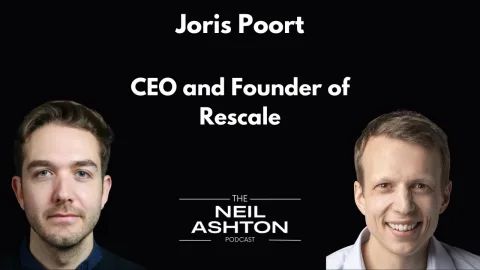
Joris Poort — CEO and Founder of Rescale
Watch on YouTube
Joris Poort — CEO and Founder of Rescale
YouTube video
Watch this episode
YouTube is contacted only after you choose to play the video, keeping this page fast and private by default.
Listen to the audio
Episode overview
In this episode, Joris Poort, CEO and founder of Rescale, shares his personal journey on founding Rescale as well as his thoughts on the future of CAE. He discusses the challenges of introducing HPC to the cloud market, the traits that make successful founders, and the importance of perseverance and execution in entrepreneurship. Joris reflects on the early days of Rescale, the significance of early investors, and the evolving landscape of cloud computing and AI integration in engineering.
The conversation highlights the complexities of transitioning to cloud solutions and the future potential of HPC in various industries. In this conversation, Joris discusses the transformative impact of AI on engineering, particularly in the context of inference, simulation, and automation. He emphasizes the importance of efficiency in engineering processes and how AI can significantly reduce the time required for complex simulations.
The discussion also touches on the cultural shifts within organizations as they adapt to AI technologies, the potential for AI surrogates to revolutionize engineering practices, and the challenges of closing the sim-to-real gap. Joris offers insights for aspiring founders, encouraging them to pursue meaningful work that can drive innovation and societal progress.
Chapters
- 00:00 Introductions
- 03:30 The Genesis of Rescale: A Cloud Computing Journey
- 05:21 From Engineering to Entrepreneurship: The Leap of Faith
- 09:28 Traits of a Successful Founder: Courage and Perseverance
- 14:51 Tactical Steps to Startup Success: Building from the Ground Up
- 22:10 Milestones and Breakthroughs: The Early Days of Rescale
- 30:54 Navigating Challenges: The Role of Cloud Providers in HPC
- 35:24 The Intersection of HPC and AI Training
- 37:05 Cloud vs On-Premise: The Cost Debate
- 39:54 Complexities of HPC in Enterprises
- 42:27 The Slow Shift to Cloud Adoption
- 44:34 Optimizing Workloads with Rescale
- 46:50 Usability Challenges in Enterprise Software
- 48:32 The Rise of Neo Clouds and Competition
- 51:18 Speed and Efficiency in AI Training
- 54:34 AI's Transformative Impact on Engineering
- 58:54 The Future of AI Surrogates in Design
- 01:03:28 Agentic AI: The New Paradigm in Engineering
- 01:14:21 Solving Real Business Problems
- 01:19:26 The Impact of AI on Engineering
- 01:22:27 Innovation in Aerospace and Beyond
- 01:25:19 Cultural Change in Organizations
- 01:28:34 The Future of AI and Engineering
- 01:39:09 Advice for Aspiring Founders
Transcript
This transcript was created from the corrected YouTube captions, with names and technical terminology reviewed. Download the corrected SRT file.
Hi, and welcome to the Neil Ashton Podcast. In each episode, we explain some of the fascinating ways that science and engineering are changing the world around us. We talk to leading engineers from elite level sports like cycling and Formula One to some of the world's top academics to understand how fluid dynamics, machine learning and supercomputing are bringing in a new era of discovery. We also hear some of their life stories, their career advice, the lessons they've learned on the way that I hope will be helpful to you too. So sit back and enjoy this episode. Hi, and welcome back to the Neil Ashton Podcast. So today's guest is Joris Poort,
who is the CEO and founder of Rescale. He's somebody who I wanted to talk to for a while as part of the opportunity to speak to people who have had that bold vision to, to create a start up, to create a new company. And I thought it was really interesting to try and learn from these people, you know, what motivated them to do in the 1st place, what some of the lessons they've learnt in doing that. And it's particularly relevant, I guess, for the themes of of this podcast. Rescale is, is used by actually a lot of companies these days, you know, if they want to integrate more like high performance computing and and more recently more applied AI,
you know, they've got hundreds of customers in this space, enterprise customers. So it's kind of interesting to speak to somebody who looks after that company and they have a good sense of what's coming next. It's been a topic also this podcast is looking at, you know, what's the future of AI and we we ended up talking for quite some time about the potential of agentic AI. This is something that, you know, myself and Joris turns out are quite aligned on in this could be quite transformative. You know, we previously mainly spoken about AI surrogates and we we also do talk about that. But I think the yeah, the the agentic AI and the potential this has for engineering was a
really interesting discussion that comes probably in the second-half of of the chat. So it definitely tune in if you want to hear some interesting thoughts on that, given my background, having worked at AWS before and therefore being immersed in the cloud computing space, I always find that interesting as well. And how that has evolved. You know, Rescale was created like 2011, Oh, quite a long time before, I guess ways today where cloud is more mainstream and and accepted, you know, and Rescale's had some pretty impressive founders, sorry, fund funding from companies like people like Sam Altman and Jeff Bezos, Paul Graham.
So talk a bit about that with the, you know, Y Combinator, NVIDIA, Microsoft. So, you know, it's, it's impressive feat for someone to create a company that's had hundreds of millions of dollars in funding. And so I hope that you learn a lot from some of his advice for for maybe one of you who is thinking about creating a, a start up yourself. I always talk about doing this and I'm probably just too risk-averse to do it. So, but don't listen to me, listen to Joris and hopefully you get some, some, some insights. So this was a wide-ranging discussion. You know, we probably could have taken it even deeper or in other areas, but at an hour and a
half, I thought he was already taking a lot of his time. But yeah, I certainly learnt a lot from this discussion and have a renewed and even more sense of, you know, appreciation for what people like him do and push the boundaries and try and create new companies and ideas. So hopefully it's an inspiration for you listening as well. So sit back and enjoy this episode with Joris Poort. Thank you for for coming and doing this. You're actually on the quite high up the list of people I wanted to speak coming I guess from a cloud provider background before sort of seeing cloud. I think I joined AWS in 2020 and thinking, oh, this is
quite novel, this is quite new. And then looking back and realized that Rescale was part of the Y Combinator in 2011. So back then, HPC in the cloud must have been even more radical, even more sort of crazy ideas. So maybe it's a starting point. I'd be interested to know like what was your pitch for that start up for for Rescale? Yeah, absolutely. So first of all, thanks for thanks for having me on. I think this is, you know a nice opportunity to to take some time and chat about the background. I think for HPC in the cloud, certainly when we started in 2011, it was a very new concept. I will be honest, when we founded the company, we thought we were late to market because
cloud computing had already started. You had big data. And it seemed pretty obvious to me that there would be like a sort of a big compute company. And I actually looked for a company to join myself to say, hey, who who's doing this, solving this problem, right? And I had personally sort of experienced this problem before. So it seemed like we were late to market. Looking back now, we're quite early to market, right? So at that time there was definitely 0% HPC happening in cloud. But it's, you know, it's been a fun journey and things have, you know, changed over time. It was a tough process to get people excited about actually,
you know, investing in this and, and sort of joining the team to pursue this. But you know, like most good start-ups, you can start with a a great idea and and and lots of effort and eventually you know you can make it. Yeah. So maybe taking a step before that, where had you been before? What gave you that original motivational idea even to overcome these problems and and create a start up, right. That's still a a leap of faith to leave a company to a start up. Yeah, absolutely. I think for for me, my background is quite technical. So I'd studied, I grew up doing a lot of computer science. I'd studied applied math,
mechanical engineering, aeronautics, astronautics. I was sort of part of did a lot of work in the field of multi- disciplinary optimisation. I know you come from a strong CFD background, right. So by the professor I studied under actually was an aeroelasticity expert who was a disciple of Lucien Schmit from the sort of structure of the first person to kind of do structural optimization. So I had sort of a background there. And then I, I spent some time working at Boeing applying a lot of these different kind of tools. So a lot of software, a lot of math, a lot of different kind of physics calculations for the 787 Dreamliner program.
And the, the big challenge we had there was trying to solve, it's the first kind of fully carbon fiber airplane and the wing optimization, wing being kind of the most important part of an airplane. A lot of big technical challenges are the main difference being since it's carbon fiber, many more variables. And how do you sort of optimize this design? And so I had a background there kind of using different techniques in in sort of parameters trying to optimize what it would be the lightest weight wing design for the best performance. Long story short, took us many years, but eventually we got there and that's the wing if
you've ever flown on 787, that's the that's the wing that's on there. So it's a very efficient airplane, right. But in order to do that and get to that answer, we we really have to leverage a lot of different computing capabilities. And this was more than 20 years ago. So there was no cloud computing yet. So it was really much more about how do we scale sort of a distributed systems problem from a software perspective inside of Boeing with, you know, different resources from different business units that we would sort of over the weekend be able to kind of gather a bunch of compute capacity service together from different teams and, and solve some of these
larger scale problems. And eventually that that really got me into HPC because it was like in academia, I actually studied more how do you solve these equations more efficiently, right. So trying to combine aero- elasticity, try to kind of combine mechanical engineering physics with, with fluid dynamics and, and things like that. And with the ultimate goal of just, you know, more efficiently calculating all these different complex multiphysics responses. And at Boeing, we were implementing with this sort of multiphysics problem, but in a very different way than how academics kind of looked at the problem. It was much more about the,
let's throw some more compute at this problem and like where are the real bottlenecks and like sort of how do you scale this? And from my own experience, I really enjoyed the ability to kind of gather a lot of these compute resources and just solve interesting problems faster. So that got me into this whole sort of category of HPC. I. Think one kind of insight as well was like, you know, if you look at kind of the people who were the best aerodynamicists at Boeing, for example, or the best at some of these like large physics computational problems, they became the really good at running HPC, right, Basically in practice, right. Like these are people at in
industry sort of working on this. And I, I, I think I sort of had a background because of the software and the math to be able to solve those kinds of problems. But it's a really like a sort of untapped potential to be able to kind of unlock, you know, the, the possibility of, of leveraging really large scale compute for many different problems. And so that sort of. Led to hey. This is an area I'm like pretty passionate about. I also tried some other things. I was a management consultant for some period of time, short period of time, yeah. And so like I, I went to Business School. So as I looked at it, I saw a pretty broad set of different
things you could do. But the thing that kept pulling me back was I, I did really think there was like a really interesting problem and and really impactful problem if we could solve this sort of large scale physics calculations for like engineers and scientists that really push the sort of boundaries forward, not only in a place like Boeing, but also in many other industries, right, in automotive and in life sciences, semiconductor. And so that seemed like a a worthwhile sort of mission to pursue. But I'm, I'm kind of intrigued the practicals of doing it because I often feel that a lot of engineers and maybe it's
changed now, haven't got the mindset to create a start up that, you know, they, they think a little bit more linearly, you know, OK, I'm going to do engineering and make something better. Was it going to Business School or going to McKinsey that gave you a bit more confidence and awareness to go and do a start up? Yeah, I think, well, there's, there's many different things. I I think ultimately for like the best founders, they have like a few traits that are pretty common that together are very uncommon, right. So like it's see if I can sort of recall, I think Marc Andreessen sort of shared what his perspective on this is, which are like, like, I think a
pretty good viewpoint. So what is you have to be very open and curious, right? So you have to be kind of willing to learn many different things. And so that's probably also pretty common with like people in academia, things like that. You also have to. Be be pretty. Willing to stick with something and work through a lot of challenges for a long period of time. And then there's this element of like he calls it disagreeableness, but it's like you sort of have to be stubborn enough, right to be able it's it's you know, starting a company is not the most like rational thing to do, right? Like no matter kind of which field you're in, it's, it's, it's really hard, right?
And so it's like people do it because they kind of have to, not the people who just do it because they want to. It's, it's often for maybe not the, the sort of ideal reasons, right? But you'd be sure to have these different traits, you need a lot of like, I think it's, it's pretty risky. And so like, and a lot of people, you know, will tell you to do something different or why it's not going to work or why everybody's already thought of this idea from the founders. I know. I think it's just like, yeah, it's, it's a combination of these, all these different traits, right? And, and everyone is sort of unique, also uniquely flawed,
probably in many ways. I certainly AM, but but it is hard to find. I would say like and out of all these capabilities, you have to be really smart of course and things like that. But like the probably the one in least supply is, is I think the courage, right? It's like sort of the willingness to kind of jump in and do it. There are times though, when entrepreneurship is much more popular, right? Like so when certain companies are taking off and there's a lot of funding and things look a little like a little easier, you get a lot of people jumping into the game. But most big companies are really successful ones are built
over a very long period of time, right? And there's lots of ups and downs. Even if you look at the absolute most successful companies, there are really challenging periods. And I think I think you have to be willing to enable to kind of work through those, those difficult times, right. And yeah, it's maybe something from Jensen, I think I shared before where it's like, you know, like it, it's really the challenges that that form the character that allow you to to become like one of these kind of leaders of these companies. It's probably not just, yeah, just being smart or something like that. Yeah, what, what practically though were the steps?
I'm always kind of intrigued. So the beginning, you have an idea. How did that form? Did you have an idea? And then you, you know, you go around to the various VCs to get to get funding. You had just a tiny idea. And then it evolved like what? How did this thing come to be, essentially? Yeah, there's a good book written on this from by Peter Thiel 0 to one, right? It's like like how do you start something from nothing? I think the how how it tactically works, right? It's it's for me, it was about sort of came to the conclusion you asked about this as well. Like what does Business School really teach you? I mean, I think the biggest lesson from Business School is
maybe, you know, all these, at least the one I went to, all these different CEOs come through, right? And they give these talks. These are all very impressive people. But I think the one thing once you've seen enough of them, right, you do all these case studies and you learn all these things. It does give you the feeling that at least for me, you know, sort of you can really do anything, right? Like you hear these kind of stories, the same thing if you listen to like sort of founder stories. And I think you could kind of do anything you set your mind to do, right? And it's in some ways one of the best insurance policies, right? Because like, look, you get this
Business School degree, you know, you can go get a job somewhere. Like I had sort of, you know, done this internship at McKinsey. I could go back there, right? And that gives you, you know, maybe sort of a floor of like, OK, now I can take a lot more risk right now. This was a time I had to, I had, I did not have a spouse that didn't have kids. I, I was actually at sort of a point in time, I think where I was able to take the most risk, right? And so I think that's sort of sets a good foundation to jump into to do it. I would recommend, right? Like you do have to kind of burn the boats, right? Like, so you can't be comparing yourself to your peers who are
going to go work in finance or whatever and make a bunch of money or go work in academia and publish the most papers and the do most innovative kind of thinking. I have a lot of peers like that. And I think you have to be kind of get yourself to the point where like you, you really do want to start this company kind of no matter what, right? And then you kind of have to like most founders describe it as like, I would say that you kind of have to right, Like you just don't see any other way. And that's kind of the how I saw it. It was not to just for the purpose of starting company. It was like. To make the impact. That I thought would be possible
like that I could make myself right and I saw kind of was possible at Boeing and then it's like OK there's many other industries there's many other engineers and scientists who are all like bottleneck by compute basically right and then there's this thing called cloud computing and like everybody's access to these and it seemed again I felt I was late right and so it seemed pretty obvious to get to go pursue that the. The tactical steps would be I decided to just move to Silicon Valley. So like, I came out Silicon Valley and I knew nothing right about. Silicon Valley, really like I'd, you know, like read some books,
listened to some podcasts, probably weren't really, I don't even know. What they were. Called podcasts at that time, but the you know, Stanford had this like I think they still do this entrepreneurial thought leaders program. And so I remember just listening to these people come in and this is a different generation. So you talk about like, you know, I was listening to this stuff like like, like way back in the day, right? Like sort of 20, probably 2010 maybe earlier to yeah, probably earlier. But they give you some inspiration and sort of a road map of of like, you know, how you can start a company. There is something special about
Silicon Valley. So you have this very high concentration of founders, you know, engineers who want to build companies as sort of builders, investors. You have sort of a cultural appetite for risk, right? Like it's a, it's a very special place. And I do think if it's like my mentality is a little bit like, you know, if you're going to, if you're going to go do something like this, you might as well, you know, try to sort of play in the NBA, so to speak, right? Like so many places you can start a company, but I think to give yourself the best chances of success, it seems like moving to Silicon Valley would be a a good move, right? But I literally moved out
without really, I had no family or you know, I had some classmates that also moved to the Bay Area. But I did not have any like like sort of real good reason to be there other than to kind of try to start a company. And I just started working at writing code. So I just started building the product in parallel. It was like, you know, trying to see, hey, you know, can we raise some money, etcetera. But it was just by myself and just writing some code. That's really how it started, right? And I think you mentioned earlier like sort of eventually led to Y Combinator, which is one of the incubators. So that that can really help a
lot, right? Because they that can give you a pretty quick start and a very fast network of other founders and great mentors that I can get you off the ground. It's a little bit different than today. This is back in 2011, right? So at that time you got to remember it was like social, local, mobile or all the hot trends, right? And so like sort of working on, you know, a, a product that would do like. You. Know complex super computing for multidisciplinary optimization of physics where the aerospace market was definitely not the hottest idea, right yeah, yeah, but I think you know that what is nice is I do think the
culture in Silicon Valley embraces this sort of anybody with an idea can come there right and you know ideas are cheap right so it's all about the building and the execution so. Yeah. It's in a very meritocratic place, like, unlike like many other sort of games, so to speak, in life. I feel like Silicon Valley is quite meritocratic, right? Where sort of anybody can be the next like Zuck. And so everybody kind of has to be nice to each other and help each other. And so, you know, it's yeah, it has a nice. I think that dynamic is really, there's a lot of paying it forward, like a lot of founders help each other. People are very accessible,
right. So for me that was yeah, it was a it was a great journey. It was, it was pretty tough though. Like I like I was saying, I was pitching this company. Yeah, yeah. That, you know, the exact opposite of social, local, mobile. There's like literally that if you have the Venn diagrams, we would be the one that like does not overlap with anything that like investors were interested in at that time. But you know, everything goes through these waves, right? And so I do think eventually, like, you know, if you just have a good mission, you're on, right? Like you'll find some funding, right? Like it is a there's a lot of investors, right?
And so ultimately you just need one to write a check. Yeah, yeah. So what was the first few years like? What were the some standout moments? Who were the was a turning point from a big investor or like in those early days, 2011, what when did you really feel that he was going to work out? Because I guess there were moments when you maybe thought, OK, I should just stop doing this and get a job somewhere else. Yeah, I mean, I think like, you know, what you call working out versus like success, these are all like your own definition, I would say, right, Like so and that definition for most people changes over time.
I remember making a promise to my significant other at the time, we were not married yet that, you know, like I'll just do this thing. And she was working really hard and and, you know, like really grinding. And I was just kind of sitting in our, I was working really hard, but I was just writing software and not making any money and, and she was paying the rent. And so we sort of made this deal where like, OK, well, if you know, let's, you know, at what point are you going to say, how can I get a get a real job, right? And my parents were wondering the same thing. And we basically said, well, like, you know, let's give it
two years. And if you can pay yourself a salary of something, right? Like enough to clear like the minimum medical benefits and things like that, then that's a win, right? Like that, then we can keep going basically. So that was kind of the. Deal I made with her and. I think that's you know, like, like, yeah, I would say really made it it it changes all the time. If I think if you have the ambition and sort of the mission that we're on, right? It's a it's a very big mission, right? And so, you know, I think I think we still have a lot of our work cut out for us even today, right? But but some big milestones, important lesson I think for
founders is also like, you know, I think Paul Graham says this like, you know, companies don't die, founders give up, right? And you can't just keep going right now. There's there's a limit probably like you take market feedback, you're like, Hey, is this still, is this investable? Is this like smart? Like did you learn some new things? But if you're kind of iterating quickly, you're learning a lot of things. You're adapting your company to like meet the market, so to speak, right? Kind of get this product market fit and then any set of like really smart people that, that work really hard together and sort of have these attributes
they, they will build success, right? Like, and so I think it is in that way an amazing place where you can kind of pursue, pursue what you want to do. For us, a big milestone was first check. So the first investor is always very special for us. That was, you know, we'd gone around like pitched all these like VCs kept getting turned down. And at this point we were doing Y Combinator. And you know, Paul Graham teed up like one of his buddies. It's like, OK, just give him the pitch. Here's the thing, I followed exactly the playbook that he gave me and you know, we didn't, we didn't know what price, what, you know, amount of the company we should give up for, for
whatever investment around. We're just trying to get some investor right. And it was like, OK, well, like, like, how about these terms or whatever based on guidance from Paul Graham. And, you know, eventually he goes through a bunch of things and still don't invest. So I come back to Paul and I'm just like, man, you know, we did everything you said. This is like the, you know, 50th time and, you know, we didn't get the check and but but you know, I did follow like all the things that you said, right? And so like, why don't you just invest? And he's like, sure, he whips out his checkbook and writes a check. And, and I think that was very
special. Not really about the actual dollar amount invested. It was much more about his, you know, when somebody kind of makes a bet on you like that, right? And it's like real money out of his pocket. It, you know, means so much to you that I'm sure you've seen this with maybe like a thesis advisor or other people who've been in your career in the past. That that is a a really special moment, right? And I think that certainly gave me a lot of confidence to kind of just keep, keep going. And eventually we, we got lots of great investors, but that was that was a special one. Another one was, you know, we, we'd started working with some
early customers like we couldn't raise money. So we just like built the product and started to get who wants to go run like large scale CFD in the cloud, right? And it's like, you know, there's like Boeing, Airbus, etcetera. At that time there were these really small space companies, we're talking about like 50 person companies, right? And we went to, there were basically only two private space companies at the time. We went to both of them and because of my aerospace background, I've known some people that working there. So we're able to kind of chat with them and eventually we sort of got them on the hook that they they would do this right. And that that was also very
special because I think that's when you kind of. Could see hey. Like, and they're making a bet on you, right? And, and, you know, when the company is like one or two people, it's very personal, right? So when these with these first few customers, like at this point, I had my Co founder, who's my old boss from Boeing, Adam McKenzie join. And, you know, we sit there in the room with some of these like aerodynamicists and they're just like this concept of putting it in the cloud is, is pretty foreign. And remember, like web services, So AWS had just started and web services are built for like almost the exact opposite of
HPC, right? Like it, it's like very loosely coupled, very, you know, you kind of have to write your software very tolerant to failure, etcetera. The actual performance is like not great. And so it, you know, but you could kind of see where this was going. And so we pitched these companies and I think that was a big breakthrough when when they were like, yes, we'll buy the software, We'll pay something for this basically right. And we'll buy the software and again, that was many iterations to get there. But once you get that breakthrough, I mean, that was very exciting, right? And and those little wins along the way, I think it's like at no point, I think the entire
journey I felt like I've really made it. Yeah. But you know, like I, I think those are very material in those early days, right? Like like just just getting off the ground. I think many great ideas just don't have enough energy on execution put behind them, right? And, and even to this day, right, like I still have people come to me and be like, well, I mean, we're doing much more than just HPC these days. But you get some, you know, you still have this sort of old network of HPC people, you know, I both know who we're talking about and. You know there'll be. People who say you get both messages, right? There were people at that time
who were like, you get these Silicon Valley investors who were like, what do you mean like HPC, Like it already exists, It's cloud computing and it's AWS, right? So you have that class of people which are basically sort of the, yeah, it's like it's already been done. Like why are you wasting your time on this? And then you have the other class, which are the HPC people, right? Like it's super computing. And these these folks are like, this is absolutely impossible, like never possible. All that hardware is not good enough, like etcetera. And you have an entire ecosystem that these days it's a little bit different, right?
But remember then it was like nobody was really doing this and nobody believed it was really possible. And then you have people who say, well, I had that idea. Right, as if having the idea is an important thing. Yeah, I think the execution is the the big thing that really matters. And that's where like those traits of a good founder, I think you, you, you know, willing to persevere. If you look at most companies, if you're just willing to kind of go for more than a decade, most of the companies are very successful, right? But it's not easy, right? So like I, I think that's also like, it's not for everybody. Well, and, and I was thinking
that you were probably really facing an uphill battle because, you know, if I look at from a technology point of view, you know, the hyperscalers took quite a long time to really have, for example, the interconnect. You, you, you know, like when I joined AWS in what 2020, things like EFA or they, they were quite new. So you were, did you feel that was part of the challenge before that, the hyperscalers that I guess you know, you were simplifying the use of when moving as quick as you wanted in terms of like technology? Yeah, very good question because like that was the remember we started in 2011, right. So there were some some days in the wilderness there, but.
With cloud computing was kind of really gaining traction, right? And even back then, you got to remember people were way underestimating these markets by like X, right? Like from where it is today? It shows how difficult it is. Even when you see something happening, it's like very difficult to forecast, right? We could talk about AI later, yeah. Early on, a big one was always like, well, like, like why do I need Rescale, right? Like I could just go to a cloud company and get this myself, right? And so and. A lot of people perceived even to this day, probably people perceived the cloud companies that are very close partners as
like competitors in this market and that's sort of the wrong framing. The reality was I would be going in at that time. It was going to be Andy Jassy and begging him to build InfiniBand networking and begging him to build like Specs that. Would do really well for this market, right? And the answer often wasn't necessarily no, but it was like, well, an incremental dollar spent today, you know, I'm better off just building more, let's call it for simplification commodity compute like because there's more market share to grab there versus this like specialized compute, everything costs X more, workloads are much more volatile, etcetera,
etcetera, etcetera, right. So there were sort of many reasons to not do it. There's also like some real difficult networking challenges like security challenges. So the the way you build like a cloud. Service as, as you know very well is a little bit different than the HPC system, right. And so at that time, the maturity wasn't there to easily sort of pursue this market, but. But from first. Principles, it seems like a really a lost opportunity, right, because if you kind of look at it, it's like, well, you know, commodity compute great. Like the whole thing about AWS was, hey, it was built for scaling e-commerce peak loads during the like, Black Friday or
something, right? And but you know, like the rest of the time and even today, like if you just look at it wasn't the money makers at AWS, it's like the simple, it's just like EC2, S3 like basic stuff, right? And most people consume just that what and super computing and high performance computing was always the case is that, you know, these systems are super expensive. So time sharing them only the biggest companies in the world or the biggest labs could afford to kind of build these systems, right? And it makes a lot of sense to share those systems, right, because they're so expensive, right? So share the CapEx investment, the sort of timeshare of these
systems, so? Used to be like mainframe time sharing, but like with cloud this becomes so much easier. And so like it really did seem like that was A at that time like a a lost opportunity and as Rescale we did make a conscious choice. It's like we are not at least at that time, right. We're not going to go get into this CapEx game like the venture capital dollars are not made. You can see that today with these. AI companies in the infrastructure side are not really made for, you know, making big CapEx compute investments, right. And so, yeah, we would be trying to work really closely with the. Cloud providers to actually
build the right infrastructure for our customers. But you could kind of see where it's going, right? Like at that time it was to me again, I thought it was late. It was pretty obvious that like this is a great market. Opportunity, right, But like yeah, yeah, I think of the eyes of say somebody like Andy Jassy or you know, Satya was running advanced computing at that time in Azure. I think they made some smart bets too, I think. I think they, yeah, HPC is still this like small sub segment that seems very difficult relative to all of computing. So all these things are all about your frame, right? Like if you come from the HPC frame, this seems like pretty
obvious I think. If you come from the, you're running like the fastest growing, most successful cloud company in the world, like, you know, there's many bets you could be making. And yeah, it took a while to get this one off the ground even today. And as far as I understand, there's no InfiniBand networking at at AWS. No, that's, that's true. And we should say as well, I guess that when we use the term HPC and I guess the relevant first discussing this is, I mean you can argue, but I would say from a hardware point of view, what AI training needs today has many, many, many of the same components as HPC. There's some subtleties, but in
terms of a low latency network, that's basically what AI training needs as well. So interestingly, like the reason that we're talking about prior in those early days, it was only really for loosely coupled, wasn't it, from like a hardcore performance point of view. So my question is, do you think those early days almost made it harder to convince people when there was actually the hardware? Are you still getting people who are like it's it's slow running on the cloud or there's a because they they're still just thinking back to the mid-2010s when maybe the hardware wasn't there. Do you know what I mean? Are people lazy to be thinking of what's current?
Yeah, and and like you and I are probably on the same side of the table on this, but, but I think if I had to steelman, like what's the sort of reason to not not go to cloud, right? Like a lot of people bring up costs and we can talk about that. But I think if I'm sort of put my hat on as one of our customers, right like like a manufacturing company it seems if you're. Certainly starting a new company like like really obvious. To to sort. Of buy this compute as a service as opposed to start building your own data centers etcetera, right? Like unless there is some sort of reason that's your competitive advantage, right?
I can tell you Boeing thought it was their competitive advantage. They probably still take that to this day. And yeah, there's, there are some I would say like edge cases where it can make sense. But in general, right, you want to kind of a provider. Like any major cloud provider has way better economics, has way more efficient sort of scale. The better supply chain they have like better hardware, faster, they are able to refresh and resell your old hardware if you want to rotate to new SKUs and things like that. So there's so many benefits if you just. Look at solving the real problem you're trying to solve as a manufacturer, say running a
simulation faster or designing a vehicle faster. That's the real problem you're trying to solve, right? The problem I think in HPC. Is there's an entire industry that's been set up with a different framing, which is like I'm, I'm actually here to most efficiently invest in CapEx, run the infrastructure into the ground, try to efficiently use this infrastructure, you know, depreciate it in a really smart way. But it's all about this sort of IT/TCO sort of frame, right? And. Purely on that frame, maybe sometimes on-prem is competitive with cloud, right? But but if you even value a little bit like actual performance, which is in the
name of the industry, right, like high performance computing, the simple sort of to me. The concept is, is like, well, who do you want to bear the CapEx? Do you want it to be some really low cost of capital, very big cloud infrastructure player, right? Should that be you, right, as as a manufacturer and especially with the sort of rotating to new infrastructure, there's a lot of complexity, right. So typical organization might be running, you say 50 different physics codes. Right. Each of these have different algorithms, some of them have different sub algorithms within those algorithms, right, Different ways of running them.
And so there's like 10s of thousands of combinations and way to run this. Then they can all be compiled differently. They have different optimal architectures. Right. And it's sort of like, and then you run them sporadically at different types like so if you're a automotive company, there's a big part of the design cycle in detailed design. You know, this is happening a lot. There's other times where you may not be running so much and so it is pretty tough. I think for the average enterprise like you know, consumer of HPC to sort of say, you know, it makes sense to kind of run your own HPC. Now if you look at the market today, right, it's, it's about
20% cloud and say 80% on-prem, which which you know, I don't know, blows my mind still today, right. I think there is a, you know, it's a big. Switching costs takes a long time. If you're running and operating data centers, you're maybe depreciating that you know if. It's a CFO making a decision maybe six years, right? And so even if you said 100% to cloud tomorrow, it's it still takes a long time, right? And there's a lot of complexities that I think are glossed over. So I think a big reason you didn't see it take off earlier was a lot of this complexity. It is actually very hard to run, say, a fluid dynamics code.
On an HPC system, very scalably, very reliably and continuously keep the codes updated. And like when you run different algorithms, they scale differently and sort of like what's the right cluster size so. There's so much that goes into that. That is, it's still, you know, it's a specialized field right now, at Rescale we write software to simplify all that. Right. And try to sort of abstract away all this complexity, but it's quite complex and if you really dig into it. If you ask the people who are on the sort of still running on-prem systems, they would often tell you the biggest reason why is, is sort of this it is hard
and you have to, you have to be willing to kind of reinvent yourself, right? So like, just imagine if you're a high performance computing administrator for like 1 of the top three aerospace companies in the world, right? All you've done last 20 years is basically figure out how to procure like the right infrastructure, you know, 18 months of like. Procurement processes get these systems tested up and running service, you know your different engineering customers, internals to your organization. With cloud, it's a completely different paradigm. Like that entire paradigm is like sort of hardware up thinking, right? Which is like it sort of starts
with the processor and then you build out the systems. I think the right way to think about. What is the purpose of HPC is ultimately to serve the workloads with good performance. And that's more like workload down thinking, right? So like it's really just about OK, like for this workload, what is actually the right infrastructure, what's the right price, what's the right performance, etcetera. Like how are you going to optimize that problem? And with an elastic system, you're going to solve that problem much more elegantly, right? So I would say that's a very long answer, but I think it's still to this day, you know,
there's people who believe. Like HPC should be done on-prem Yeah I. I see that my big observation is always just timelines that everything, as you say, just takes so much longer than people realize. So, you know, when I started, I remember and this is This is why I'm still amazed by you having these ideas nine years earlier that people were like completely anti cloud. A lot of people were anti cloud. And then you know, just as the time as I was leaving, I remembered that it wasn't, are we going to do that? It was like how, how we could, oh, no, that's not true. It was probably hybrid, hybrid and we are going to do some of it on, but we'll still keep
some. And that depended whether it's to start upon enterprise. But I definitely saw a shift. But then I thought that means the time then to do a PoC to then roll it out to change like so. It's probably, I guess you'd agree there's probably even more upside in cloud to come because it takes so long to convince people and then for them to change that we may not see that consequence for another few years. Yeah, I think that's right. I do think that, you know, Rescale, we're really focused on solving kind of like what is the real problem the customer's trying to solve, right? And so often it's again, using this example of a manufacturer might be an engineer doing sort
of fluid dynamic simulation. They just want to run that simulation as efficiently as possible and like all this other stuff. And so they're like all the IT stakeholders trying to kind of serve that user ideal, right? You kind of work from that customer backwards. I think you really want to solve this. Problem more from first principles as opposed to. Sort of you have all this baggage of these like on-prem systems, hybrid, all this stuff, right? And our view is sort of like, well, if we can give you a service that is the optimal router, right? So they can real time say, OK, you're going to run this fluid dynamics code. You know, we understand some of
the metadata, right? So we say, hey, it has like, you know, 500,000 cells or whatever, right? And say you're running STAR-CCM+. We know that version of STAR- CCM+, how well it scales. We we know like with that kind of cell model, like what's the size cluster that should go on, right. And then you go through this sort of what we've built as a compute recommendation engine. So you actually so say, OK, you can plug in your own on-prem resource. So that's one of the fixed resources you could choose from. It comes at some price layer internal sort of cost to operate. Maybe they have your cloud resources, right. And then, you know, just have one, you have all the major
cloud providers, you have neoclouds, maybe have some special supercomputing relationships with universities, etcetera. In this whole network, hundreds of architecture choices, right? All of these had a little nuances, right? Oh, but that's an Intel processor. So you need to use Intel MPI or like hey here this like version of this code. Like needs to be compiled differently whatever. So it's a, it's a we want an analysis in this little data, but how many combinations are there is like more than 50 million combinations. So it's like, how do you solve that problem? Well, you basically want to go through some sort of algorithm
and we. Recommendation system was kind of our solution to this problem to automatically kind of figure figure out and route that right. And that's now you have the service for this user for any workload. That you know, you can kind of use both the all the metadata and all the knowledge Rescale has from running many of these similar workloads before, but you can also leverage any of the resources you want. In the way you as an administrator can say, hey, like, I first want to fill up my own system or whatever, right? And that is, I think that's the right way to solve this problem, right? And it is, it is a pretty technical way, right?
I think there's also like usability of this is, is super important. So for us, how this shows up is literally like you open up Rescale, you drag in your like input file, right? Or if you upload the input file and you and you select the software, you press run, right? It is that simple. But in that is this highly complex Configurator which can kind of optimize and solve these problems for you. And, you know, I, I think that's a. Great way to solve this problem. But like you said, like there's a, there's a lot of practical challenges, right? Like, so that's the technical person and he says, OK, like this is a great solution, right?
There's a lot of practical things in enterprise software. And like go to market and like how do you use customers like transition and etcetera. So that are still challenges for customers today. But I think increasingly, like you said, it's easier and easier. Like this PoC process you described, you got to remember, like if you're buying on-prem, you're probably going through like a sort of 9 to 12 month like procurement process at a minimum, right? For many companies, it's closer to 18 months. You go through all this evaluation, then your system is finally live 18 months later. And that's just not like, you know, if you're an engineer
trying to run this. Fluid dynamic simulation, you can't do that right? Like you got to solve the problem in a different way, right? And I do think today if you go to Rescale, right, and go through this process, you can do this all in like 5 minutes, right? But there are practical challenges. So if you think again, think of a like a large enterprise organization, there's a lot of new ways of thinking that's sort of required. And it comes back I think to like the courage, right? Like are you, are you willing to? Say, hey, like we got to do it a different way and I know I'm going to go through lots of challenges, etcetera.
But and I think increasingly a lot of companies are seeing so much success that it is hard to argue the other way, right? Like if I had to argue where if you're using cloud, like if I go to on-prem. Yeah. There's a few reasons, but for most organizations this would make very little sense. And I guess now it seems, and I didn't predict it, but it seems to be happening that there's even more because of you see, sort of, neoclouds, which I guess has been really because of AI. There seems to be even more competition to the big cloud providers. I guess there's more options, but even more reason to have a single place to route that through.
Because if you have an if you have accounts with cloud providers A, B, C, D and E, for that enterprise to build out all themselves. I mean it can be done. But it's a lot of work. Does it make it even more valuable to have like a go between it than it was when there was mainly just AWS as the biggest one? Yeah, I think. Now of course we can, we can optimize within a single cloud, right? So like if a customer really loves Microsoft or Amazon or Google like we can, we can certainly do that and and you sort of solve the problem at a smaller scale. I think there's this margins piece, there's the speed, right? That's why I think. You see the neoclouds as
well, like they're just able to stand up a cluster much faster, like it is the bigger organization is it is hard, right? And it's pretty. Interesting to see Microsoft that they outsource a lot of their GPU compute to CoreWeave, right? So public information, you know, there's, there's a few dynamics I think why like 1 is. Sort of just pure GPU scarcity. So like they just have them, not only GPUs, they also have the power infrastructure, right? Like I'm sitting in a data center working to power them and cool them. So there's sort of that timing effect, but there is a setting up. Those systems are like HPC systems, right? And that is very different than
building public cloud resources historically. Now, if you only have like one or two customers, you can build these bespoke systems, right? Like, like what cloud provider to get at is serving thousands or 10s of thousands, millions of customers, right? And so there's a challenge for a neocloud is how do you scale that? There's also, I think an element of, but the speed really matters. Like I, I think right now in AI, it's just all about speed, right? And so people are willing to do absolutely crazy. Thanks for speed, right? And it's because of the sort of ultimate end-use case like this sort of AI war between all the
big tech companies is fueling all of that, right. And and if you're just a few months faster, I'm training a large language model that can make a big. Difference right in in the long term game here. And so it's, it's, it's interesting the bottlenecks, right? Like if you, I don't know if you've been following this, but there's like, it's all these neoclouds of course. But there's also these practical problems people are running into, like there's not enough electricians to, like, you know, build data centres, right? And there's like, you know, like, like a meta doesn't have enough like buildings. So they'd like operating data
centers in tents, right? Like, and then there's like this really efficient cooling systems built by NVIDIA that like run super efficiently. But then like xAI is, is is like literally like, like using generators to do sort of cool water and pump it into the cooling system in the Super inefficient way. But they, they got their training model up much faster than anybody else, right? And so like, yeah, like running fast matters here. And that's probably where, to be fair, the, there is a difference between the HPC for CAE and the, and the HPC for AI because it's probably true. If if you're a very large AI company where you need so much compute, but it's basically just
for you, you could probably argue that it might be actually better for you to build it yourself. If that's your core differentiator is to get that training model out. Two months later, you can kind of see like, why would we go and wait on a cloud? We can just do it ourselves. We, we have the same type of GPU. We have 100,000 of them. That's it. Then it's I can see the logic but for most manufacturing companies or aerospace companies, they don't have 100,000 GPUs to train one model right? It's a different world. So I guess it's different needs as you say. And probably they don't have 150 different applications, legacy
applications like CAE does. I guess the AI world is something newer. Yeah, I do think like you know, AI is is changing a lot and you know the CAE engineering world as well, right. And, and we could talk more about that, but like you spend a lot of time talking about the HPC layer. I think the way, if you sort of Fast forward to Rescale today, right? Like the way the way we look at it today is there's the HPC layer or the compute layer, but you have the data layer, super important, right? Like, so, so one of the big argue like, OK, why do these big training models? Why, why are these then sort of on-prem is like a natural
question, right? Like, but like if you're sort of the downloading entire web and then like training on that, that's a very heavy data gravity kind of situation, right? And of course you want that data as close as possible to the compute. So there's always like memory implications. There's there's how these, you know, all the detailed architecture really matters, but also it's like, how do you serve all these things? So that's one, I would say class of HPC problems. But data starts, you know, it's true that some of this is only for these large LLM providers. But you know, I think everybody like if I speak with our customers, they're all building
AI models themselves as well. And these are much smaller scale. But ultimately they need efficient infrastructure to train their own data as well. Yeah. And then obviously inference is a big one too, right? And like running inference efficiently is going to get really important right today, you know, if you if you sort of breakdown the economics. So like Silicon Valley is funding a lot of very cheap services, right? Why? Because everybody wants to win the AI platform war, so to speak, right? And so people are willing to lose a lot of money today on inference, right? Just to win the customer, right? But over over time, all these
economics need to be figured out and things do need to be run actually efficiently, right? And so a manufacturer, because here say a Tier 1 manufacturer and automotive, you're kind of running your it's like a 5–10% margin business often, right? And so it's like you already have to run really efficiently. Why that's why IT focus so much on TCO. That's that's why it's like, hey, I can run like the system for like 10 years and divide it, you know, like it all makes sense to me. But I think if you think about the engineering. Problems you want to solve if you're a little bit, you know for thinking of like OK, you know how to get out of being a 10% margin business as a.
Tier one supplier, right? It's I think the way out is actually using the latest technologies, which is, you know, there's, there's a compute layer, but especially your data, say you're a seat manufacturer. I know how to like do seat design really well. And I might be really good at crash simulation, right? And so and so have all this crash simulation data. If I'm like one of the top three companies in seat manufacturing, I probably have some of the best crash simulation data for seats out of anybody, right? If you can build what we call some of these like AI physics models around that, you can build a lot of the intelligence
into a much more compressed timeline, right? So now instead of like trying to speed up the algorithm, you're actually like changing the algorithm and going to from deterministic to probabilistic. But then maybe I can serve my OEM like way faster, like not a little bit faster. Like I can actually say, hey, like I, I think I could do that seat with like 98% confidence and I could give you that answer in maybe an hour instead of like 2 months of analysis, right? And so this is, that's, I think where the future's headed. And then like you have, that's on the simulation side. Then there's also this, you know, we're working with
customers to build sort of engineering agents. Right. It's like. You, you kind of get this capability to this, you're actually starting for the simulation engineers. They have this this automotive company empowering them to just do their job like way faster. So all the mundane tasks you're starting to sort of automate, right? And that's I think every function and every industry frankly is going to go through that sort of process, right. The nice thing in engineering is there is a lot of data and there's a lot of like intelligence already built into all these processes, etcetera. And so it's Rescale with our customers. We're in a unique position where
we, I think, have a really good understanding of like how the actual end user engineer or scientist runs all these work flows. What are the problems they're trying to solve? It can help them do that, you know, 10 times better. Everybody wants, right? And this entire compute conversation, right, becomes pretty secondary, right, Because it's sort of like, you know, like that's just it's just electricity, right? It's it's like you're just powering the ability for an engineer or scientist to come up with a cool innovation. Well, that's kind of yeah, a good segue to talk about that a little bit more. The you're right, we basically
focused on HPC. HPC was pre-AI, the big changer, you know, you have more HPC run your simulation faster and it still is, don't get me wrong. And of course you know, GPUs help that, but the AI feels very transformative for engineering. So I mean, how have you seen that convergence on the Rescale platform and from customers that you're speaking to, You know, are they still just dabbling and with their sort of more in the R&D phase, how much more sort of AI training or AI surrogates are they doing next to their traditional CAE? How are you seeing that you're, you're at the front with customers? How is that transition?
The yeah, it's happening really fast, you know, are let's say our most innovative and fast adopting customers. They have AI based automation. You called agentic kind of things built in. They have they're definitely doing AI surrogates. They are really thinking ahead of like what's the sort of let's just assume we already have AI surrogates, right? Like what are the next level of problems we can solve? Because once you have AI surrogates and sort of, you know, domain I'm I'm pretty familiar with is things like in the, in the multi physics space, right? Like you're always trying to kind of to reduced-order modelling or some way to
simplify these highly complex kind of large scale models? And sort of. If you're say building an airplane, you have this conceptual design phase where you're like, it's smart to use like carbon fiber as a material system for this airplane where all the implications. The challenge with that is always like we get to the detailed design that that's when all the details like it really matter. And it'll be like, you know, at the at the base of like a commercial aircraft, you might have 100 to 200 plies of carbon fiber. And then you have this like bolt that comes through there into the titanium fitting. And there's like a bunch of
rules on like how that bolt supposed to interact with the system and all this kind of stuff, right? And it'll be like, OK, like we really need 200 carbon fiber. Plies at that root, right? But then it'll be like, well, we can't just go from 200 carbon fiber plies to like 10 in the next panel over. Like this needs to go very sort of slowly, like reduce it by 10% sort of every panel because you can't have this disproportionate kind of stress situation, right? And then it's like, oh, well, this panel, we need actually be able to make it. And you know, like our tool forming process can only handle XYZ. So there's a lot more that detail drives an enormous amount
of the actual design. And the problem has always been is like in that conceptual design phase, how the historic has been done, you get a lot of really smart people in the room. And you say, yeah, this seems like the right decision because I've seen some test data on carbon fiber over here and I've like run some experiments over there. But what you really want to do is kind of take all that really detailed complex information and synthesize it up to help make one of these kind of higher level decisions, right? And what AI surrogates allow you to do is to simplify that compression process. I do agree that it is, you know,
the criticism is like, hey, this is misleading. You can, you can run the simulation 10,000 times faster, etcetera. I mean, it is, it depends on your frame of reference whether that's true or not. But like what what is absolutely true is that using neural networks to compress this highly complex information, right and solve next sort of generation problems that you would never even attempt before, right? Are now possible, right? And and you have this much more elegant process to sort of capture the intelligence of your engineering organization. So and you can look do that at the, you know, individual discipline solver level, right? But you can also do that at
higher levels. And then you can start incorporating, you know, these sort of things like manufacturing constraints and things like that. And if you can, you know, the, the faster you can do that loop basically, right, like the better design you will get. Like I think what people are usually surprised by is that that loop, there's exceptions to this, but that loop takes a long time. Like in in typical aerospace company, both Airbus and Boeing of this sort of like loop of just like all the different engineering disciplines to sort of say, OK, to have this shape wing based on this ship, we're going to have these like loads in the system based on these
loads, like this sort of mechanical team is going to like decide what kind of like structure we can do because of the structure, it's going to bend a certain way, which then comes back to like, OK, that's the shape of the wing at cruise, right? And so you have this big loop and that loop takes like three to four months. It could take like an hour, right? Like if you sort of said, hey, I'm not constrained by compute. You're just running a whole bunch of software, right? You still need some really smart people to make some smart decisions, right? Like it doesn't totally eliminate the engineer. No. But, but I do think that that's where the industry is going.
Our customers like the the bleeding edge customers, they are implementing all this stuff right now and it's all possible today. Like the exciting thing now is like, hey, it's right there. You just have to do it. That's exactly that's the way I normally describe it to people is that, you know, 10 years ago there used to be this dream of real time CAE that, you know, HPC would become so fast that you could do the simulation in real time. But it actually is impossible. You know, there's various reasons why a traditional structures or fluid solver will never really become real time. And that's where it's, I feel the AI surrogates, because by definition they can be real
time, does allow for the more agentic AI. Because how can you really have an agentic AI system when one of the agents is a solver that takes 12 hours to run? Like, yeah, you can do that, but it, it doesn't feel like the end goal. The end goal should be like Google Gemini just because I happen to use that one. There's others where like I want to ask it to do something for me. I don't want to wait 12 hours to get the answer back. It feels like you want it to come in a short time and I feel like the AI surrogates plug into that AI agent theme more easily if you know what I mean. I don't know if you agree. Yeah, it's a good.
It's an interesting way for any and I guess the way I look at it is you have kind of, you know, just like you have deep research, it takes a lot longer and then you have also like quick responses. It's just like that, right? Like where it's like, hey, if I am a designer and I just want to change the shape of a mirror, right, I can get an instant aero response that's like 99% accurate. That is awesome, right? Like before, my alternative was I changed the design, sent the CAD model over to the aero team. Three days later they send me back. Hey, that, that create a lot of drag, right? So now you can get like a like a
pretty good answer and and pretty good. Like I've seen cases where this is like over 99.9% accurate and like, of course that depends on like the data you train on and all these kind of things. But ultimately you can get these responses back that dramatically reduce the cycle. So you just eliminated 3 days by providing like a rough estimate that's almost real time. I still think that the detailed simulations do really matter. Like that's your training data, right? Like so like, and there's a couple of parts there, right? Like I think there's the, I call it the sim-to-real gap, which is a separate discussion. But that's, it's another, I think, interesting element,
which is like, OK, are these simulations that we're running, how accurate are they? Because the real ground-truth data, right? It's not even wind tunnel testing. It's actually like the real data, right? And the wind tunnel is a proxy for that. And then your simulation tool is a proxy for the wind tunnel. And yes, all the physics equations are correct, but there's like a lot of little things that still can, can change, like real world outcomes. And so, but from the pure simulation, you now have the ability to generate and ground all this data like very efficiently with these AI models, right? And so like, yes, that designer
doesn't want to wait for like an like, yeah, you can give them an agentic capability spin off a simulation, right? That's not that useful to them, right? Where agentic to me means, and you know, it's a kind of a buzzword. So everything's agentic these days. But to me it's more of this kind of like like proactive thing, right? So where it's like, OK, here, here's what happened. And it'll sort of describe a customer scenario, automotive OEM, right? And they have a supplier, supplier say it's the seat manufacturer, they changed the design of the seat because some reason for same manufacturability on their end, right?
That design change is is sort of automatically synced this OEM, this is happening because this seat manufacturer is in Europe and the OEM is in the US. You know, this is happening at like 2:00 AM right now because that change happened. You need to rerun your crash analysis. So you could do an instant response of like sort of an AI surrogate of like, hey, is this going to be a is this look great or is this bad? And it's like this might be a problem. OK, now because of that and the simulation engineer sleeping because of that, a spin up like LS-DYNA job to go run the crash analysis and I'm just going to run it for just this component, the subcomponents, you know, in
a way that's like pretty efficient based on a bunch of rules. I gave that agent right, which said, hey, you can't spend more than $1000 and if it design change like this comes in, always use the AI surrogate first. And now I, I want to, you know, like failed that test, though, right then then run this simulation. So when I come in in the morning, right open my laptop at 7 a.m., I've got right there. I have the simulation results right to go review right? And it's like it's. Pre done the preprocessing, this whole like trace of all these things that happened is presented to me in like a simple way. And you know, my job just got so much faster and more efficient,
right, Like, like the real way this happened before and and most organizations work this way is like, oh, this this CAD file got zipped up, right, and then it's like sat in somebody's outbox, but they were in Europe, so they were actually on vacation for another week, right. And so like it didn't actually get make it over to the OEM because like whatever random human delay, right, then the zip file comes over and then somebody has to do this analysis, right? And then, and then all these sort of steps happen, right? And I think if you can sort of shorten that entire process now, it's not perfect, right? Like if you look at the tools we have today, there's a lot of
expertise to make all these judgements and do all these things. But you can already see today that like our customers are already doing this. They're automating more and more of this process, right? And you're just going to get comfortable with it. It's just like you get comfortable with using a Gemini or ChatGPT or whatever, right? And that's the sort of agentic thing is sort of like. Proactively doing all the kind of like. Grunt work that you don't want to do right? Yeah, but I, I seriously, I don't know if I'm just, you know, drinking the Kool-aid or whatever the phrase is, but I, I really can't see how this will
just totally change because. Well, the first thing to say maybe what, what I was mentioning before is even if I believe that you, the AI surrogates, make it good enough, you're still going to have a whole load of huge HPC resources to create training data. You know, so even if the surrogate models become good enough, and unless there's some breakthrough that I'm not aware of, you still need all the traditional stuff to, to generate the data. So actually it's, it's not a, it's a replacement in that the end user may primarily use it, but in the back end, somebody's still having to generate this data to go and train the models
so that you're not truly replacing it. It may just be in the background, if you know what I mean, but I really feel that the, the AI engineer thing seems more and more real because what you just described to me is eventually through enough training or awareness of different agents, isn't it just that I become like a manager? So I have I and I have a team of people who are not real people who are doing this analysis for me and I'm just looking at it at the end. Yes, and I think it's awesome, right? Like I think it's so so the other part's like this is already happening today. So hopefully shortly we'll be able to share some like maybe
public customer case studies and exactly how this works and have the customers talk about it. But I think, you know, there's no part what I just described, right? Like all all the components that we have for any company to go do that, you don't need a magic AI surrogate model, right? Like it's just like, but I think the right framing is more AI surrogates is 1 module of AI. There's many AI modules in the entire product development engineering process, right? Some of these are more leveraging LLMs, right? Like some of them are more like this compute recommendation engine. That's like a totally different category of AI. But it helps solve this like
search problem much more efficiently. You have AI surrogates who do these sort of probabilistic physics analysis much more efficiently. The, the really nice part is the productization of these because like if I tried to steelman, sort of the cynics and I've I've heard many of them in sort of the CAE space, right where it's like, but those are not real like engineering calculations. These are just like approximations, etcetera. Approximations been around forever. We've always done surrogate. Modeling right like the. I think what's really important is like, solve the real business problem, right? Like like solve actually what,
why are people even doing this kind of work, right? Like, well, they're just trying to figure out the sort of physics answer for something. And almost all simulations that are run are essentially a waste because in the end, there's only like one or two that really matter that go into certification and like the aero model for say a Boeing airplane, right? Like they're sort of if you want the entire way of how did you get there, right? Like, yes, then all those other data matters, right? Like all the other experiments that were run, but more than like 99% of all those computations that don't impact this, like final design is great, right?
And so the question is just like, how can you go through that search process as quickly and as efficiently as possible? And what changes everything is, I think it's if you can solve that search problem so much faster, it changes how you do engineering completely, right? And not in a negative way, right? Like to me because, because there's also like the other criticism on this is like, OK, well then we just replace all these engineers. Like I'm an engineer, like why are you replacing me? Right. But this is all like, what is your frame on technology and like how the world should kind of work, etcetera, right? But like it's I think right it
it's super important to kind of like jump on these waves as like this is awesome. Why is it awesome? Well, what we just have to grind through a whole bunch of CAD and CAE modeling with like a team of 12 people for like 6 months to get to this answer, not to get the exact same answer with two people in a week, right? That is a win for everybody. Those ten other people, right, that you may not need any more can go do five other projects. Those ten other people can do more meaningful things, learn other things, right? If you look at the history of like CAD modelling, right? Like it used to be, we have these drafters I'm sure you've
seen these pictures of like, you know, yeah, 100 people just drafting the physical documents, right, To be able to build components. I don't think it's a negative thing that people don't need to do this anymore. Like you press a button in a 3D CAD product and spits out like so. It's a productivity argument, isn't it? You know, yeah, you can do more efficient. I mean, there's a debate on jobs. I guess it's maybe the correct thing to say is it's not the job. There will be people's jobs that they don't need to do anymore, but you'd hope they could trans transition to a different job. I guess is. Yes, and like it's. You know, the U.S. I think the job retraining stat is something
like 20 to 30% do reskilling every year. Yeah, yeah. So yes, unemployment stays at like X level, right. But like in the US statistic. But I imagine it's similar globally. And I don't personally find it very satisfying if you're like if your job was like, say, just drafting documents, right? But actually, like, you can just automate it with software. It's right. Not a very fun job. Right. Like no, no, no, hadn't. There's just certain stuff. I think that machines or AI now can do better. You know, if I have to manually go through 50 simulations and try and write a report, why this one moved the vortex here and AI could do exactly the same task
in less than a minute. And then you can still write the report and analyze and think about it. But you didn't have to do some of that manual stuff that probably took you half a day. To do exactly so we've we've actually done this with our customers. We survey them, right. Let's say what part about your job do you dislike do or where you don't feel like you're adding value? One of the top things that come up is exactly what you just described is write all these reports. Guess what, it's really easy to take a bunch of like simulation files, right? You've decided, hey, this is the right sort of answer and here's sort of the high level reasons why.
And you can just generate a report using AI tool that works today. There's no reason not to do that. Now, do you need to review the report? Yes, right, but like you can shortcut a lot of the process, which actually allows the person or the human to add, you know, spend much more time on those like value added tasks, right. And and I kind of think of this always as like moving up a layer of abstraction where now you can do so much more. I think what people underestimate is like when you change something, right, like say the six month process down to a week, that changes everything, right? It changes like industry dynamics because like you can now do product development so
much faster. It changes like what kind of innovations you can actually build, right? It changes like the org structures of companies, obviously, but I think that's all, you know, like value added to society, right? Like I think it's great, yeah. And. I guess full circle. The underpinning of all of this is access to compute, basically. That's right, isn't it? I do think, I mean, I, I will say like, you know, pre AI wave, right? And, and, and I think, yeah, that's when you were probably at AWS, you know, compute was really considered like very much a commodity that's like, yeah, like there's all these like complexities, even HPC, but like in the end, it's just like sort
of a means to the end, etcetera. I think AI has shown, which is quite exciting how important compute still is, right? And they're sort of the, the high level thing of like, hey, well, you need this massive scale compute to solve this, specifically this sort of LLM training model. But I think that analogy applies to many other things. So if you take a typical engineering problem at a large company, a complex problem like like like high end aerospace product, these people doing this work are highly compute bound, right? And they're compute bound at the, you know, I can only run so many simulations, but they're also compute bound at like as you move up these layers of
abstraction, right? As I sort of like this agentic engineering, it becomes easier and easier to actually like sort of kick off a simulation, right? Add more training data, all these kind of things, right? That's where you need to be really smart about like, well, what are all the, like design points you want to run? Again, AI can help you do all these things, right? But the compute bill sort of going up and up and up. However, in most organizations, if you look at like, what is your R&D spent, the biggest cost is the people. Yeah. So this opportunity to get much more leverage out of an individual, right? Like they can just add much more
value in this cycle is is massive. I think it is underpinned by compute. And if you don't have that foundational building block, right, like you're, you're highly constrained. The good thing is engineers can always work around those constraints. You know, they just make do with whatever you're given. But you know, like those constraints, like really constrained also innovation, right? They constrain the ability, like if you can make it, SpaceX is a good example, right? Like it like sort of back when I was working at Boeing, it was like, hey, there's a SpaceX company and, you know, Boeing thought they were pretty good at like launching rockets and
putting satellites in orbit. And you know, at SpaceX there will take the cost. I think of like putting a kilo in space, like down by like 20 to 50 X depending on like kind of what metrics you use, but a minimum 20X, right? Once you do that, right? Like it opens up this entire market, right? Like it's like, OK, now you can do Starlink, now you can do all kinds of other stuff in space, right? And you want those expansion opportunities. I do feel like a lot of industries are pretty stuck, like the way Boeing builds an airplane or Airbus for that matter, right? Is pretty stuck in sort of these old ways, right? And I think of the way you can get out of that is using all
these new tools where it's sort of like something is at least 10X better. It totally changes not only like how fast you can do the product development, but also like the markets you can serve. It changes the way you work with your customers. If you're say, an aircraft manufacturer right, and that pushes society forward, I think it's great. I, I don't know about you, but the older I get and the more I work with enterprise and the more I work with startups I have, and it's probably not practically possible, but I often think, OK, if company A is a legacy enterprise company and they're trying to innovate and come up with some new product. I really do think their best
suggestion is they should go and spin off a startup, right? Because I sometimes feel as if they cannot change into they should literally go and take 50 super smart people, fund it and let them do whatever the hell they want and then integrate it back. Do you know what I mean? Some companies are just too stiff to really innovate. Yes. I don't. Disagree. I mean, I think it is much harder to be running like one of those companies and like transform as an organization and it's proven through all the numbers, right? Like like sort of the Fortune 500 companies, like, you know, the stock market top companies rotate like very quickly, right? Like most companies don't last
like 15–20 years as a public market company. So I will say though, like, you know, like we as Boom Supersonic is one of our customers, right, man, starting a supersonic jet company, right? I always think Rescale is like a pretty tough company to run, but that is hard, right? But that really takes a lot of courage, right, to do something like that. So it's very admirable for folks who have the mission and willing to kind of take that on. But what is also true is that like, so they're super innovative. They're adopting all these methods. They're going to be way faster than any other kind of large aerospace manufacturer trying to
do a supersonic jet, of course, but it's still really hard, right? Like, like startups are just really hard, right? And, you know, I'm, I would say I'm glad I'm, I work in the like field of software, right? But we, our customers are all building hardware pretty much. So it's, yeah, it's awesome to be able to serve them. But I think it's, well, that's the right answer. It is still like, you know, the, the the odds are sort of stacked against you when you start a company, right? And so even today, like boom supersonic, right? Like they, they, they flew that airplane. It's, it's like, built with Rescale. Awesome, right to test airplane, they got to, they build the real
one. They got to get all these customers, you know, and it's, it's, it's, it's a tough, yeah, it's a tough problem to solve as a as a small company, right? So, but, but that is the way like I do think cultural change, like culture really matters. So one thing we focus on at Rescale is like not only making sure our customers are adopting all these capabilities, right, but like if you, if you work at Rescale, we have this. So being an AI first company is completely changes how you run the company yourself, right? And so we're very focused on that. Like this whole thing you were talking about, hey, now I'm managing a bunch of agents. So every employee at Rescale is
empowered to kind of like, you know, run their agents, right? And, and we are using every single AI framework, right? Like I'm testing all of them usually in parallel at the same time, very rapidly changing landscape. But I think the way you build a company and the way you scale a company is quite different in this like world of when you have this AI tooling. And I do think as a as if you consider Rescale a big or small company, but as a 200 person company versus say a 2000 person company, we have a distinct advantage. Our ability to adopt new tooling for this and sort of like dog food and use all these tools ourselves is, you know, if we sort of execute well, is it
really fast, right? Like we can, we can adopt new tools really fast. That allows us to understand how our customers will also need to like sort of change and adopt tooling like this, right? And, and it's a very different business. Our business is building software. Their business might be building a vehicle, but a lot of the principles are the same, right? Like it, it's sort of like you have to really rethink how you do business and how you do engineering and all these things. But I think that's also why it's exciting, right? Because it's like it is a new paradigm. These shifts don't happen very often, right? Like I don't know, if you asked
me a decade ago, are we going to pass the Turing test, I'd have been like, I don't think so, right? I would have been very wrong. But like I think just like the cloud shift like opened up these like massive, massive markets and and massive new opportunities, right And many businesses could not exist without sort of concept of cloud etcetera. AI, I do think is even bigger, right? It is sort of like the probably the biggest one of our generation. And that's awesome because like, you know, I don't know if you think about this, but I'm like, man, what was it like when like the I mean, I was a kid, like the Internet sort of first came
out and then you could all of a sudden like do this, like, you know, you could sort of message people across the world. It's like it seemed crazy, right? And it was really a special time. And I think those, you know, you go through the high of these waves. I think right now is a really special time, right where we're like the bleeding edge of applying AI to engineering and like how you build companies, everything's changing and that's, I think that's really fun. Yeah, I think we're living in interesting times where it's hard to predict what things will be like in 10 years time. It's hard to. Yes. Is it going to really be
different or is it just going to stay the same? I have a feeling it will genuinely be different. I, I just feel like I I use these tools enough and I'm sure you're the same, that I think it's more. It's more than hype and anybody just says that. I think they need to use these tools themselves to see the potential. I mean, one of the key things, so we work with customers like we really encourage all the executives CEO down, right. I mean with a lot of like CTOs, CIOs, but also CEO right, very important that they lead by example like embrace these tools, right? If you want your word, if you believe in this, right. But yeah, like Silicon Valley hype cycle is at its all time.
That's right. Like it is just crazy times. But you know, I I've seen these waves before. I you've seen them as well, right? Like I do think things do get over hyped, but you know, people said cloud was over hyped for a long time and actually they were totally wrong. It was way under hyped, right? Like go look at a Gartner report from like 2010 about like cloud computing, right? They probably didn't even have a quadrant, right? Like it's just like, but I think my intuition, like I think as you said earlier, and it is hard to forecast these things, right? Especially like 10 years. That was a long time. But from first principles, if
you could pass the Turing test, that changes a lot of things because the way you sort of interact and that so that interacting with a human or an AI is similar. You can say 1's better than the other, whatever. But I think that changes, yeah, how entire organization is built, right? Because like, like you said, you can manage a bunch of agents instead of people is also maybe managing agents is easier than managing people, right? Like, you know, like, but it's a, it's a new paradigm. And then it's like, of course things are going to be overhyped. So if you take AI surrogates as an example, you see somebody saying, Hey, you know, you could
do something 10,000 times faster. You know, there's a big. Asterisk there that's sort of hidden about like well, but you'd be able to write training data and like he gets a 99.9% accuracy, yes, but like even more training data and then you know, how does this work your organization? Well, then you need this and that and so but that's what I call example, like sort of over hyping. But then if you look at like the real implications, right? Like now all of a sudden you take a bunch of tasks that engineers were going to do. And if you compress this, like, as we were speaking earlier, something from three days into like an hour or less or like a
second, right? It it's a, it's a sort of like there's a lot of implications to how the entire sort of ecosystem changes. I don't think you can challenge that, right? Like, so you can, you can sort of take this one data point and say, like, well, simulations are not actually 1000 times faster today versus like 3 years ago, right? But, you know, on the one hand, I don't think you can blame the marketers because like they're just doing their job trying to grab your attention. It's hard to get somebody's attention. Yeah, the like, can something actually be 1000 times faster, like given the right conditions? Yes, right.
And then and then it's like, hey, if you implement this in the right way, I think the benefits are much more interesting than 1000 times faster simulations. It's like now you have designers who can get real time physics responses. Yeah, right. They're pretty accurate. I think you can take this concept of like at a very high level with AI. One sort of framework that I think is important for organizations to think about is like these engineering organizations are highly, highly complex. And one of the big challenges is the people. So at Boeing, right, you go in for like a detailed design review and they're like, oh, we
got to call up like this world famous expert who's like 78 years old, right? And they sort of come in and they like pontificate and give you advice on like whether this is going to work or not. But the intelligence of the organization gets sort of lost as the people leave the organization. And so like, the problem is if you like lose the best people for say, building an airplane, if that knowledge was actually just like in their heads and like you can kind of see their work, but like you don't really kind of understand exactly how they did that. And then maybe there was like a aerospace industry goes through many cycles. So there's like a time there's
like 10 years didn't hire anybody. So there was no like apprenticeship training, right? And so you, you've lost a lot of the ability of the sort of IP of like how to actually build great airplanes can be solved with AI. AI can kind of like sort of again, aggregate a lot of this detailed stuff, synthesize it. It's not always going to be perfect or always going to be right, but it can do a much better job in a much shorter amount of time than any person can really do right. And so if you think of AI as ability to do things like that, it's pretty incredible. And then like the, if you just project forward to even like
forget about 10 years, like 6 months or like 12 months, right? You know, I will say, like when I saw ChatGPT the first time, right? I'm like, like, interesting toy, right? But I didn't actually think at that time, the first time I used it so I could just get a change. I think it was cool that I could give certain answers, but I didn't think it was going to change my like day-to-day workflow. And like today, I don't think an hour goes by, but I'm not like prompting AI models and and running stuff in the background and all kinds of stuff going on, right? And so like, that is a new way of working. And if you talk to new founders
that are building new companies, right, that's how they're doing it. And they're just like I was, there's like the the Claude Code founder, right? It's kind of showcasing how he's like does software development. He's got like all these different agents and all this stuff, right? And you know, this Claude Code thing was just a hack day project for him like a year ago. And now it's like at I think 400 million run rate, right? So like this is no joke, right? And that's, I think that same sort of shift is going to happen in for engineers and scientists, right? Like the exact timing of these things is always really hard to predict, but same thing with
like cloud HPC, right? Like I think the the it's easy to be right about sort of the secular trends, if you will, at least from my perspective, right, where it's like you're going to get more processor fragmentation, like Moore's law is going to kind of slow down and like got to go to specialized processors and all this stuff, right? If you want to just get more advanced computing, just all these things are going to happen. It's very hard to say like at what exact point in time it's good this like big shift or whatever and sort of the Overton window of what's acceptable to people will shift, right. But you could be right about the trends, right?
And so same thing with AI, I think you can kind of see where this is going. And I think then the timing is really hard. I would say all the AI predictions I would have made in the last 12 months would have been like, if they were about something that happened in the last 12 months, they would have, I would have predicted them over longer time horizons than they actually happened over, right? Like, and so if everything is just happening much faster, I almost don't even trust my own intuition and forecasting too much, right? And so like what? Well, what can you do to prepare for that is like, I think you got to really lean in to like that future.
And so like, even if right now, like an example is like you can do CAD and CAE modeling through natural language prompting through MCP, right? So like this concept of model context protocol, think of it like an API, right? It's sort of like connect like a piece of software with like your, your favorite AI tooling and it can interact. So we have a Rescale MCP. You can interact with it. You can spin up jobs and do all the all the things you'd want to do in the user interface, But you can now do it through an LLM. But then you can connect to LLM to like a CAD tool, right. And you say, hey, like, you know, change the angle of this like windshield.
You're the author of the DrivAerML data set. Like create all these models. Like you probably did it manually. And so like now you just yeah, so now you just say, hey, you know, like building this design space here's like the parameters, right, to generate all the CAD. It can do that today. Now your CAD designer is going to say, Oh yeah, it can do that. But look, look at the discontinuity over there. Like because of this thing and like whatever. Like it's not good enough yet to like 100% replace it. But the whole point is like not to 100% replace. The point is now you can generate CAD like nobody's business, right? Like it's as easy as a prompt
that is just going to get way better, right? Like, so if, if we're talking about like, is this going to be good enough to do the like aerospace level carbon fiber layup design work? Absolutely at some point, right? Is that in like 1 month or is that in 12 months? Or is that in two years? I don't know, but it's getting really, really good, right? And so those curves are really fast and the adoption curves of the of the technology are usually pretty slow in enterprise, right? So like just because it's possible doesn't mean people adopt it, But you know, these industry pressures are real, right? Like I, I do think like if you
can just kind of do innovation a lot faster in automotive, in aerospace, in like semiconductor and life sciences, they're all very big R&D spenders, right. So if you just get a lot more leverage out of that investment, you know, that's a, that's a huge leverage for society, I think. So maybe a final question, more of a forward-looking question or advice question. Given all that we've said, if you are a young founder, OK, you're coming out of the first job or a PhD and you, you know, you think, what problem can I try and tackle without giving away anything that you you're working on so you can't get too good around.
So I guess what would be like the biggest unsolved challenge that you think the next startup should try to tackle? Yeah, there's a lot of big challenges out there. I think this is going to sound a little bit self-serving, but if you're amazing, you can always come work at Rescale. My e-mail is joris@rescale.com. But I think this look, all the things we've discussed, so they're all happening right now, right? And so like I say, so where's like the sort of next challenge lie? I do think it's in this kind of like very buzzwordy word like digital twin. But like there is this, you know, this concept of digital twin, right, which is the the
equivalent of like what's happening in the real world in a digital form. That concept is super important. And this sort of sim-to-real gap, like real being reality, right? And the sim being the kind of the simulation of that reality, the more you can close that gap, the more powerful products you can build, right? So like a good example I think is I don't know if you've been to San Francisco taking like a Waymo. Oh yeah, that freaks me out. Yeah, yeah. Yeah, Yeah, I, I think Waymo is like the coolest thing now. Why is Waymo so impressive? I remember there were self driving vehicles in San Francisco about roughly 10 years
before. Like Waymo kind of really went live for like the sort of private data slash real people, right, consumers that last mile of like whether it's regulatory or like getting the software to the right level, etcetera. Took a long time, the way longer than I expected. At that time I would have said like, oh, in a year, if they're testing it right now, like in a year, this is going to be ready, right? And you sort of know all the technology already works. Like you already know, self driving kind of works. There's obviously a lot of safety and things like that. But that I think that's a great example of like Waymo is able to simulate, right, what's
happening in the real world very effectively. Like locally on the edge uses enormous amount of AI, right? Enormous amount of training data, right? And it, it sort of solves this transportation problem in a way that's like awesome, right? Like it's, you know, I and I think that's a great example of like what the future looks like. Then then you have to ask yourself like, OK, well, what are the next set of problems? Well, robots is an obvious one, right? So like if you can solve this sort of simulation problem for robots, I don't know if you've watched these robots like folding laundry, but it's like. I kind of wait. You know, it's it's yeah, but
it's it's not pretty when you watch them walk or fold laundry or some of these robot Olympics that are going on. We got a ways to go that said, like, we all understand physics, right? So like, this is actually a solved problem. Like we we know how robots should operate in a sort of real world, right? And I think NVIDIA's done amazing work in, like, sort of, developing the software and SDKs for like the virtual world for this, right? And so you can sort of train these models in a virtual way, but ultimately you want to kind of get that sim-to-real, right? Like somebody's going to build all these robots. These robots are going to go do
all the things you don't want to do at home. And that's solving those types of problems. If you're like sort of have a simulation background, right, is I think that's the next frontier, right? And you already have this example of Waymo, right? And to me, like, I think if you really think closing the sim-to- real gap is possible for anything you're passionate about, you can do for airplanes, you can do for robots, you can do for Earth, right? Like there's this Earth model again. NVIDIA has done an amazing job developing this weather simulation, you know, horrendously difficult problem, but worth solving, right? Like if you solve weather prediction, you know, a little
bit better or even like say 10X better saves a lot of lives, right? It makes it makes a big difference, right? And yeah, I think those are meaningful missions. You know, talk a little bit about starting a company. You join a company, Do you, do you stay in academia? It's I think you have to really think for yourself what what are you motivated by, right? Like, like, what do you really want to do, right? I personally would encourage people to generally like veer towards where they can make the biggest impact and going to learn the most right. And so can be a start up, can be a big company, could be many different sort of platforms can
be in university. But I I do think what's what we need more of is like the people to really have the courage to kind of, I think, solve the problems that are really on the edge, but nobody solved before. The problem with academia in my view is like I spent a lot of time in school, right? A lot too many degrees. And it's sort of like, I think the challenge with school is that you start competing on a dimension that's that's a little bit removed from like the practical reality and you start competing. I'm like, you know, can we solve this equation more efficiently, whether or not Boeing like uses this and adopts this or anybody
else does, as long as this other really smart person thinks it's smart, right? And I get a lot of references, like I win the game, so to speak, right? But, you know, like it's, I think it's like, I think it's Kissinger quote, which is like the battles in academia are so fierce because the stakes are so small. So, you know, I I think that's a yeah, it's, it's, it's unfortunate because you see a lot of really great talent, right? And, you know, I was part of this as well myself, right? You know, Peter Thiel has a good view on this as well. I think where it's like it's really elite students who are super smart and they keep
climbing this sort of academic ladder. Why? Because these are like the badges you want to collect. I went to Stanford, I went to Harvard. I get to this and that right have all the sort of certifications, but that's sort of like the status game and like signaling to other people, right? I think. And the problem is, you know, he, what he talks about is that like the sort of the in that process, the sort of dreams get stomped out of you, right? And that's his view. I think that's, that's, that's pretty correct. I also think there's a specialization that happens because like, OK, you want to be best in the world at something,
you know, narrow, narrow, narrow, narrow, right? But great innovation actually often happens by, you know, taking concepts from 1 field, applying it in another, right? Like, like it's actually like the DeepMind folks that sort of like MeshGraphNets, etcetera. Like that's why we have AI surrogates and they're not all like physics experts, right? Like, in fact, you often need somebody from a domain who's like naive enough to be like, hey, let's just try this thing. And so I do think you want people to follow like a mission and sort of a like, like the where they're passionate about, right? It's like, if you're your 20s,
like, like you probably have enough life experience to kind of know what, what you like. And there's so much more possible than people think they are capable of themselves, right? Like I personally would have never thought when I was like an engineer, simulation engineer working at Boeing doing my little thing, right, that I could kind of break out, start your own company, get these like like maybe they sit across the table from like some of the smartest people in Silicon Valley and together kind of like it like build an amazing company, right? And I think it takes you of course need the ambition, but most of all you need the courage and the the willingness to kind
of persevere, right? Many people give up, like, I don't know if you see this, but like, you know, there's a lot of people who apply to jobs at Rescale and I see a lot of resumes and like you see a lot of this, like, hey, 1 1/2 years here, 1 1/2 years there, etcetera. Right? I, I think you got to kind of find that right, problem that you're really passionate about and then like really pursue that with, with all the energy you have. There's a good essay written by Paul Graham called, it's called great work or something like that. It's like how to do great work. It's kind of a long essay, so it might take a while to read, but
one of the things he talks about is like, you know, you want to be on the edges, like sort of the he thinks of like knowledge as this sort of like tree and these like fractals basically. And you're sort of want to be on the edge, right? And then you want to kind of see where the gaps are. And often I, I think I'm not sure if he talks about an essay, but in my view, it's like if you take kind of the lessons from a certain field applying in another. That's where I've seen like amazing breakthroughs like that Rescale and like also beyond like in places like Boeing and other places. And that requires like the willingness to kind of learn these different things, right?
And, and sort of apply that curiosity in different ways. So, you know, for somebody who is just graduating with their, you know, master's or PhD or something like I would look to the in short, I would go somewhere where I think you're going to learn the most or make the biggest impact. What is hard is that there's a lot of like societal things that will pressure you to do other things, right, Like maybe go work for the company that has the brand that your parents will be proud of you for, right? Like it's a natural thing, right? Like maybe go, you know, like, for example, if you just start a company, it's like, well, like
now you're unemployed is a different view of the same thing, right? Like, so I think that some of these things are hard, but but you know, I do think people could take much more risks than they usually think they can, right? And the challenge is a little bit as if you find that out late in life, there are less opportunities. Like we, we all have just time, right? And, and that's the sort of the, the great equalizer. You know, people spend a lot of time doing work. I certainly do. I think it's like the that time that you spent, it should be something really meaningful to you. I can't just be a mean student, right?
Like I love spending time with my kids and family and those things too, right? But like, if you're a motivated individual, you're probably going to spend a lot of time working, right? And so that whatever that work is, it should be, you know, I wouldn't compromise that too much for, say, like a better salary. You're like a mission you're not so excited about, right? A lot of big tech companies that have, you know, some missions are certainly more interesting than others, right? And I think applying yourself to kind of make an impact, you know, move society forward is super important. Yeah, wise words and thank you so much for this.
I love this conversation and I think what we need to do is schedule in like a few years time and see how close we were, whether we're all using AI engineers or whether we were wrong. I'm sure something completely different will have come around that neither of us predicted, but it'd be a good thing to see. So with with that, thank you Joris, really, really appreciated your time. Thank you, Neil. Thanks for the opportunity. And yeah, let's let's put it on the calendar and pass it back up. Sounds good. All right. Cheers. Thank you. See you.