The Neil Ashton Podcast
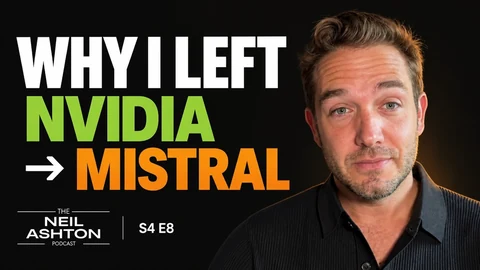
Why I Left NVIDIA for Mistral
Watch on YouTube
Why I Left NVIDIA for Mistral
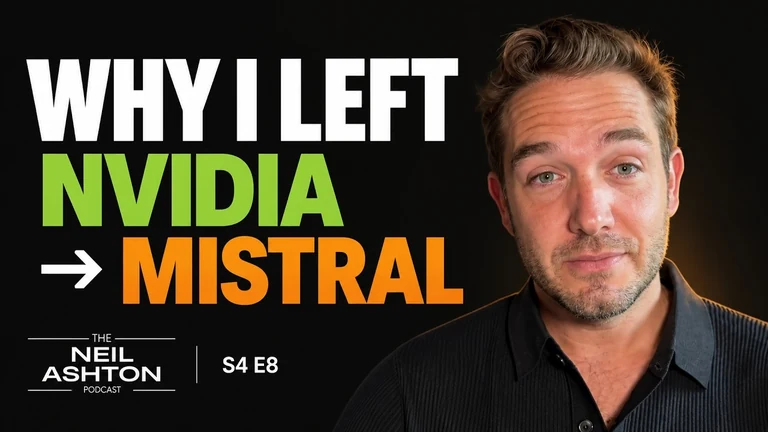
YouTube video
Watch this episode
YouTube is contacted only after you choose to play the video, keeping this page fast and private by default.
Listen to the audio
Episode overview
Why leave NVIDIA to join Mistral? In this episode, Neil Ashton explains his move to Mistral as VP of Computational Engineering, where he will work alongside Johannes Brandstetter on AI for engineering, physics foundation models and large language models. Neil reflects on the career decisions that took him from Manchester and Formula 1 to Oxford, NASA collaborations, AWS and NVIDIA.
He shares what he learned from moving between academia and industry, how open datasets became central to his work, and why the chance to keep learning and build something new made Mistral an exciting next step. For students, researchers and engineers considering a change, the episode also offers a personal perspective on developing a specialism, keeping an academic mindset in industry, and staying open to opportunities without needing to plan your entire career in advance.
Chapters
- 00:00 Podcast intro
- 00:39 From NVIDIA to Mistral
- 01:46 My new role: physics AI and LLMs
- 03:18 Starting out in engineering and motorsport
- 06:26 A PhD and finding a specialism
- 08:38 Getting a first break in Formula 1
- 09:52 Returning to academia
- 11:57 Oxford, HPC and NASA
- 15:21 Consulting, Formula 1 and the connection to AWS
- 19:39 Leaving Oxford and joining AWS
- 21:06 Product engineering, ML and open datasets
- 23:29 What I learned at NVIDIA
- 26:39 Why Mistral felt like the next step
- 29:51 Career advice: stay open to change
- 31:28 Becoming known for a specialism
- 32:41 Podcast plans and closing thoughts
References and links
Transcript
This transcript was generated automatically and may contain errors. Download the SRT file.
Hi and welcome to the Neil Ashton podcast. In each episode, we explain some of the fascinating ways that [music] science and engineering are changing the world around us. We talk to leading engineers from elite level sports like cycling and Formula 1 to some of the world's top academics to understand how fluid dynamics, machine learning, supercomputing are bringing [music] in a new era of discovery. We also hear some of their life stories, their career advice, and lessons they've learned on the way that I hope will be helpful to you, too. So, sit back and enjoy this episode. Hi, welcome back to the Neil Ashton podcast. So, as the title of this uh
episode suggests, I've changed jobs. I've left Nvidia and I'm joining uh Mistral. I wanted to use this episode to talk a little bit more about the reasons for doing it but but more than that go into talking a little bit more from a career progression point of view uh career advice point of view um I've done episodes in the past you know which have tried to give some guidance to people who are maybe early on in their careers uh just after university or first jobs uh and I thought it might be useful a time to reflect and and maybe give some things I've learned uh along the way and to briefly talk about some of the sort
of reasons for me doing it. Um this is in no way a sort of commercial thing. I'm not trying to sell you to to to Mistral. Um I just in the in transparency I I think this actually might be useful for some people to know. So just I guess to get out the the obvious bit which is what am I actually doing? What what have I done? So I've um I joined Mr. as well as the VP of computational engineering where I'll be co-leading the AI for engineering side of things with my very good friend Johannes who I'll talk a bit uh about later on and uh and yeah it's um to summarize it very briefly it's about developing uh physics AI so foundation
models all the stuff that you know we talked about in the fluid intelligence paper um and also the LLM uh side of things and and to be completely transparent, one of the reasons I was so excited to to go to a company like Mistrial was to be right there where these leading LLMs are being developed. And for me, it's an amazing opportunity to to learn and contribute and to to make an impact in that. And that is yeah, super exciting. I'm not going to talk any more uh on on this for now. Um also, like I said, really want this to be more of a sort of general thing. I'm not here to try and sell uh the company. You know, you can
there'll be opportunities for that on more the official sort of uh I guess mistral channels, etc. Um but this I'd like to maybe take a step back a little bit and um and give you idea of sort of how I got to that and what drove some of the decisions. Uh but maybe for some of you who are um like I said earlier on in your career and this might be some useful things. So I I guess this started I did a 4-year mast's engineering um at Manchester University and probably like many of you I really wasn't sure what I wanted to do. I'd got to the end of a degree and didn't know what I wanted to specialize in. Didn't really know what
company I wanted to be at. This was the days before LinkedIn. you know I am getting a bit old now just turned over 40 in fact been 41 soon so I guess this is a while ago and so things are probably different now uh but back then uh certainly it wasn't I mean obvious you know what companies to go to you know just graduate schemes or going to um emailing or people etc. It was quite different uh back then compared to now and um I had been lucky to do a placement with a uh racing team. So Formula 1 was for sure on my mind. I was lucky enough in um to do my fourth year project with this team called Iceport International that was a Formula 2 team.
So the sort of feeder series to Formula 1 at that time called GP2. and I was doing a project to help optimize their rear wing in a wind tunnel and to do some CFD was actually my first introduction to CFD using I think Gambit for anybody who is a CFD person will remember that tool from many years ago and fluent and I more than anything the amazing opportunity was to go to the racetrack. So I actually shadowed a fantastic engineer called Gavin. Um, and if if Gavin's listening, I really should bring him on this podcast. I'd love to talk to her about all those years. Uh, and shadowed and was like a shadow race engineer. I mean,
shadowing in the most thing of it. I wasn't doing that much. Uh, but I was there watching how do they set up the car? How do they decide what to do with a strategy? I was sat on the pit wall uh trying to lift up the signs. Uh, it was an unbelievable experience for someone 21. I think uh at that time also this for people's interest uh Christian her was at that time in Formula 2 he owned the art Grand Prix team um if I remember correctly I remember seeing him at some of the races and Teemo Glock was racing for iceport who later of course had that controversial thing in Formula 1 that racing moment you had Bruno Senna of
course Eton Senna's nephew and um Karen Chandok who now does a lot of commentary on TV. Uh Luca Degrassi was also around at that time I think with art and um and who else was there and yeah several other uh people that I'm um forgetting. It was a great experience. It definitely made me think right I want to get into Formula 1. Um I think I've told this story before but I emailed I think basically every Formula 1 team. Didn't get any response. I didn't know anybody. Had no clue. I was probably not even emailing the right person. I don't think they even had the email addresses on the website. It just felt like an impenetrable thing. [gasps]
And um so for that and linked to various other things, I'd got into the research side. I was given the opportunity to do a PhD and uh as I explained to people doing a PhD basically was do you want to carry on being a student but be paid and do it around potentially formula 1 theme to thing. So, I took that opportunity and I'll I'll skip through I won't go chronologically through every year or it's going to take forever. Uh but um during the course of PhD, I finally felt like I knew what I wanted to go into. I knew that I could be a CFD or computational engineering specialist. That felt [snorts] clearer, which is why
I always I'm an advocate of doing a PhD because I feel it gives you time to know what you'd want to do. you could do lots of other things. Um, in fact, you could argue the reason I'm doing this podcast now is because when I was at university during my PhD, I ended up being um the like subeditor of the newspaper for the university. I got in to journalism. I got into writing and explaining uh things. Something that I didn't do in my undergrad and probably if I'd have left at the undergrad and gone straight into a job, I probably wouldn't have done it. The PhD gave me that sort of time. also gave me a lot of time to meet people and go to
conferences. I was involved in a lot of these European workshops, you know, with EDF Energy, with France, um, with Airbus, with DR and it was a great, uh, experience and Alistair Revel who was my super at the time I owe a lot who sort of showed me that that world and and but as my good friend Alistister West and probably remembers, we I remember saying to him, if I ever say that I want to do a posttock, please like you know stop me. By the end of the PhD I was just like not interested in academia. I just wanted to get out. Uh wanted to get a job. I had no desire to do academia. And luckily because of the PhD
I'd now I think become a sort of specialist I guess and I tried again to get a job in Formula 1. Emailed all the teams. Basically nobody replied apart from um two or three teams. Did a few interviews. Uh a couple I was going into like aerodynamics which wasn't really my thing. Went to one which was Lotus. Applied for an aerodynamics position. Basically they realized that I wasn't an aerodynamicist but the the gentleman Jared said oh but maybe we could create you a position to be a CFD engineer and uh you know we'll do it for 6 months or and then if you know if you do well we'll we'll we'll we'll carry on and um
and that was that was my break and so I have to thank Jared a lot for that. Jared's now I think the chief engineer of Mercedes F1 team or I mean he's very very senior. He basically I think looks after all of the car development arrow. Um I haven't seen him for a good few years. Uh but he he gave me that that that break and so yeah I left sort of left university behind and went into there. Um then only after leaving academia did I reflect that I actually missed it and I realized that even though I really enjoyed doing the Formula 1 job I felt because I've been doing aerospace and I had so much freedom and I felt that I was just getting into
a more like dayto-day job there something didn't fully connect. Uh and so this is why I sometimes give this advice now that don't rule out something. Sometimes you need time to leave to realize that you like it. So it was only leaving academia or leaving after the PhD to go to industry that made me sort of realize the benefits of of academia. And so sure enough, I went back to do a posttock, the thing that I said I would never do, leaving Formula 1 behind, but thinking to myself, it's not like I'm closing the door forever, but I feel I want to become even more of a specialist. I felt good after my PhD, but ironically, going into
Formula 1 changed my mind. I was like, ah, this is how industry does it. All the stuff in academia was great in my PhD, but I realized I'd been, you know, not naive, but I hadn't really understood how the world works. Going into Formula 1 and industry, maybe got ah I think I can now come up with a research direction. I think I know what my research could fix. So I went back to do the posttock uh at at Manchester and uh I actually did it also with CD Adapt which is now Seammens and that was another entry point into the software side. So I actually had a great opportunity to work with the team at City of Appco in Hammersmith in London.
Would go down there sometimes and that again exposed me to the sort of ISV software world and during the post talk it was great because then I would really be going to conferences expanding my network uh even more and that was when I had the opportunity to then eventually move to to Oxford University. uh that was a great opportunity where then I really started to specialize more in HPC uh and that's sort of where all my high performance computing sort of uh an IT I guess you would call it side came in uh to to to everything and that's the other thing that I'd advise is that changing university if you're an academic is good
there's no doubt if you just stay at one institution your whole time yes you can do it but I think it does change your mindset so that's sort of second piece of advice I guess the first one being it's okay to switch between industry and academia and the second one being even within academia it's probably good to change institutions to see a different world to see a different attitude so I had a great time in the Wes Amore who's now a professor uh in the engineering science department was fantastic for me and um and actually that was my opportunity then to go to to NASA because I'd met um Chattin Chatir who was at that I'm the branch chief at NASA
as he he kind of saw that I had this experience industrial experience from Formula 1 which I kind of been bringing in to my research thinking how can we solve some of these problems and he invited me over I think at the same time Jeff Slopnik uh who has now retired from Boeing invited me over to to Boeing to give a talk to them because I think they had a link with F1 anyway and that opened up my world to the US And I've said this before, but this is I've noticed with academia there is like quite often it's almost like a European way of doing thing in the US. I don't know if this translates outside of CFD, but everybody
in Europe that there was this well maybe not Europe, but certainly the UK. Oh no, I think more Europe. There was it was coming from like this incompressible maybe it wasn't so much an aircraft design. it was. So I think that's where open film came out of Imperial very much with this sort of incompressible pressure-based segregated type approaches. Um and that was true at Manchester with the EDF, a lot of the codes were like that. And then you'd go and even if I look at the curriculum that we had, the examples were with those sort of formulations. And then you go to the US and it was all because a lot of it was done through NASA and
Boeing and aerospace. you were taught at Stanford and others more in like compressible density based uh codes and I remember and like overset meshes and all these things I'd never come across before. Uh and that really opened my eyes and it was the first time I saw Silicon Valley and ironically I remember being out in Silicon Valley and thinking oh wow wouldn't it be amazing to come and work here. That was 2016 so 10 years ago. Um uh and I'm sorry if this is boring people but I'm going to keep going cuz I I'm hoping this is also the reason like if you do a posttock you can also try and find those placement opportunities
you can find go somewhere expand your horizon go to a different part of the world just to see do they do things differently uh there and then um you know I I came back to the to the UK kept you know trying to push things um that was I started to do also a little bit of consulting with um with Williams and and Audi and and uh British cycling team. Um ended up doing then some stuff for Formula 1 because um good friend of mine James James Crook um sort of helped introduce me. It's a bit of a long story, but um basically they needed some help to be doing the um the 2022 uh regulations at that time and they were looking to build up like a CFD team. Um
and uh you know, I sort of pitched that I could do the CFD for them. In reality, you know, it probably didn't make sense for them. And so I think they went with um with Total Sim, you know, who have become good good friends, but they were like, well, maybe you could just help us as like a consultant, as an adviser. You know, CFD, you can and HBC, you could maybe stop, give us advice so we know what we're doing. Uh, and so that that was an amazing opportunity to go back into F1 um quite a few years later except now I'm in London with Pat Simmons, you know, an icon of the sport, somebody who, you know, I speak with now
reasonably regularly and someone I greatly admire as one of the sort of amazing brains of the the sport who, yeah, totally gets it, has a very forward uh looking and it was a bit of um a shell shock to be uh in F1 in London with him, Jason uh Somerville who's now deputy technical director at Alpine, Simon Dodman who's now one of the chief engineers at at Cadillac um and and a couple of other people uh and uh and sat in London and Ross Brawn's walking around cuz his office is basically like right next to you. It was very surreal to be to be doing it. Um, and um, it I'm sort of saying this because I never knew that I would work
for AWS or Nvidia or any of these. I thought I would always be just like a CFD person. And and funny enough, during Formula 1, they sponsored AWS or AWS sponsored Formula 1. And at that time, they were like, "Okay, well, we kind of need somebody who can help us maybe on this cloud stuff." And because I got that HPC background from moving to Oxford, you know, I ended up helping basically on the HBC side. And uh and and I've sort of told this story a few times, but I ended up then also AWS said, would you mind helping us? Uh and and you know, Formula 1 were completely fine with it. So I I was sort of helping both people at the same time.
um which which was really kind of a funny situation but it was all done with complete transparency. It was basically like hey can you help the AWS people who weren't CFD specialist help formula one to get all the CFD going and work with you know total sim and others and um and I remember there was like one example where the code wouldn't scale that we thought it was because of the interconnect at the time being slow on on the cloud you know the whole like EFA thing getting into too much details for most people but if you're a HPC personally you know this is a big controversy Ethernet Infinibad and they thought ah it's because it's Ethernet.
So we we basically why should we do this deal with AWS? You know, the performance is crap. And uh and turns out I found out it was uh due to a mesh decomposition. They were using uh hierarchical instead of scotch and I said let's switch to scotch because I'd done some research in the past that shows it scales better. Very very specific thing but basically it showed that then you could scale a and that helped a lot the AWS people. I work with a great guy Lewis Foti on that and and basically long story short the reason I'm blabbing on about this is because that is when AWS said to me would you like a role at AWS you could be our CTF
specialist because we've seen how you've been able to sort of translate and help formula 1 to AWS well we want to go to all these other engineering companies could you be our like you know domain specialist and there there it was there was my opportunity to completely change to go essentially back into industry. It was a very difficult decision to leave Oxford at that time. I was still just starting to get to the point of being offered like a faculty position. Um it I'm not going to be I'm not going to lie to you. It was a struggle. Um I didn't really succeed in academia. Like I see some people getting a professorship straight
away. I I don't know. Maybe my research area just wasn't aligned. I was too industrial. But um I took that very difficult choice to to leave and you know to go to the dark side to go to industry and there it was I joined AWS uh an unbelievable experience in the cloud and it was great because I've always been a sort of IT person. I did an IT A level when I was 14. I was a bit of a geek and so I I got to to do that and those years at AWS were probably the most transformative in terms of working at a you know 100,000 or million person company being in these commercial discussions understanding the sales cycle and the technical cycle like
just amazing um and um and throughout that time I just learned so much I I but I kept with academia I kept publishing I kept doing workshops. Um this whole auto CFD thing I started at Oxford. I carried on carried on publishing papers. I've always kept that academic mindset. Uh and it was a couple of years in that I I wanted to go back even more technical and so I moved from the sales side which is basically where solution architects were into the product engineering team at AWS. and Deborah who's my manager and Ian colleague were were fantastic for that and I I then got into like how do you design a service I saw this how does the
product team work how does the engineering team work how do you do monthly business reviews how do you design the APIs how do you figure out the needs what's going to be the revenue what's going to be the structure of the code how are we going to make this a SAS solution what are going to be the compute requirements EC2 oh my god like sitting in those calls with Dave Brown who I really liked. I think he's now just gone to Meta to lead all their infrastructure. I just unbelievable experience. I can't tell you going to all these big tech companies how much you learn. Just I can't think I would be where I am now without having made that
switch to to to AWS. And that's when I got into machine learning. I was for years kicking off sort of and I probably shouldn't talk too much about it openly just to say there was projects I was um leading where I really got in to machine learning uh the surrogate modeling in a huge way was like so much of my time and that's actually where the drive ML stuff was created these open data sets because I knew that we wanted to develop things and test things and um we needed open data and it was my academic IC mind I could have created that data and kept it internal but I thought no it's the best thing for the community that the entire
community benefits it will help us as well if everything so and I think it has you put the data out it's now become one of the most widely used data sets and it has helped all tech companies to to advance so uh and that was something I did with a ML and winter ML and and I really it taught me I truly believe open source helps everybody Um but I felt like if I really wanted to succeed in the sort of AI for engineering, you know, do I need to to keep moving on? Is there other opportunities? And this is where I had the, you know, great opportunity most recently with Nvidia. I joined to sort of do a not a completely
dissimilar role to AWS to be that I guess domain specialist for for CE now. I I sort of broadened out and eventually also to EDA and joining Nvidia again I felt like another step just amazing to see all of the stuff around the GPU development, the CPU development, um all the the AI development with like Neotron and Vix Nemo, the way Jensen runs the company just like incredible just like another level, you know. Also I guess I was slightly biased to AD as always thinking the cloud going to Nvidia. Then you you saw the other side you know that there is this obviously huge onrem opportunity. I saw now this
in between you know like these neo clouds etc. Um but also loved getting into the architecture. It wasn't my main job but seeing how they make the decisions on okay what should be the next GPU? How do we decide this? How do we, you know, all the benchmark that goes on the, I can't tell you how many super smart people there are at NVIDIA, it's [snorts] nuts. Um, then all of the CUDA libraries, all the stuff that goes in at the lower level, you know, the these enabling libraries that you basically most people don't know about, but are what powers all of deep learning and engineering. [snorts] So, I I was fortunate to still sort of help with
some of the sales side as well, speaking to customers. um uh and and the AI side and the agentic and then working with some of the chip design team at NVIDIA on the EDA side. But probably one of the biggest things I realized at Nvidia was the partnerships. I totally and I think this is a Jensen thing the value of the ecosystem and partnerships and I learned so much from interacting with cadence and synopsis and seammens and you know I've realized the value of the the ecosystem you know that it's not one company can do everything it's a multi-layered uh cake and um and that that was an experience that I sort of saw at AWS but
it was turbocharged uh at at Nvidia and and Uh again I if id have stayed at AWS no way would I have the knowledge that I have now. Not this is nothing against AWS amazing company just like Azure and GCP and all the cloud providers but I definitely felt like I learned so much for Nvidia and to the point that I was absolutely not you know looking to leave. I was very happy um you know that that those inspirational uh figures there you know I had I had a great manager. I was so inspired by people like Ian Buck and um and and Madison and and Carrie and all these sort of and Reb and all these like great leaders, you know. It was so
so good, you know, just felt like every day I was learning. But I definitely felt like I could take another step. That's for sure. Um and when the opportunity when you know sort of Johannes was like you've got to come. You've got to come over. You know this was Emmy just got acquired by Mistral. It's like this is it. We can do it together. Let's let's this is the new wave, right? It's the Frontier Lab company um with Physics AI and you know I really deliberated on it um because as I said you know I I love Nvidia I still do today I think it's an amazing company but I thought this is it. I've never done a startup, you know, as you saw
from me talking about the history. I've done academia, gone to AWS, gone to Nvidia, sold two very big companies. I thought, oh, maybe going to a thousand person company. Yes, I can take a bit of more ownership as well. That's, you know, obviously I'll be transparent. You know, becoming a VP, it's it's a nice thing. It's a nice great progression. Uh being part of a sort of leadership team, but it was still my inner academic scientist wanted to learn. And having the opportunity to get into this space of LLMs, I felt this for sure no matter what happens, I will learn a lot. It will always help you know my understanding
and uh and so yeah I I made the move. I made the move out of a desire to to learn more I guess and a feel like to build something. I should say that's the other thing is that for very good reasons Nvidia and AWS still stay at the say not the top level of the stack you know um they're not making an application per se it's mainly compute and libraries uh and um whereas you know obviously when you go to a company uh that is directly going to customers then it is a a slightly different uh experience and I I kind of fancied the idea of also building or being at a company early on in the day, you know, where things aren't fully defined, where
they need direction and there's the opportunity to sort of build things from the ground up. Um, and uh and I yeah and and then of course I met you know Argy the the co-founders or all the team there and just amazing group of people. Um again for transparency I'm sure there's amazing group of people open a nanthropic this is not in a dig at you know any other uh company but uh but for me the opportunity to work with with Johannes who is also an academic he is a professor we share the exact same mindset of like we're really fastm moving and and pushy and and like you know we know what we want to do but
grounded in science and and rigor and and openness uh and that sort of pro- academic um pro publishing pro open thing is so well aligned uh to myself. So yeah, here I am. I guess uh the advice maybe for others is that you don't know where you're going to go. I didn't have some grand plan that I'm going to join an AI company, right? I didn't even have a plan that I was going to join a tech company. But looking to continuously, I guess, push yourself and be comfortable to take new challenges is is worth it. And for sure, if you go into a a large company, a sort of tech company, I think you can learn so much.
It it doesn't mean that you can't eventually go back to academia or whatever, but I I'm still an advocate of this scientific academic mindset combined with industrial sort of application. So, so that's it. I know I've looking like a clock here went on for half an hour and so I hope that wasn't uh well or maybe it helped you fall asleep. If you listen to this to fall asleep, maybe this did its job. But I just wanted to share um a little bit of my story. I hope again it just gives you a sense if you're younger that don't worry if you don't know exactly where you're going to go as long as you you know have you know what you want to do it what makes you
happy what what helps you to continue to learn don't worry if you can't fully chart out where you're going to go there's a funny way that you can go from place to place and and uh I wouldn't stress sort of too much uh about it you don't need to plan out your whole career right from the Um but be open to change and and be a continual learner. And I guess one thing maybe okay I would say is and I'm biased. It's nice if you can become a sort of expert in something. I feel that that is always going to help. You know there's nothing wrong with being a generalist but I do feel that if you can become a specialist in an area it probably makes it easier
to chart a career path because you you are known for a particular thing and I feel that is probably hard to do without having done a PhD or to be honest even a posttock. Um obviously this is not applicable to everybody but that would at least be my um my personal uh advice. There are many other ways of course and it could be a specialist within your own area right so it might be that you'll in formula one but you become known as the person who's like the AI engineering expert within your formula one discipline. I don't mean you have to, you know, be then going to work for some tech company or it could be in a in a
software company. You could just be great uh that somebody who knows product really well and you you become that that person. All right. Well, um as you can tell, I did slip a little bit with a few episodes because uh all this change has been a bit u been a bit busy. Uh but but rest assured there is uh the podcast will stay on track and I'll try and be a bit better at getting these episodes out more more regular. So if I can um help if people have any questions on sort of career or um things like that or just general advice, feel free to leave a comment. Uh probably on YouTube, I guess. I think you can do it on Spotify,
but probably on YouTube and I'll try my best to uh to to answer. So, I hope you enjoyed that and uh wherever you are, hope you're doing well. See you. [music] [music]