The Neil Ashton Podcast
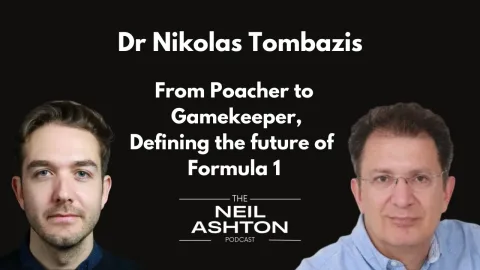
Dr. Nikolas Tombazis — Defining the future of Formula 1
Watch on YouTube
Dr. Nikolas Tombazis — Defining the future of Formula 1
YouTube video
Watch this episode
YouTube is contacted only after you choose to play the video, keeping this page fast and private by default.
Listen to the audio
Episode overview
In this episode of the Neil Ashton podcast, Nikolas Tombazis discusses his journey into engineering and Formula One, starting from his passion for mathematics, physics, and design. He shares how his childhood dream of designing Formula One cars led him to pursue engineering. Tombazis also talks about his experience at Cambridge University and the freedom he enjoyed during his university years.
He then delves into his decision to pursue a PhD in experimental aerodynamics and the valuable skills he gained from his research. Tombazis reflects on the challenges and responsibilities of being a chief aerodynamicist in Formula One, as well as the evolving role of CFD in the industry. The conversation explores the advancements in wind tunnel technology and computational fluid dynamics (CFD) in Formula One.
It discusses the role of CFD as a design tool and the potential for it to become the predominant tool in the future. The conversation also touches on the balance between the technical aspects of the sport and the entertainment value for fans. The importance of teamwork, leadership, and culture in Formula One teams is highlighted, as well as the challenges of maintaining success and avoiding complacency.
The conversation concludes with advice for aspiring Formula One professionals, emphasizing the value of a broad skill set and the potential for Formula One as a stepping stone to other industries.
Chapters
- 00:00 Introduction to the Podcast and Season Two
- 03:38 Nikolas Tombazis: A Key Figure in Formula One
- 04:56 Early Influences and Passion for Engineering
- 08:52 The Journey Through Cambridge and PhD Studies
- 12:57 Entering Formula One: The Path to Benetton
- 18:25 The Evolution of Aerodynamics in Formula One
- 24:06 The Role of CFD and Wind Tunnel Technology
- 38:53 Balancing Technology and Entertainment in F1
- 44:47 The Future of AI in Formula One
- 54:56 Understanding Team Dynamics and Performance Variability
- 01:03:44 Advice for Aspiring Engineers in Formula One
Transcript
This transcript was created from the corrected YouTube captions, with names and technical terminology reviewed. Download the corrected SRT file.
Hi and welcome to the Neil Ashton podcast. In each episode, we explained some of the fascinating ways that science and engineering are changing the world around us. We talk to leading engineers from elite level sports like cycling and Formula One to some of the world's top academics to understand how fluid dynamics, machine learning and supercomputing are bringing in a new era of discovery. We also hear some of their life stories, their career advice and lessons they've learned on the way that I hope will be helpful to you too. So sit back and enjoy this episode. Hi and welcome back to the Neil Ashton podcast. We're in season two.
Wow. I'm, I'm pleased that we managed to get through a whole season, I think 14 episodes. Uh I'm really appreciative of the positive feedback. And so I wanted to try and do an even better job for, for season two. And uh what's a better way than starting a new season with somebody who I think is probably at the moment one of the most influential, powerful, important figures within Formula One. And that is Nikolas Tombazis and he is the single-seater director for the FIA essentially what that means is he is the person who is responsible for setting the rules of the sport and, and works with his colleagues to,
to, you know, set the discipline, the rules of the, the car, speaks with the teams, changes, listens to feedback. He's the one who works closely with Formula One Management uh and all of the partners. But he is the one who is the, the figurehead to deal with the team principals to deal with the technical directors. And along with his team advance the technical and sporting regulations of Formula One. He in this discussion though I really wanted to or for you to learn more about him because I think he has a, a fascinating history. He's one of these people who was one of the first PhD educated uh people with a real sort of scientific background
who went into Formula One starting in the, in the early nineties. Uh It's obviously very common now for that to happen. But back then it, it wasn't so much and he really has gone through, you know, the ticking the box of all the top positions in the teams. He was at Benetton, he was at Ferrari, he was at McLaren, he's won multiple world championships um and is someone who really has probably one of the best understandings of the sport from a technical side and obviously now from a regulatory side. So we cover lots of areas. He he's somebody who I, I really like his personality. We worked together a little bit. Um,
when I was doing some stuff with Formula One for the new rules, you know, about four years ago. And at a time he was a consultant there before he took over at the FIA and he was one of these people I, I had on my list, uh, to speak to, um, before we, uh, you know, when I was starting to do this podcast. So I was really pleased and I, I think if you're a fan of Formula One or not, I hope you'll appreciate the, the, the topic and the discussions. Um We go through in hearing about his fascinating uh life journey. So yeah, sit back and please enjoy this episode with Nikolas Tombazis. You went to Cambridge University.
But when did you know that you were going to do engineering versus let's say physics or maths, you know, specifically what made you want to go into an engineering course? Um Well, I guess I was very um interested in mathematics and physics, which I liked, really, at school. Um And uh I also always had a bit of a design background because uh my father was an architect and um so there was always some form of drawing going on at home. Um And I was extremely passionate about Formula One. Uh So, and my aspiration was to be designing Formula One cars as a kid.
Um and all of those factors I think conspired to make me want to go and do engineering. I was also quite, um I guess, uh maybe a bit arrogant as a youth, maybe I still am and, and therefore I didn't want to do what my dad did. Um I felt it would be to too easy in some ways, even though I have full respect for the profession, architecture. And I find it fascinating. I had too many people. I guess when I was a kid asking me, are you going to be an architect when you grow up? And that probably uh created the opposite effect in my head as a youth.
It's kind of amazing, isn't it? How those reverse psychology or some people you see, you never know if you say to someone don't do that, sometimes it can drive them the other um the other way. So, oh, so you're always into, were you one of these people then as a teenager that was, had that laser focus for Formula One, was watching the races, was really passionate about it. Yeah, I guess I got hooked up to Formula One when I was about 10 years old. That's when I watched my first races. Uh And uh when I was then uh well, in Greece where I come from there was no, there was not always TV, coverage, there was only a few races a year
but I was uh I was always waiting for the newspaper or the, the evening news to see who had won a race and following and so on. And, and, and back then, of course, there was a lot of talk about the ground effect because the Lotus 79 was um dominating in, in 1978. And then in 1979 it was all very much an aerodynamic war between competitors. And, um and there was a lot of drawings in magazines with diffusers and arrows indicating where the air would move and so on. And uh all of that uh intrigued me very much. And uh that's exactly, that's what, what really attracted me. I used to have. Um
uh Well, I still have that, that my best friend from school in those days and, and he was also extremely passionate. He didn't become an engineer in Formula One. Uh but we used to have um to draw our own Formula One cars and try to compare them and say why mine is better than his or his better than mine. So we used to draw cars a lot back then. Yeah, that's uh I guess you, you would be the equivalent now of those people who can draw and have you seen them online where they draw in CAD, an almost exact Formula One car. They're not Formula One designers, but they just have incredible CAD skills that they draw these things, I guess. Maybe
clearly. No CAD. Yeah, indeed. Not even a computer. Now, we just draw um, um, side view, plan view and the cross section of the diffuser and a few things like that. And, uh, but yeah, I guess if CAD had been available then probably would have loved to. Yeah. What was Cambridge like there was that quite a culture shock going to? I can imagine, uh what feels like being in the 16th century? Was that something you enjoyed that you were sort of excited about? Very excited to go there. And, um, and I have to say, uh, I definitely enjoyed it. Um, it was probably the most,
um, careless period of my life in many ways. Uh, um, it's, I was doing something I enjoyed. I didn't have to do subjects that I did not enjoy. Like at school, there were some subjects I did not enjoy that I had to do being at school. Whereas at Cambridge, you know, just in engineering which almost everything I enjoyed. Um, it was my first period away from home and parties and, and, uh, living with other young people, uh, you know, in close proximity. Yeah, it was quite reasonably hard work but I wouldn't, compared to other stuff I've had to do in my life. It was probably
with hindsight. Yeah, it was definitely the easiest period of my life. I know. I always think there, I don't know if you ever look back and well, not regret is the wrong word, but you do fully appreciate university. I think it's that sweet spot because you're right at school, you have no freedom really. You're kind of told what to do. You have to do the things you're in, you're in a work scenario when you're in your early twenties and you're kind of told what to do normally, especially nowadays, university, I guess, is that sweet spot where you have enough freedom? Usually they kind of say, well, if you don't want to go to lecture,
well, fine, whatever. It's, yeah, it is a freeing period, isn't it? It is. Yes. And, um, and again, you're 18, you're away from home. You don't have to ask permission to, to do almost anything and you're doing stuff you enjoy. Um, I must say when I was there, I felt quite shocked by some of the professors who, you know, sometimes you get to speak with a professor who was maybe 70 years old or something like that. And you'd ask him where he'd been to college and he'd say, well, I've been to Cambridge and I did my PhD at Cambridge and then I became a fellow and then I, and so there are these guys who have lived there for
like, 50 years and, um, that, that one I must say did not attract me. I am I happy. I haven't stayed there for 50 years. Um, but, uh, I can see why some people have done that as well. Yeah. Well, yeah, that's true. That's sort of uh, I've met a few professors who don't drive, um, because they've always lived in college accommodation and probably similar to you. It's like this and they just cycle around all the time. It's almost like watching an Inspector Morse or one of these, uh, programs, you know, live in a bubble, don't they? And some have never moved away from that bubble. Um,
I'd say obviously life has its trials and tribulations and, um, and maybe, maybe they've understood things much better than we have. Yeah, I was gonna say like it's not such a bad lifestyle. Um But you, one thing that intrigued me is especially when you did it. Um A lot of people who are really into engineering or, or even fast forward to now really are desperate to get into Formula One the first chance they have, they'll try and go. You went on to a PhD. I, I'm just wondering what drove your decision? Was it a quest just for more knowledge? Was it a strategic thing of doing it? What, what, what was the reason that you then went to go down the PhD um route?
Well, um well, first of all, I will say conscious that we're talking about uh whatever now, um sort of 35 years ago or whatever that I fully acknowledge that things may have changed since then. And what, what decision back in the eighties or nineties isn't? I do not imply that and I, I didn't feel at the time that just a three year degree was enough in some ways, in many other countries, um, you know, three year degree would be associated with. Uh, I don't know, lesser studies of some sort.
And then, so I had one was that in my mind. So I guess I always had in mind that I was going to do some form of postgraduate study. Um, I had heard that uh Imperial College where I went for my PhD had um sort of quite a few people had gone into Formula One from there back then and I felt that it was going to be putting me in a good position. I also felt that maybe the amount of aerodynamics I had done at Cambridge was not that much. I mean, I had taken all the aerodynamic options I could, but I felt I could do a bit more. Um So it was pretty, I, I didn't, I didn't actually even try to go from Cambridge into
the Formula One team back then. I, I only started looking for a job in Formula One during my PhD during the latter part of my PhD, more accurately. And what was the focus of your, your PhD in the end? What, what was the main it was uh experimental aerodynamics? So I was working in a wind tunnel and I was studying uh the wakes of bluff bodies and the vortex shedding and how the various 3D effects that occur naturally. And, um, and, uh, I guess what I got from the PhD was not the, actual knowledge of vortex shedding from bluff bodies and
that honestly you can read it up. Um, and ok, I guess what I got from it was that I had to do a big project which was standalone. It was, I had to deal with a lot of issues whether it was instrumentation or writing software back then to analyze my data or designing my models or instruments that I would put in the wind tunnel, sorting out basically everything and having to, to then think a bit like or try to provide some original theory of some of trying to explain what you're seeing and understand what it is you need to do in order to investigate it.
So for me, it was more the thinking process or learning the thinking process more than the actual specific topic I was studying that I felt was neither here nor there. No, I, I um I totally agree with you. I felt, I don't think your conclusion is entirely wrong about the three year thing. I, I know when I speak to a lot of my sort of European colleagues that, you know, the four or five year standard degree or master's or, or rather let's put it around the other way, people who do end up going into a PhD from a UK background sometimes struggle a little bit in the first year because they hadn't had the same amount of knowledge
as people who have done longer degrees. Um, but the, the other way works as well that if you were to leave after just three years, uh, you wouldn't have necessarily had the same length of study time and individual projects and things like that. So, I think that's still, um, it holds true today, at least in my opinion. Um And you were probably, would you not say one of the few—there were far fewer people, I would say having a PhD going into Formula One in the early nineties compared to. Now, was that the case when you went to Benetton, were you one of the few people who had done a PhD or was it actually already quite common
uh in Benetton? I think there were very few. Maybe it was me and one other guy in, I remember, structural mechanics, I think, I don't think there was anybody else there. And back then, of course, there was a lot more um people who'd grown through the ranks and uh been mechanics in their youth or, or whatever and uh as well as quite a few engineers, of course, um in aerodynamics back then. Obviously, aerodynamics in the, let's say in the eighties or in the, or even the late seventies during the Colin Chapman, whatever the period I described as a kid aerodynamics was evolving very much um empirically and
I don't think people who did it really had that much knowledge about aerodynamics. So there were people who were quite successful aerodynamicists back then who actually had very little formal knowledge about aerodynamics. I think when I arrived in the scene in the nineties, it had become, it was beginning to be more um accepted that people needed to, to actually have understood aerodynamics a bit better. And certainly there was, there were a few other people also from Imperial College who had gone into Formula One back then. The big difference to now, of course is that um when I arrived at Benetton, I was the second
aerodynamicist. Um uh So basically, my boss was head of aerodynamics and me as junior aerodynamicist and um most teams had two or three, or maybe four aerodynamicists in the bigger teams. And uh and maybe the small teams had one aerodynamicist. and as a consequence, the opportunities to enter Formula One were much fewer back then. I felt it was a double edged sword because um nowadays, I think people enter, I think it's probably a bit easier to enter now. A lot of competition, quite hard needs hard work, but their career progression afterwards is a bit slower because a lot slower,
it's unthinkable for somebody to be, I don't know, chief aerodynamicist. At 26 I was chief aerodynamicist. I was going, I mean, nowadays, I think if they're lucky and very capable, they will be maybe that sort of position at 35 or something like that. Um So I think it was arguably more difficult to enter back then. But once you entered, I think if you had some sort of level of competence, I guess your progression was a bit more rapid. And I remember back then, even I had this feeling for the generation of engineers who were in Formula One since the seventies, they were all sort of chief designers, technical directors, you know, they,
they had designed everything from nose to tail and they had a uh I felt that for many years there was a quite a gap in Formula One because there were these divine heroes in my perception in the seventies who knew how to do the whole car and all the young people like me or other people arriving, um didn't have exposure to the whole car and it was difficult to see how they're going to expand one day and so on Clearly. I guess biology contributed to that. They retired or went out of work, and then you had to step in. Yeah. I mean, that is— so you went from Imperial, so you went to Benetton
was Benetton. Where was it? Was it in Enstone by that time? Um Yes, I think uh well, when I started working, which was end of 92. They had moved to literally probably a month or something like that. It was very new. And uh and yeah, I, I my interview to be accepted at Benetton was done at a previous factory. And then when I started working, it was a new one. What was it like at a personal level? Because, um, you were in Cambridge then, I guess in London and then you were coming out. Did, did you have a bit of a shock moving to this Oxfordshire countryside Cotswolds from the sort of big city of, of London? Was that sort of
a move um, from a personal side, uh I guess a bit, but I, I was obviously a lot younger than I am now and I had quite a lot of stamina and I, all my social life, I remained in London. Uh I found a house uh in a place called Wheatley, which is uh quite close to Oxford, and quite close to the M40. So I could easily get into London within about 50 minutes. There was fewer speed cameras back then. Um And uh I was about 20 minutes from work and I would go to London almost every weekend.
Usually I'd probably go into London probably once midweek as well to meet with friends and stuff like that. And of course, we had the wind tunnel, we were using a wind tunnel at Farnborough back then, which was a little bit closer to London. Still. So, so, so, yeah, my, my, I never had any real social life in Oxford or, or in that area. All my life was in London, which is, I always find it a little bit unusual and I know there's some historical reasons for it that these Formula One teams, other than a couple of exceptions are all within this 40–50-mile radius of each other. Do you find that? Uh And then when I speak to some younger people, they hate it because they're like,
oh God, I'm moving out to the countryside. There's no, you know, there's just these old pubs around, hence why you went to London and I think others sometimes want to be close to a city. Um It does create a weird dynamic though, doesn't it, it all being in just this one part of the world, do you not think? Yeah, I mean, it's understandable technically why this is the case because the, um these teams um indirectly and unwillingly sort of collaborate with each other to some degree nicking each other's personnel. That's exactly what I was alluding to that, I guess as you can just jump to another team and still stay living in the same place
when I found my house, I chose it strategically. I bought a small flat back then when I got my job after a few months. But I thought, well, it is close to Oxford. Um If you look at where the teams are Benetton and, uh, the various other Formula One teams, Williams was a bit south of Oxford back then and so on. So I felt that I was covering a reasonably good circle. Of course, then I moved to Italy afterwards, so I had to sell my house. But, um, but yeah, initially I thought, yeah, it's quite a strategic choice. But in the end life came about differently to the point that I, um,
if I go to a pub in Woodstock or, or somewhere, it's, I'm always surprised how often you'll see somebody and I think it's probably best not to, it'd be hard to have a secret meeting, you know, when people are deciding to move teams because you'd have to pick a pub that no one else is going to go into. I'm sure there's been some conversations, uh, overheard for sure. Um, so you were, I mean, that was incredible. You joined in 92 and then, and then by 94 you were essentially the head of aerodynamics or the chief aerodynamicist Yeah, the latter part of '94, so two years after I joined, I guess I was the chief aerodynamicist.
actually. That's almost unbelievable. You know, now people never become head of aero—they're 15 years in and still trying. How was that? Were you always used to leadership positions? I know it sounds a strange way. Were you comfortable in that sort of responsibility? Yeah, I don't, I don't think, I mean, I, I'm not saying I'm necessarily, I'm good or not good at leadership positions, but I didn't have a, um, I mean, I enjoyed what I was doing very much. I was a very hard worker. Um, it was a passion for me as well as a profession and I, I think I was half decent. So,
so, um, all of that was ok. I always felt that people who are cutting up patients on a, on a surgery table or something like that have more responsibility than I had in many ways. So, what I mean is maybe less publicity and maybe, but, but still, I think ultimately I always felt yes, it is a lot of responsibility but it is, we are still doing sport or something a pastime, almost, for a lot of people. So it, it That doesn't mean I ever used that as an excuse to say to somebody, ‘Well, don't worry,’ you know, we, uh, my boss,
but I always felt that ultimately we are, uh, you know, we are still doing something that is fun. And, um, so, yeah, did, um, what was it like though? Going to that first, you know, few days at Benetton because as someone who was really into Formula One, that first few days of being in it, was it everything you hoped it to be? Was it a bit less, you know, what was the feeling like those first? Well, I remember driving, uh, up those country lanes, um, on the morning of day one. And of course, that was pre GPS and, uh, trying to find my way around. And I remember driving and, and thinking now, finally I'm going to
learn the truth. You know, I'm going to ask all the questions for why, uh, this is done in this way or that way and why is the car shaped in that particular way? Why is this particular duct and so on? And, um so I remember asking when I arrived, you know, the first day I went to the wind tunnel and say, why is this like that? Why is it like that? And I got a lot of answers along the lines of uh well, you know, we've tried certain shapes and this is the best one. And uh and I've got no idea why this works. So I guess my um yeah, my imagination of perfection was
damped very, very uh uh and, and people nowadays, I think struggle a bit to understand it because nowadays, you have such near perfect simulations that people can see the flow can see almost every little vortex, every little eddy or something like that. Um Whereas back then, of course, we didn't have that and therefore to understand what the flow is doing, it was extremely difficult. And people of the previous generation hadn't pursued as many aerodynamic, you know, studies, and therefore a lot of it was empirical. So
my, yeah, my my dream was shattered quite early but not my enthusiasm. But I mean, and I also realized very quickly that it's very difficult that you still need a lot of empirical approach. Even if you've done a PhD, it's not your PhD doesn't immediately tell you what shape to do or anything like that. So you still have to spend a lot of time understanding things. I, I must admit, um, I had that reaction when I went into Formula One and I, I think I've seen others that the only the problem with doing a PhD in a way is that you have become an expert in your area, you become almost a little bit opinionated because you've been a sole person working
and sometimes the temptation is to go in from academia to industry and instantly question, you know, why aren't you doing this? Why aren't you doing that? And um but conversely, I found that, that um practical pragmatism is something that is just almost essential within industry, isn't it? There's a certain amount of this thing that, you know, the ideal world is in academia. But if you only live in the academic world, you don't really see how things are really done in industry. And that's what I personally have found. People who go into industry do see a more rounded view of, of sort of design in the world um maybe different back then because
they didn't have some of the simulation approaches. Um but yeah, I, I can see where you're coming from. Well, as I say, what I was impressed, what I was not impressed with on day one was the level of aerodynamic understanding. I felt it was low. What I was on the other hand, impressed with was the very intense programme and empirical approach and getting the job done. And that very much compensated. And for sure if somebody arrived on a high horse and said, this is what the theory says. Uh one wouldn't be successful, one had to do a lot of empirical things. And I have to say in a bizarre way, my PhD because that was the previous question
helped me because in my PhD, I had to design my experimental apparatus. I had to design my traversing gear to write little bits of software to analyze data, to um take algorithms and fit them into my programs to do. I don't know, Fourier transforms and stuff like that. So all of these things um I felt were extremely useful to my first years at work probably more than the actual knowledge I learned about vortices and uh bluff bodies. Yeah. No, no, I, I can see exactly. And I guess at that time as well because there was so few aerodynamicists, you had a bigger impact, um you know, potentially and you were driving the change.
One question I did have is back in that time, you were probably, I guess at the crucial starting point of when CFD, when did CFD start to be used? Was it in those early nineties or was it when you moved to Ferrari that it was really more predominantly I was tasked with starting the Benetton CFD programme. And, uh and they did quite a lot of work there. Uh to say that the CFD work I did actually benefited the car would be probably quite wrong. Uh I think I, there was very little, if anything at all, that was CFD-originated
and so on. Um I, I learned a lot about CFD and about why things are more complicated than CFD. So I think that benefited me in later stages of my career when I was at McLaren and Ferrari and so on. But initially, I remember I was doing 2D simulations for wings very soon. I realized that it was pretty hopeless and um and I was writing some routines to change wing shapes and stuff like that and try to optimize. But basically, I didn't have a, a package that would tell me whether design A is better than design B in a reliable way. So that was pretty hopeless.
Um I guess back in the nineties. Uh And, and I was using the uh how do you call it? The, the, the ancestor of Fluent was a package called RAMPANT. It was done by, I think the company was called Fluent, but, but the package was called RAMPANT initially. Um then I, I felt at that time and that was a common phenomenon in the nineties that people doing CFD felt they were a bit too cut off from the real action They were like boffins on the side
and felt they were too detached. That was common back then. It also happened to me at Ferrari when I was in a senior position, people doing CFD would come to me and say, now I want to do wind tunnel work back then. Um So yes. Uh uh back then, I guess the most useful CFD um process back then was panel methods. Um panel methods were numerically, of course, a lot less dense. Uh You could design really reasonably well 3D shapes on wings like front wings. And um we started doing some panel methods then I was promoted to chief aerodynamicist in late 94. So
I moved much more. My focus was much more into the wind tunnel and so on. Okay. And is it um which would you say has advanced the most from a practical, making-a-car perspective? Do you think it's the wind tunnel technology since the nineties or the CFD technology? I would say the CFD by probably quite a considerable factor. I mean CFD has multiplied by, I don't know hundreds if not thousands of times in usefulness. Uh uh Whereas wind tunnel was pretty useful back then, of course, still very useful. Um clearly technology
has evolved massively, but the basics are extremely similar. Um whereas uh back then, you know, CFD, like back then was like a, like an abacus compared with now. I want to, I mean, this is jumping forward a little bit, but just while we're on the topic, um I remember there was a lot of discussion about this, particularly during the sort of Manor period in the Virgin team. So there were some of these challengers who tried to do more of a CFD-only approach. And obviously, now there are a lot more topical discussions around the role of wind tunnels and CFD. Do you see a future where CFD, you know, could be the only or the predominant design tool or do you see that there is a,
a role for wind tunnels and experimental methods almost always in this sport? Um Well depends. First of all, if you talk by, by the team's free choice or by regulation, of course, depends which way your question is. Uh I guess the prospect of CFD being the only development tool I think is I believe is becoming quite realistic. Um I think you will always need to have a very strong correlation for them. And I believe that therefore to have a periodic correlation um opportunity,
I think will always be necessary because you can't expect just to do CFD and to get a bad surprise when you arrive at the track. So you will need some form of correlation. I think that is a realistic prospect that it could happen. You mentioned Virgin and back then I was, you know, when they were making a lot of noise about. Uh Well, actually we're going to do it all in CFD. I felt it was naive. Uh I however, was thinking back then, we were worrying a lot about, I don't know, curved flows. Um If you go many years further, back, back in the mid nineties, I believe at Benetton and we were probably the first
to do serious work in yaw and the role of yaw and steer. We were the first to go away from the straight ahead to yaw and found that yaw was giving so much performance that we had to develop a lot of them. I think that was a trend that then subsequently got copied by everybody. But back in the sort of mid two thousands and late two thousands, we were worried about a lot more about wheel shapes, uh and tires and tire deformations and um hot flows, um um curved flows, all sorts of parameters of this sort of nature that clearly could not be simulated in the wind tunnel properly. And therefore, I remember thinking
uh well, maybe they, they have correlation issues, but at least they can simulate the full, you know, the full monty only to find out when I did my brief stint at Manor um that actually at Virgin they were running just half a car straight ahead. So therefore, I think they had the worst of both worlds. They had just a straight-ahead condition to, to the best of what I've been told, I never saw any data, but somebody told me that was what they were doing and no correlation. Clearly, I think they had underestimated the difficulties that are posed by open wheels. But how, I mean, obviously I'm a CFD person, I'm quite biased in wanting to see more CFD.
But then equally, I can understand a, an argument of, well, how does it make the sport better? How do you balance? And then the other argument is, well, Formula One should be the pinnacle of technology and we need to be pushing all things forward like CFD and other things. How do you balance in your head? This thing between it's a sport. It's all about just how exciting the racing is versus upholding that Formula One is the pinnacle of engineering. It's trying to be always using the latest methods. That's why companies want to sponsor it. You know, how do you balance those two? That's a very good question and a very
difficult one. It's a very, very fine balance because as you, we do have, uh obviously we do rely on public watching us and, and the main client of Formula One is the fan on the grandstand and they must watch an exciting race, exciting championship. Sometimes we succeed, sometimes less so. Um I think fans don't want to see Formula One become like a one-make series. I think they are interested in the fact that it is a Ferrari fighting against a Red Bull, against Mercedes, against McLaren, etcetera, etcetera.
Therefore, there has to be a competition for technological stuff. And at the same time, Formula One needs to be pure. Uh when I say pure, I mean, uh we don't want to have uh let's say Balance of Performance of some sort, try to handicap the fast car or something like that. Um And fair in that respect. And also we, we need to, to reduce costs. Um And in the last period, uh we all have an obligation to remain relevant from an environmental point of view and, and so on. All of these key targets, entertainment,
technological, uh you know, environmental um cost uh sustainability in that respect, all of these are mutually incompatible to some degree. Uh So as any, you know, mutually incompatible um set of equations with many equations with sorry, too many unknowns with too few equations and vice versa, um Too many equations with too few unknowns. The the solution is, is always, let's say what one perceives to be a best fit, not uh it's not um it cannot be too much in one direction or the other. Um And that is a very difficult part we have
in my current role for us at the FIA is really having, let's say an agenda to protect the sport as much as possible and to make it grow and to keep it to achieve those objectives, we have the the team participants, you know, team principals, for example, the the the bosses of the teams who also love the sport and want it to be healthy. But they also at the same time, they want to win. And they in the discussion, they, they look at both, they look whether this particular rule is going to benefit my team more than their team. They also look at whether the sport is going to grow. Then you go into discussions with the engineers who also look at the interest of the sport
and, and it's all very legitimate. But every participant and every stakeholder in these discussions has a slightly different angle to why they, they believe the sport should go in one particular direction or another. Um sorry, we can't make it just a playground for who is designing a car. Uh It can't be um just a playground for, for an aerodynamicist, for example, um or, or an engine designer or anything, but also it cannot be one-make. There's a middle ground somewhere that tries to, to, to identify the correct areas where we want to have competition, to what extent, and the areas where we don't want to have competition maybe
and so on. And clearly, we always want to keep the driver very, um you know, a key part of the, of the competition because ultimately the fans want to see humans racing against humans. I am still amazed when I, you know, have some friends message me who are really into Formula One and they love the intrigue about the engineering stuff. It is one of the things of Formula One, isn't it that people, even if they don't fully understand it, and there's probably very few people who truly understand what's put on the car and the real reason, you know, there's a lot of people who write about it but a lot of people don't actually understand it
but it doesn't matter because they love the intrigue. Don't, oh, have you seen the new rear wing of that car? It's, it is almost part of the sport, isn't it this technical? Although we need to be very conscious that if it was just that, yeah, and no entertainment then we'd be all looking for another job. Yeah. And probably, maybe we're all a little bit in our own bubble because probably most people we speak to are engineers and they're the ones, there are a lot of people who don't, um, understand any of that, even avid fans. And some years ago when we were discussing some regulation changes, there were some, um, teams,
some principals who said, uh, that's going to make all cars look, um, very similar to each other. And we, I remember somebody did a rendering of the previous generation cars all in white and asked the team principals to, to recognize which was their own car. In most cases, they couldn't even tell their own car apart from the others. And the reason however, that we, we don't have cars that look a lot more different. It's not only whether the rules are more restrictive. That is one part of the reason, the other part of the reason is that, um I think it's very much what we've been discussing for the last one hour.
It's the level of simulation. Um The, the amount of simulation you do nowadays, um There's no way you would design a car with six wheels even if it was permitted. Um If it wasn't much better or, or if it wasn't clearly better in simulation or indeed, uh if it was better, probably there would be ten cars with six wheels and suddenly there would be a rule saying, well, actually you must have four wheels. But what I mean is there's no way you would design something that is so far out of the ordinary with a, with a low nose or, or completely different things like double diffusers or, you know, all of these, either successful or unsuccessful
um things of the past. Nowadays, the level of simulation is so so fantastic that you can't just use your gut feeling anymore or, or your instinct or some sound knowledge, but you just need to simulate and a lot less is left to chance nowadays, which leads then on to the I guess, logical question of AI in a lot of industries, there have been breakthroughs in drug discovery, weather forecasting where with sufficient amount of prior data, machine learning models have been trained and shown to actually give as good or faster, you know, predictions. Is this something that you sort of see as almost a natural evolution, just a CFD,
wind-tunnel thing? Or is that sort of a, a sweet spot here? You know, you have to be careful that you don't have a team that's, you know, blasting money on training AI models. And as you said, being able just to automatically design a car almost, you know, where, where do you see that future going when it comes to AI in the sport? When I think it's, I think it's uh unavoidable. It will be playing a more and more dominant role in this sport. I don't think there's, I don't think that clock can go backwards in that respect. There's a lot of things, uh which happen, which
are an indication of progress. Um, not only in the sport but in life in general, which in many ways have made life better in a particular way, but have made life less fun than it used to be and so on. And, um, but you, many times you can't go back, I'm pretty clear in my head that kids having computer games and Game Boys and, and, uh, you know, online games is a lot less, uh, fun overall than playing in the woods. And, uh, you know, building houses out in the garden.
Um, and I think it is a bit and I, I went, I mean, my kids are now old enough that I don't have to have this concern, but I had a moral dilemma about whether they should get a game boy or a computer game or something like that. And, but at some point it became impossible to resist the tide of that thing happening. And I think the same applies to what we've been discussing about simulation. Simulation has removed a lot of the intuitive or a sexy part of creative, creating something different. And, um, and, and AI has, I think a similar
connotation, I guess, um, I don't think these things are things that can go back really. I get, yeah. So I guess for you more, it's more just how you manage it and make sure that teams because I guess the challenge you always have is you're not dealing with a, and this isn't meant to be offensive to the team. You're dealing with incredibly competitive people and teams who will go, who won't stop just for the sort of moral or ethical reason, but will go to the limits of the rules, essentially. Um, that seems to be my impression of sport, you know, there's, it's a, it's a tough, it's like any other sports people are so passionate that they will just go up to the line,
I guess the difficulty for you as an organization is just how you frame it in a way to protect it from the excesses that they may do. Yeah. Um I think that will be evolving in the next few years. Clearly, we also are going to be using more and more AI for policing and for detecting breaches and, and so on and so forth. So, uh, it's, it's a bit on both sides, I guess. Yeah. Yeah, it's the million-dollar question. You're in a unique place to maybe answer this. People always wonder, what do you think is the reason you have a team, let's say Mercedes or it could be McLaren in the past. It doesn't really matter who have been going really well,
had a great car won world championships and then the next year usually, I guess because of a rule change, but not always, they then start to do really poorly, is it? But they have the same people sometimes. Does it suggest that Formula One, whilst there's lots of simulation, is just such a complex thing that people truly have still not really understood how to design a Formula One car. And so there's so many risks that you can just go off the wrong path. You know, why is it that they can suddenly go from great to terrible. First of all, I'd rather not speak specifically about. I've lived in a similar, um, I've lived similar experiences as, you know,
working for a team when it's been winning at one time and then doing badly at another time. Um, I guess, well, first of all the gaps nowadays are very small and therefore what you call doing terribly is maybe three or four tenths of a second a lap. As you say, the, there's, um, usually quite a lot of accumulated knowledge that it is difficult to undo and, and sometimes the rule change contributes to that, um, you know, being nullified and then almost people starting again. Um It's extremely difficult to not become complacent. I think if you're winning,
um, people do become complacent by, by nature. Um I find that myself as well. It's, um, you know, it's easier to, to underestimate sometimes the task at hand. Um So I think it's all of these factors that, that can contribute. Well, how much this is my theory, I'm interested to know if you agree with this a people thing. How much do you think of it is a ultimately this wave of people. So somebody gets lured away to another team by the fact that somebody else goes to another team, somebody else replaces them. Maybe the people below didn't like that, they got replaced. They don't, that causes some bad thing. Then the other person leaves like,
how much do you think of this weird thing is this going back to the other question of all the teams being so close, they jump around. How much do you think this is also like a people thing rather than technology and that who you have as your leader can actually make a genuine difference because of the potential for people to move around. And I think I would tend to agree. I think the people thing is, is very much part of it. And, um, yeah, I, I mentioned it as complacency, but complacency involves a team maybe stagnating. And, um, but on the other hand, it could be that you lose two or three key personnel and then the new people,
you know, working together don't quite manage to click together properly and so on. I remember when I was, uh, I'm digressing a bit but when I was at Ferrari, um in, and I was chief designer in that period, we won two championships in 2007, 2008. And I was feeling particularly chuffed about that and we had, um, the company had organized for some of the senior managers, some sort of leadership training and, and they were, they were, and I remember doing these sessions with all my group, like my senior
people in my group. And there was about seven or eight of us and I remember they gave us a task to do. It was like a bit of a role-play-type game type task where you had to produce an outcome. And I remember we sat down very much like we do in a meeting and we said, ok, now what's the task? Let's do XYZ and so on. Um uh these things that some people were giving us, tasks are less important. These things are more important. Let's vote. Ok, bla bla bla, so we, we delivered the results quite quickly and I felt we were going to get good grades. I thought we'd get good feedback. These, um, people who are organizing this course,
these external psychologists and stuff and they gave us a little bit of a blasting. They, they said, oh, no, it's, it's all too easy. You, you guys are too complacent. You know, it's just these things you had to choose between to make your decisions. You should have had a much more intense debate and higher level of tension in your group to decide. You shouldn't have just steamrolled through the, the easy solution and you should have debated it far more. And off the back of two championships, I felt, come on. What are these guys talking about? Then 2009 came, which was a very bad year for, for us. And
I remember thinking that actually, and understanding a bit more what they were on about. Um, I think it's, it's not only people liking to work with each other, it's also challenging each other on which and, and sometimes challenging each other sometimes comes with not liking each other if you know what I mean? And, and what is the right balance between getting on and agreeing or not getting on and disagreeing or, or how do you mix both? I think is very much, uh, one of the difficulties I know. It's one of these things that I must admit, I think when you're early on in your career, you do think, oh, this is a load of rubbish.
You know, this is all this psychobabble, talking about all this psychology stuff. But I don't know. At least, the more I progressed through my career, the more appreciation I had for the role of the culture you set and like how much level of disagreement or agreement you allow. And I think it can have more of an influence than people realize on sort of a team. Absolutely. And I remember in my early career, uh I'm going to speak ultimately very positively about two individuals. I have huge respect for and therefore, uh uh I'm sure if they happen to listen to this. I had my, my two bosses in my early career were uh Ross Brawn and Rory Byrne.
And in my Benetton days, I remember um I was thinking that Rory was chief designer and he was basically creating the car and Ross was a more managerial leadership type role. And in my Benetton days, I definitely, if you'd asked me who's actually responsible for the results, I would have 100% said Rory. And I still believe Rory had a massive input and was very, very good at what he was doing. So as the years moved by, uh I realized actually that Ross had also an extremely important role of a different nature, which in my early years, I, I really underestimated and then I
understood how important it was probably more after we moved to Ferrari, for example. Yeah, I guess you needed, maybe also as well. You needed to be in a senior position yourself to fully appreciate, you know, what others are doing. Did you ever, um, you've obviously been in Formula One now? I mean, essentially your whole career and it does seem to be a trend that people stay in it, but I would imagine has a part of you ever, you know, wanted to go off and do a start up in California on eVTOL or, or, or do something completely different. Have you, do you still have the sort of bug for Formula One even to this day? Is it that strong
within you? I definitely have still got the bug um, I, I wouldn't say it is a bug that prevails over everything else. I have seen quite a lot of people who've left and done start ups or different things and are very happy and content with that. Um I also know quite a lot of people who have a better work life balance than I have. And therefore, um, I certainly wouldn't see it in as absolute a way now that I perhaps used to see it 10 or 20 or 30 years ago. But I still enjoy it and I feel very fortunate to be doing it, so maybe uh a kind of final question for you or area
really about what you would advise to people and you must get asked questions so much, but I'll try and be more specific with it around getting into Formula One. Is there, first of all, the PhD route, I would call the becoming a specialist route. Would you, would you advocate for that? Is that somewhere you would look for if you were sort of hiring people? And secondly, what about this balance between the Formula One knowledge or the motorsport knowledge versus the science or the technology? It's often a question I get asked like, should I do a motorsport degree? Should I do work experience in motorsport or is it more
important to have the sort of science and the technical knowledge? Ok. There's, there's obviously more than one way to skin a cat. Now, I do get asked this a lot and I do speak with young people who are in this phase of their studies quite a lot and they ask me such questions. Um So what I say is my opinion, it's not the only way. Um I don't think a PhD is essential. Um and it's not uh if you consider three years versus a master's of one year,
does it vastly improve the chances? I would say, I think a PhD has this degree of flexibility that if you happen to find a job at the right moment, you can more easily jump ship and more easily uh move into your job without maybe completing a PhD, which is very inadvisable. But, you know, people would do that. I'm not, I think I prefer more general, more generalists than specialists overall. Um I don't think it is essential to do a motorsport course. I think, um,
you know, doing a general engineering or, or something like that is at least as good. And then what prevails in the choice is the quality of the university rather than the, whether the course is a specific motorsport course or not. What I do however, recommend a lot to young people is I give them two bits of advice. One is my opinion of course. Uh that if the university has a Formula SAE type activity, I think it is strongly advisable that they do that. Um If you want to get into motorsport, of course, because uh doing it, uh indicates that they work hard, they can work in a team.
Um They, they have spent a huge amount of time doing that as well as studying for their degree and getting the good grades. Uh I was asked a question by one guy. Um, what's more important: do Formula SAE or get good grades? Well, you need both. That's very common in Formula SAE, because they get obsessed with it. I remember telling him, no, no, if you, if you're going to do it and then have bad grades, actually, then you're worse off. Um, so you need to do both and if you manage to do well in both it means it gives a message to your employer that, look, you're a hard worker. And uh and so, so I definitely advise that.
Another thing I advise is that the world is changing and we don't know what it will be like in 20, 30 or 40 years from now. And people should uh always have a plan B as well. And uh and make sure that what they study and what they do doesn't lead only into motorsport, but can lead into a variety of fields in motorsport. So I consider it's, it's good luck to be in motorsport. I, I've been extremely fortunate. I'm not sure if somebody who is now 20 who, who will be still working in 45 years from now, probably when he's 65. I'm not sure if he can rely on,
on just motorsport being his breadwinner. So I think it's important for people to keep to, to have a wide range of skills and abilities. Yeah, it is. Uh that's really good advice. And I, and I, what I find as well, maybe it's because of what we spoke about right at the beginning: there are so many people employed in these teams and it's hard to progress, you know, because I guess it's like a triangle, you know, sort of structure, isn't it? Um I usually say to people that, you know, yes, be passionate about getting into Formula One, but it's, it's also a great stepping stone. So many people have gone into Formula One and become
experts and then exported that into others. I think one of Formula One's greatest exports is its talent. I know you often talk about technology but I'd say it's more the people if you look at Tesla and Rivian and all these sort of exciting companies and you look at who's the person who's head of aero or chief designer. It's almost always someone from Formula One. It's, it's kind of incredible. It has been a great exporter, hasn't it, in talent? Even if you don't make it in Formula One or decide to leave it. It's still a good stepping stone, I suppose. Yeah. Yeah, I agree. Yeah. Yeah. Well, thank you. Really appreciate it. I know you're a busy man.
And as this is probably your first day back, there's about a million emails. I have to close with a mini boast. Uh I think sometimes um my biggest contribution to the sport I think was I believe I was the guy who initially originated the idea of the August break. And so, so Um Thanks to that, I don't have a million emails and I have only a relatively manageable list of emails to go through. But nonetheless, I'm trying to remember what it was all about. So that's a good thing. Right. So people, whenever they're, you know, disappointed in the FIA's decision, they should thank you for actually giving them a nice break
over August and it was done for, back in my pre FIA days. So I proposed it when I was at Ferrari and I proposed it when I came back when I, I think I would have thought about it when I was flying back on a plane. Uh, a bad holiday, which was full of phone calls and emails and trying to um manage between my little kids at that time and phone calls and working on a report and I had a really lousy holiday and I remember thinking that's just stupid, you know? It was a good decision. Okay. Great. Thanks so much. Really appreciate it. Nice to see you again. Keep in touch
then.