The Neil Ashton Podcast
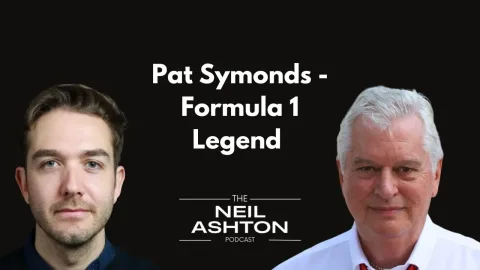
Pat Symonds — Formula 1
Watch on YouTube
Pat Symonds — Formula 1
YouTube video
Watch this episode
YouTube is contacted only after you choose to play the video, keeping this page fast and private by default.
Listen to the audio
Episode overview
In this episode, Neil interviews Pat Symonds, one of the most well known and respected engineers in Formula One. They discuss Pat's career in engineering, his time in Formula One, and the evolution of the sport. Pat shares insights into his early motivations, his work with different teams, and the challenges he faced.
They also touch on the growth of Motorsport Valley in the UK and the potential for Formula One teams to be based in other countries. In this conversation, Pat discusses his experience in Formula One and the challenges of being a technical director. He emphasizes the importance of continuous learning and the ability to make compromises in order to achieve success.
He shares insights into the culture at Williams and Benetton and how it impacted their success. Additionally, he discusses the future of Formula One, including the use of AI and ML, the potential shift towards sustainable fuels, and the role of motor manufacturers.
Transcript
This transcript was created from the corrected YouTube captions, with names and technical terminology reviewed. Download the corrected SRT file.
hi and welcome to the Neil Ashton podcast. In each episode, we explained some of the fascinating ways that science and engineering are changing the world around us. We talk to leading engineers from elite level sports like cycling and Formula One to some of the world's top academics. To understand how fluid dynamics, machine learning and supercomputing are bringing in a new era of discovery. We also hear some of their life stories, their career advice and lessons they've learned on the way that I hope will be helpful to you too. So sit back and enjoy this episode. Welcome back to the Neil Ashton podcast. So really excited. Actually, this is one of the interviews I was
planning to do when I created this podcast. In a sense, these are the sort of individuals that I really wanted to speak to and for you to hear from, because I think they're that blend of engineers. But they've been in such privileged positions, such unique positions that they sort of give you an insight into a world that very few of us get get to ever see. So, Pat, uh, I worked with him on the Formula One sort of next gen car programme. That was the 2022 change in rules. Uh, and so for a couple of years, I you know, I worked quite closely with him, and I had a huge amount of respect for his technical knowledge, but also his leadership and and just the kindness that he has towards individual He,
uh, he works with and very much a sort of, um, future thinker. I think there's a a bit of a trend in Formula One that sometimes people can be a little bit conservative and and sort of not always adapt the sort of latest methods. Um, which is I know a bit ironic to say that, but but but it is true. It's quite a conservative business. Uh, whereas Pat's always, uh, thinking about the future, which, which I really like. Um, now, we actually did this interview a few days before he announced that he was actually leaving Formula One after seven years, uh, as their CTO and actually has moved over. Now it's executive engineering consultant to Andretti.
Uh, this happened a few days afterwards, so we don't discuss it, uh, in the talk, but it's kind of interesting. Uh, to know that after after doing this this interview, um, we we go through lots of topics, as with any of the guests I've had. You know, I, I feel we could have spoke for many more hours. Uh, but we start from the early days. What motivated him to get into engineering into Formula One? Um, I love hearing the sort of the stories and the way that Formula One has evolved, you know, particularly the way the paddock was. And you know, not this, uh, amazing show that it is today, Uh, but something, you know, more like a Formula two or Formula Three.
of course. When when he started his time moving through, um, Toleman to Benetton to Renault, of course, with Michael Schumacher being the race engineer and then sort of discussing, rising through the ranks and almost a reluctance in a way to go into these very managerial positions because he was such a an engineer. Um, of course. He then went on to have time at Virgin, then Williams for a few years. Uh and then, of course, we formed new one, and we talk about some of the some of that project of of changing the rules. And we talk a little bit about his vision for the future where he would like, uh, the sport to go.
So, I, I think he's someone who, um I think people can learn a lot from He's had an amazing career. And it's not over yet. Not at all. He is super ambitious and still has so much energy. So, yeah, I really, uh, hope you enjoy this, uh, this episode with Pat Symonds. Um, we've known each other a little bit, and I can't think of many people who have done as much as you have. Um, but was this all planned? Did you have some grand vision when you were 1516? That you would be winning world championships and being technical directors? Did you always want to be an engineer? Yeah, I think it was 12. Actually, not 15 or 16. And it's interesting because, um,
many years ago, someone asked me, Was there a point where you really decided what you wanted to do? And I said, no, not really. You know, I. I grew up. My my father was, uh, an engineering officer in the Air Force, and, uh, he loved cars. He loved racing. He loved aircraft. Uh, and so I sort of grew up in that engineering environment. And that was every weekend, sort of helping him take his car to bits, pull it back together, et cetera, et cetera. But, um and therefore I thought, you know, I want to get involved with this, and I want to design cars. And that was certainly when I was, uh, by 1112, You know, knowing this and
my father used to take me to races. We lived up in Norfolk, so we'd go to Snetterton, Uh, quite often. And, uh, I think you know, the the real turning point to me was, uh, good Friday 1967. Believe it or not, there was a, uh, a race, uh, at snetterton that day and been to many races before. But this particular one, it was an international, uh, all the top drivers were there. It was the first race of, uh, a new formula two, formula. And there were GT for in the support races and all these wonderful cars, and I thought, Yeah, this is something I want to get involved in. And, uh, yeah, I was I was quite focused. Now,
of course, I didn't think I'd get into racing the way I did, but that's perhaps another story. But I certainly decided that I wanted to design cars and B that I wanted to work for Ford because Ford were, you know, they were everything in motorsport in those days. And, you know, that was such a great motorsport history, Uh, and so worked my way through school and, uh uh, applied for an undergraduate apprenticeship with Ford, which I was lucky enough to get. And that really set me going. No mechanical, definitely. And, uh, in fact, when I I did my my Ford undergraduate apprenticeship,
I actually did an H and D first rather than a degree, because my a level results hadn't been quite what I needed them to be. Um and so I did my HND in mechanical engineering and then, uh, I. I did a master's in automotive engineering, So I had that sort of background of, uh of mechanical and then went on to do automotive and my sort of specialisation was vehicle dynamics. Then, uh, of course, this was in the days long before there were any motorsport engineering type courses, of which there there are many now, but, um, yeah, that that was my My aim was to to go and work for Ford and design road cars. But in actual fact, by the time I I graduated, it was in the
in the mid seventies. In fact, when I finished my HND, um I looked at what was going on at Ford, and it wasn't a great time in the British motor industry. It wasn't a great time in Britain, to be honest, but, uh, Ford were were really in a bit of a transition. And Ford in the USA had sort of decided that that Germany would do the cars and Britain would do trucks and vans and things like that. Uh, and that didn't appeal to me much. And in addition, they'd very much gone into this sort of component engineering very specialised thing. So you know, you you could be the guy who who knew more about tooth cam belts than anyone in the world.
But you never really got to to design the whole vehicle. So it wasn't that appealing and that that's actually why I went and did my masters to sort of hope that, uh, the industry would would pick up a little bit. But at the end of that, it it still wasn't looking good. And I went to Cranfield, and, uh, when I was at Cranfield there, there was actually an advertisement appeared on the notice board in in the university and, uh, looking for someone to help a little company called Royale, uh, who wanted to do a Formula two. Carl and I thought, Well, I'll go and play and see what happens. And so I went and did that. And I met Rory Byrne, who became quite a big part of my my life later on.
And, uh, I got the job. Uh, I thought, that's great, you know? And then I found out what motor racing's really like. Because, of course, as soon as I got the job and, uh, I decided I wasn't working for Ford anymore, the sponsorship money that was going to build this Formula two car disappeared. So absolutely. And so the job disappeared. And but by this time, you know, I got the bug and I so I just wrote to everyone I could think of and said you know, I was graduating and I wanted a job. And I actually got a job with Hawke, who were a competitor of Royale making Formula Fords, Formula Ford, two thousands, uh, down in south end,
and I went to work there, and, uh, it was a bit of an eye opener, actually, because, uh, I arrived and there was a little porter cabin and I said, OK, this is where you're working. And I walked in there and there was no one else there. So I realised then, you know, I was the designer. There was no one else straight out of the university. And it's like, Oh, OK, where do I start? And I started by by sort of saying, Well, look, you know, I've learned a lot of engineering. I've learned a lot about vehicle dynamics. Let's let's see what we need to do with the with these cars. And it started off with the Formula Ford car,
and, um, they ran on on Dunlop tyres. So I got a hold of Dunlop and I said, I need some tyre data and they said, Oh, well, I've never been asked for that before, but yeah, we can we can get some. So I got some very basic tyre data. And I did, uh, you know, a few calculations because I didn't have a computer or anything like that. In fact, actually, when I was in south end, uh, working for Hawke, I actually enrolled at local technical college on a welding course. And I did that because, yeah, I wanted to learn too well, but also, it meant I could use a computer. Uh, and so I, I wrote a suspension geometry programme. And,
uh, it was that attitude of when you'd done a masters. You'd gone, you know, was was motorsport at that time, predominantly people who hadn't almost gone through that path. It was more sort of old school. Yeah, a a absolutely, um, I. I was very lucky in a way, because I was one of the the first sort of academics. You know, who who who got involved now that that's that sounds a bit grand. Because, of course, there are a lot of people around people like Patrick, Colin Chapman, they, they they had degrees, a lot of very, very clever people as well. But there was still an awful lot of people who who were the sort of traditional engineers self taught, particularly track side.
Um, but yeah, I I I'd actually done automotive engineering. I I I'd specialised in vehicle dynamics, but I'd done all the other modules as well. Uh, and so yeah, I. I started to apply that sort of thing, and and the cars were actually very successful. In fact, the first race I attended in a professional capacity was the form of the Ford Festival in 1976. And, uh, we finished 1st, 2nd and 3rd in that, and I thought, Oh, OK. This is easy how wrong I was. I mean, it's anything but easy. Um, but yeah, uh, I I did the formula Ford car there, the form of Ford 2000. I did a Formula Three car, um, which
was run by Jan Lammers, in the European Championship. Uh, it wasn't terribly successful car, to be honest, it was, uh it was a bit overweight, and it took a lot to get the the weight off the car, but you know it it it was competitive. So it was a great way to start. Uh, and then things progressed, I guess because Uh uh. Hawk was it was a fantastic place to work because, you know, we had a big machine shop, big fabrication shop. We were doing everything, um, but it, like so many times in motorsport, you know, finances were strained. And after the paycheck bounced a couple of times, you sort of think, Oh, I wonder if there's something else around now
at this time, it's funny because it goes back to that advertisement at Cranfield because Rory Byrne was chief designer at Royale and he was, uh, going to Toleman. He was leaving Royale Toleman were going to build their own cars in Formula Two championship. Rory knew all the Toleman people, so he went off to do that. And he recommended to Alan Cornock, who owned Royale, that perhaps I was the guy to take his place. So that's what I did. I moved to Royale and did a few years there, which were very, very successful, actually. Formula for Formula 2000, we didn't do anything beyond that, but, um, we set a record for the number of races won in a year. Uh,
we built a Formula Ford 2000 car that I think the first time it got beaten was sort of end of August of that season. It was It was a really good time. And ultimately it led to When Toleman decided to go from Formula Two to Formula One, they asked me to join them on the Formula One programme. So it's interesting, because in those early days in in 76 when I graduated, um, and I I said, Right, I'm gonna do a three year programme. I'm gonna three years in motorsport. Then I'll go back to a proper job. And I'm on year 47. Yeah, that's that's kind of were you watching form one at that time? Were you sort of a big fan of the sport or were you?
Do you know what I mean? Were you always obsessed with P on, even while you weren't in it? Yeah, yeah, yeah. No. Always a big fan. You know, the the bedroom wall had all the pictures of the latest 49 things like that, you know, going back to the the sort of sixties. So, yeah, Al, always a big fan of of racing. Um, even when I was at school, we formed a motor racing club and we used to go off to races. In fact, quite an interesting story was that, um when I was at school at the end of one summer term. You know that last week when you're sort of talking about things you're going to do and one of our our teachers said, OK, what are you guys going to do when you leave school?
And one of my friends said I'm gonna be a racing driver, So I thought, Well, II, I say I'm gonna design racing cars. So I said, I'm going to design racing cars and and we got laughed at, um, but actually, the joke turned around because that guy was a chap called John Village and, uh, in probably, I don't know, 1979 1980. I designed the car that he won the European Championship in. So, uh, we did actually achieve what we what we said we were going to do. That's that's amazing. You know, I was just gonna ask you before we maybe, um, move on a little bit. You know, during those times when you were starting. I think now,
if you were to join a company and you didn't know something. You could just google it. You could look online. You could when you were put into that situation and you didn't know how to do it. And it sounds like a very practical question. But what? What What did you have to do at that time? Was it going to the local library? Was it? How did you get that information? Yeah, I mean, it really was difficult. Uh, and, uh, it it is amazing what you can Google, and and you know how that can sometimes mislead you, but yeah, you You did just that you went to your local library and and you looked it up. You know, all your stress calculations came from Machinery's handbook, and,
you know, there were well thumbed copies of that and, yeah, that was an expensive sort of book, but you had to have it because that was your basis for all the formulas and things. But of course, you had all your college votes and referred to those a lot. So then, Tom And what what was the progression like there? So they were then trying to get into Formula One, right? That was those times. So what was that experience? How did you move? Yeah, it again, You know, very, very different then the teams now are huge, and they take on a lot of graduates. And, uh, there's a lot of progression through the teams and what have you.
But when I joined Toleman, I was employee number 20. So there were 20 of us. We had an ambition to go Formula One racing. And we had a a lot more ambition than we had ability, I would say so. Toleman had had just come off the back of a very, very successful Formula two season. They built their own cars, Um, brought Pirelli into the sport dominated Formula two season, Uh, in 1980. And so they decided in one to go Formula One racing. And I think the sort of people involved Ted Toleman, who died just recently, uh,
Alex Hawkridge, who was the what we'd now call the team Principal Rory Byrne, Chief designer. Very, very ambitious people and lateral thinkers. So when they went into Formula One, they said, OK, we're not gonna just follow the the route of building a car, putting a Cosworth DFV in the back, bolting on Goodyear tyres and running around with the rest of them. We're we're gonna look at where things are going, and we're going to do it differently. So I guess the first decision was they needed a turbocharged engine. There were not many turbocharged engines around at the time, so they said right, been successful with Hart in Formula Two.
So we're going to turbocharge the four cylinder engine. Um, it's something you'd hardly dream of doing these days with with this sort of knowledge you have of how complex the combustion is on those engines. Um, they decided that they would bring Pirelli to Formula One. But even then, you know, not do it the simple way. But everyone was running 13 inch wheels then and we thought, Well, you know, why are we on 13 inch wheels? It would be much better if we could get onto a 16, uh, inch wheel. We can get bigger brakes in there. All these sort of things, even the the monocoque. We decided not to do a carbon monocoque.
We would do an aluminium monocoque aluminium honeycomb. But whereas most people were sort of taking sheets of aluminium honeycomb, they were routing out a little bit folding it and and glueing it together. We we actually made the monocoque in the same way that you would make a carbon monologue. So we first developed the skins. Then we used film glue honeycomb, uh, or put it in a an autoclave and built it as if it was a carbon monocoque. So, you know, trying to do everything right. And it was an absolute disaster. You know, the car, The car was just dreadful. It was so slow. Um, in fact, in 1981 most races we didn't even qualify for because in in
in those days, it wasn't like today where it's where you only have 20 cars, you know, we had an awful lot of cars and not many spaces on the grid. So we used to have qualifying, uh, to get into qualifying, if you see what I mean. In fact, sometimes it was even pre qualifying to allow you into practise. So it was a pretty disastrous year. Um, and and I think from memory, we only qualified for a couple of couple of races. But what was it like, though? I'm just trying to bring it to the current time. So you said you were obsessed with Formula One really into Formula One. You'd been in Formula Two before. Do you remember those moments when you first went to,
like your first Formula One race as an actual part of the team? You know, when you go into the paddock was or had it become almost normal by then? Well, yeah, that's interesting, because in 81 which was the first year Toleman were in Formula One, I didn't actually race engineer, uh, the Formula One cars that year. Uh, we had done a deal with Lola whereby they were going to produce the Formula Two car and because my job was sort of set up the wind tunnel model and all this sort of stuff because the first Formula One car had been built without a wind tunnel model, even, um, set up all the R and D facilities and things like that.
I didn't have time to go to the Formula One races, but I did actually have to do the the support on the Formula two races. So that year I was running Stefan Johansson in the Formula Two car, um, and really supporting Formula One at a at a distance. So the first Formula One race I I went to, um was actually the first race in 1982 in, uh in Brazil. And it's, you know, it's one of those. It's sort of serendipity, Really. We we went there. We were still using the 81 car. Um, we've done some modifications to it, uh, which we hope will make it a bit more competitive. We had
just got the car in the wind tunnel at the end of the previous year. So we hoped, you know, we we were going to at least be qualifying. Uh, went to Brazil. We didn't qualify. And so there was a bit of a meeting on the Sunday and Ted Toleman and Alex Hawkridge said, Right, we’re going to change things. Um, Rory and John Gentry. Who's the other engineers? Slash designer. Uh, it was decided they were going to stay back in the UK, and they were going to design a totally new car and I was going to run the team. So my first sort of really proper Formula One race, and by race two, I was sort of in charge So it was. It was really being thrown in the deep end, which is actually,
there's nothing wrong with that. It it What was it like? Was there a bit of a cos I can imagine the more established maybe teams or the people, and you come in there. I'm just trying to get a sense of what it was like in the paddock or the people around, you know? Was it? Well, it Firstly, it's very, very different. Yeah, the teams were much smaller. I. I said that when we started in Formula One, I was employee number 20. By the time we went racing, we were only in the sixties or something like that. In fact, I I've actually got an organisation chart, uh, somewhere from that year. And I think there are about 63 people in it, and
that includes everyone. You know, That's the, um, the receptionist, the truck driver, everything. Um so the teams were quite small. They were nowhere near as professional as they are now. Uh, there's a lot more sort of camaraderie. The people were pretty friendly and and of course, we weren't a threat, you know. In fact, we were a joke. So it it it wasn't as if people, um, were against us. There was a bit of friction because this was the time when there was what was known as the FISA–FOCA war. So FISA was the predecessor of the FIA. Um they were supporting the sort of manufacturers, the Ferrari Renault, Um, people like that were in the the
FISA camp. FOCA was a Formula One constructors association which Bernie was just sort of taking over. And these were all the people who were running essentially the the the sort of, um, the cars with the DFV in the back. So, you know, you could go and buy a DFV. You could buy a a Hewland gearbox and, you know, you could build your monocoque and go go racing, which is what a lot of British teams were doing. So there was a bit of a split between that, and we were on the the FISA side and we'd gone with the turbo engine and everything, which was one of the differentiators. So there was a little bit of friction in that respect, but but still,
you know it it it was ok, but it It, You know, the the professionalism I'd see in a formula Ford team today was above what we had in Formula One in those days. You you you worked under an awning that was side of the truck. You you didn't have motor homes or anything like that. Um, you didn't have these fancy pit wall stands. You had to, you know, you just stood by the pit wall with a stopwatch and and things. So it was a totally different world. So then, um, how did that, then? Progress on. So was that now in Witney that where was the It was in Witney. That's right, Witney in Oxfordshire. Um, yeah, we We had, uh,
3000 square feet when we started, and then we took over about another 2000. So, you know, tiny little units and that was everything. You know, that was manufacturing. That was the race team that was R and D. It was inspection. It was buying. It was all cramped in there. Um, I mean, over the years, we took on different units in in Witney and sort of expanded around there until we built the the new factory at Enstone But by that time, you know, Toleman had become Benetton, and there was a bit more money in in things. I had a broader question to us at that point, though, if you look now, even though Formula One is arguably one of the biggest sports in the world
tonnes of money there is an unusual location of teams in 50 mile radius of where we are now. Do you know how that started? Why that? Yeah. People call it Motorsport Valley, and people have studied it. People have written about it. Um, the Motorsport Industry Association, the MIA actually coined the phrase Motorsport Valley, and I think it really started. Um, from March now. March were, uh I guess going back to the seventies, even sixties. Maybe they they, um They were the largest racing car manufacturer in the world. So if you wanted a Formula three car, a Formula two car sports car, you went to march, they made these cars.
And I think that then, um, that really spawned, uh, a lot of subcontractors around people who knew the sort of standards that were needed. People left march and they started up on on their own um so it it sort of grew organically if you like. So then if you if you wanted to build a racing car, well, actually, you might as well be in in sort of Oxfordshire and Northamptonshire and that sort of area. Um, because that's where the skilled workers were and it was easier to get them and and these things, then they grow said organically. It's actually virally. They they they grow because, you know, one generates another
and, um, it's still true today. I think that, uh, you know, if you if you want to build racing cars and you want the right people, you want to be in that area, Um, I mean, many years later, when I was doing consultancy work for Marussia— well, Manor— when they entered Formula One, they were based up in Yorkshire, and so when they took me on as a consultant, the first thing I did was move them down to Oxfordshire because then you could get the, uh, the employees that you wanted. Yeah, it wasn't an example. Maybe I'm mis, uh, misremembering this, but I thought there was an issue with Caterham. Something about they were in Norfolk but they
were struggling to recruit people and they moved up. Am I right on that one? Yeah, that's right. Um, yeah, they were. They were originally did start up in Norfolk. Of course. Lotus had been up in Norfolk in the old days, but, um, that was really pre Motorsport Valley. Uh, yeah. And Caterham moved down to Leafield, um, just three miles from Witney, actually, and and Oxford, Uh, and, uh, yeah, suddenly it became a lot easier. And, you know, even the even Ferrari have had a UK base for for many, many years. And, uh, yeah, uh, the sort of people know about the Guildford Technical Centre when John Barnard was there and a lot of the
work was done done there. But in fact, they've had a research group based in Oxford for many, many years. I just find it interesting just how this centre or thing, and any team that's tried to almost go away doesn't really seem to even like has, you know, it's Banbury Way, isn't it? Has are in Banbury. Yeah, it's true. And and it goes beyond that, you know, even the FIA based in Geneva, They find it difficult to recruit the experienced FON people. And, uh, of course now a number of them are actually UK based. So the aerodynamic group that you and I worked with, um, when they moved from Formula One from Formula One management to the FIA.
Uh, they didn't go to Geneva. They stayed in the UK. Mhm. Do you think? I mean, um, O on a kind of related note, a little bit, You know, the expansion of Formula One into the US, arguably things like drive to survive and others. Now, I work for an American company. I remember in 2020 Not many people really knew about Formula One. I would speak to my colleagues in the West Coast. It was kind of like, Yeah, we can't know about it, but it wasn't fast forward to now, and they're obsessed with it, you know? They're really into it. The logical conclusion, Uh, logical thing of that, I guess, is around teams Do you think there will ever be an opportunity
where Formula One teams can be more based out of the US? Or do you think there's a just a fundamental challenge, you know, beyond has, you know, really being successful. I don't think we can be complacent in the UK. Um you know that that large racing car manufacturing base that we had has more or less gone? Um, the largest manufacturer of racing cars now is Dallara in Italy. Um, a lot of the sort of formula regional cars are made in France. Um, so we shouldn't ever be complacent about it. But I, I would say at the moment it's still quite difficult for the teams that aren't UK based.
Um, you know, S in in Switzerland. Um, Toro Rosso, who are in Italy and Italy, has its own little Motorsport Valley. But even they are moving, uh, their design group over to the UK. In fact, have moved a lot of their aero people to the UK. Um, just because, you know, that's where the talent pool is. Um, so can it go global? I mean, it's a global sport, but, uh, I see no reason why it couldn't be, uh, have teams in the USA because USA has a good racing heritage. And again, they they have this sort of subcontract, uh, base. You know, supplier, base and supply chain is good there,
so absolutely no reason why it couldn't happen. Uh, these days, out of the 24 races, the only a third of them really are in Europe. So there's no there's no logistic reason for it. Um, and race cars don't really come back to base between races anymore, Uh, because the the schedule is so hectic. So, uh, I. I don't think the geographical location matters much in terms of logistics a little bit in terms of supply chain, but there's a good supply chain in Italy. There's a good supply chain in the USA, Um, so it then comes down to the, you know, the talent pool. Yeah, I just I don't know if you've noticed that quite a few of my
friends or friends of friends have almost left Formula One some of them, and moved to work at places like Tesla who have gone out to California. And there's there's actually a lot If you look at these Tesla's rivian. There's an amazing Formula One sort of, uh, group of people who moved over there. And that's why part of me was wondering, would a Formula One team ever actually base out of there? Yeah, I think that's a slightly different thing, because, um uh for example, Peter Jones, who used to work with us, went to work for Ford in California as an AERODYNAMICIST. And I think part of the reason we're seeing a bit of a migration now is that is the cost cap,
which was introduced into Formula One. So there was a time preco cap when Formula One wasn't sustainable and teams were were going broke. Teams were living on the breadline, um, really struggling to be competitive, et cetera. Part of the reason for that was that actually, you could earn a damn good salary in Formula One. and engineers were getting paid much more than they get paid. Working for these sort of exotic car companies or even people like Dyson Dyson were taking a lot of aerodynamicists recently, the Costa came along, and there was a bit of a shift in the profile of Of the teams, the the sort of more expensive guys were
harder to justify to have so many of them. You know, a lot of graduates are coming in on much lower salaries. You could have a lot of graduates working for the price of one of these more senior engineers. So, uh, I think a lot of the senior engineers said, OK, you know, we've had our time in Formula One. We'll move on to other things. So I, I would say it's more to do with the the cost cap than anything else. Yeah, which I guess in some ways it's good of graduate students that they're getting a chance to go to, sort of get more easily in, or there's more desire to have them. Yeah, I think I think that's true. You know,
there was always a place for the graduates because the teams are expanding so much. Um, yeah, going back to my my sort of experience when when we were at Benetton and we were working out of these sort of ever expanding industrial units in Witney. Then we we built the the new factory at ends, the factory that Alpine are in now, Um, and I remember when we built that going into the design office and thinking, How on earth are we going to fill this? You know, it is just enormous. And I guess at that time we were about 250 people at Benetton and I've been over there recently quite often, actually. And, um, firstly, you'd hardly recognise that that old design office,
because it's been pushed in every direction. There are so many new buildings there. Uh, and of course, the teams are, uh, are employing around 1000 people. So in that expansion, there was always plenty of room for the graduates. Um, of course it did. Sort of Asymptote it at a point where you know, they they didn't need to grow anymore, Couldn't afford to grow anymore, Didn't want to grow anymore. Um, because it gets very, very difficult to manage these these big teams. Um, but I guess I guess now, you know, the graduates can get in for a different reason. Probably. It's a little bit more difficult for them to to rise up through the food chain.
Uh, and it'll be interesting to see in in 10 years time just what the the scene looks like. Yeah, I guess. Um, you know myself and probably others have of our generation in some ways are slightly jealous of your generation that you probably had it harder in a way cos there was less people, but it seemed because there was less people. It was if you ha, if you have a talent, you can take on more responsibility. And there was more ability to to become a leader of a team Where I guess now, you know, as you say, if you've got that many people statistically the chance of a graduate making it all the way up to a technical director.
Yeah, I think that's probably true. Up to a point. But I think the biggest difference is that when I started, you had to be a multidisciplinary engineer. You know, I. I studied mechanical engineering, automotive engineering. I specialised in vehicle dynamics. Uh, you know, I did the other courses. I did structures. I did engines and transmissions and things like that, but but not of a great deal. But when I went into the workplace, I really did have to teach myself, Um, you know, from that day, walking into that porter cabin in 1976 and realising there was a drawing board there and no one else and I had to just get on with it,
uh, right through to you know, my time in Formula One. so with Toleman OK, we need to go. Wind tunnel testing. How do we do it? I don't know. Let's go and find out. So you go and find out now. I remember in those days, actually, um, I'd said earlier we didn't really have access to computing facilities. And I remember in the early eighties, uh, while we were in America, I bought my first computer, which was a Hewlett Packard. An HP 85 1st sort of little desktop. Um 01 of the very first desktops. This is pre PC. You know, people might think there wasn't a world before, uh, before IBM came along with with personal computers, but
it was and it it was, um it was a device that had its own little screen on it. Little thermal printer on it. It had, uh, 32 K of memory, which I expanded to 64. I got this thing back to the UK, and I thought, What am I going to do with it? So I'd written a suspension programme while I was at at at Hawk. So I put that on it, um, programming in basic, because that was the only language on it and decided to mechanise the wind tunnel. Now, if I'd known what I was doing, I would never have done it. But it seemed like the right thing to do because, you know, we had a manual balance on on the winter. Um, but it had some load cells and put some load cells on it.
And then I got an I triple E interface that I could plug into the into the HP 85. And I could start reading, uh, these load cells and things like that. And this was in the days when you know you you were programming. You come across a problem, you could phone up Hewlett Packard and say, Hey, I've got this problem and they say, Oh, try this. Try that. You know, it was a different world, But the fact was that, you know, I was able to learn that, um, later on, you know, when when aerodynamics was really becoming the thing, I had to sort of teach myself aerodynamics. I was one of the early adopters of electronics on the cars, um,
building data acquisition systems. I wasn't an electronics engineer. I was a mechanical engineer, but I appreciated how I could exploit electronics. So I needed to learn a bit about them and I needed to employ some people. And so I really, you know, right through my career, I've had to learn new things. And, you know, II, I do talk about, you know, my my my hobby being knowledge acquisition. Because I just love learning new things. And I think that's what keeps you going. Unfortunately, in Formula One these days, um, we have some really, really highly qualified, really clever people, but sometimes very specialised.
So when you talk about this sort of progression and how do you get to be a technical director or chief technical officer or something like that? Uh, there are some people, you know, I. I could name them straight away, who I think absolutely have the intellect to do it. They have the engineering ability to do it. What they don't have is the bandwidth. And there are plenty of people who know they're subject to the nth degree, but they don't necessarily know how to make a car go fast. And I know you're an aerodynamicist, so I'll try not to be too rude about aerodynamicist. But, you know, there, there is a thing with aerodynamicist where
all that matters to them is that the best number they can get in the wind tunnel and one of the things that I I lecture to students is I try and lecture in the application of what they're learning into the real world. So a single number getting a C_L of 5.5 on your car. That's not what matters. What matters is getting a map that you can use, uh, so that the car can be set up so that the car has good characteristics, where wherever it is again. And I'm not getting an aerodynamicist. But, you know, I've had I've had people, in fact, even quite recently, who have come along. And they said, Look, we've got this swing profile. It's absolutely fantastic.
It will produce X Newtons of load and you look at it and you say OK, so what structure are you going to put in there to support this X Newtons of load and they go, Oh, yeah, it's a bit thin, isn't it? Yeah, it is a bit thin, so you know you need if you want to get to a technical director level. If you want to get to a CTO level, you need to know how to make the compromises. And you do that by by understanding the the total car. You need to know what gives you performance and, you know, for for any engineering problem, which in our case is a set of Formula One regulations, there is a singular answer. We never, ever get to that singular answer.
But the guy who is most successful is the one who knows how to compromise. He knows which compromises to make he knows, and that that compromise might be a financial one. It might be a, um, a pure engineering one. it might be a resource one human resource, you know, just knowing how to bring everything together, but fully understanding what gives you performance on the car on the track, under every condition. Well, that's one. I really would love your insight in this. So maybe using examples from, you know, the Benetton days, Um, I always say to people, it seems all in a way that you can have a team doing amazing
for several years and then do terrible and I often wonder, is this a something just to do with not fully understanding just the immense complexity of turbulent flow over a car and all. It's just not a solving problem. Is it a people problem? Like why? Why is Formula One not just, uh, sorted? We know how to design a car where some teams come out, so it's it's awful. Now, how could that happen? Do you have time? Yeah, I know exactly what you're getting out and been through it and it both ways. You know, I think when I went to Williams, Williams had been ninth in the championship. I attending teams for a few years. And
I remember Frank saying to me when I went there, he said, I want you to turn the nine upside down. What? You've got to aim at six. And yeah, I did. I did the normal sort of 100 day thing, you know, 100 days of looking at it all. And I thought, I think we can do a bit better than that. And and I realised that, you know, I had a lot of very clever people there, some very good people, but they weren't working as a team. They didn't know what the objective was. And there was this terrible culture there, um, I guess two aspects to the culture that there was that this is the way we've always done it, which, you know, you can't
have in any business, I don't think, and particularly something as fast moving as Formula One. And there was also a terrible blame culture there. So there were these little silos who, you know, there. There hadn't been good performance there for a long while. And each little silo was blaming the other silo, and it actually didn't take much to sort that out. And, you know, my my first full year there, we didn't go from ninth to sixth. We went from ninth to third and beat Ferrari that year. Um, and in the years I was there, we finished third twice and fourth once. I can't remember. Maybe fifth once, but, you know, we we we were successful.
And then after I left, you know, the team did go down again because I think those sort of lessons that I tried to instil in people just disappeared. Um I mean, there can be other reasons, you know, it can be lack of money. And if I take the Benetton in years, um, the last years of Benetton and before we were bought by Renault, we were really existing on a shoestring and trying to to really compete in a way we'd won a couple of world championships in the mid nineties. By the end of the nineties, we were really struggling to pay our bills. You know, this was in the days when engine bills were just horrific. They were
they were higher then than they are now, 25 years later. So those sort of things can affect it. But I think fundamentally there. There are a number of factors that you need to get right to win championships. You know, you've got to have the engine, right. You've got to have the tyres, right. You've got to have the chassis right in. That is the aerodynamics, which is probably the most important bit. You gotta have the driver, right? And you gotta have the team, right, because the team is often underestimated. And of those six factors, you know, if you've got four of them good and two of them mediocre, Yeah, you probably win some races,
but if you're going to win the championship. You've gotta have all six of them together. And, you know, you've really got to set out what are your objectives? Where are you going? To invest? Um, you know, in terms of performance on the car, for every dollar that you spend on aerodynamics, you get a much, much bigger return than almost anything else. But that doesn't mean you can ignore everything else. Because if you have fantastic aerodynamics on the terrible chassis with a a team that can't do a pit stop and don't know anything about strategy and et cetera, et cetera, you're not going to get anywhere. So one of the things I was interested was so as being a technical director,
what would a a day or a week look like? You know? How much could you delegate? How much was it about? How did you manage that? Cos you were an engineer. Did you? Did you do project management qualification? Did you try and learn about? Because I'm always amazed at how do you manage a team of I guess egos and lots of people. Do you know what I mean? Did you just It's not easy and uh, I first became technical director at Benetton, and I'd been chief engineer for several years and Ross Brawn was technical director, and Ross decided he was going to go to Ferrari. Michael Schumacher had moved to Ferrari, Ross was going to Ferrari,
and Ross suggested to Flavio Briatore around the team that I should be technical director and my first reaction was, I don't want to be a technical director, you know, I've got the best job in the world. I'm chief engineer, you know, I can play with engineering. I have a passion for engineering that's equal to my passion for for motorsport, maybe even greater. I absolutely love engineering, and I thought, Why do I want to get into being technical director? But they did a lot of persuading, and eventually I did it and and I don't regret it for a minute because it it opened up a whole new avenue in my life. Um, lots of interesting things,
but the first thing I found and it didn't get any better it got perhaps more and more relevant. You see, you can't do all your engineering that you like doing. You have to manage people in fact, actually, years later, when I was at Williams, I always used to say that sort of six o'clock, I used to close the door of my office and I used to turn into an engineer. Uh, because then people knew if my door was closed, don't come and disturb me. And I said it was really urgent. And then I could go through all the reports, and I could, you know, start to sort of analyse things that we've been doing. But it it's not easy. Um, the teams are very large. You you you are managing.
You're managing huge budgets and you're managing huge human resources. The budgets I never found difficult to to manage. Um, don't particularly enjoy doing that bit of it, but it was never difficult to me. It was just like being at home with a lot more zeros on the end. Um, but, you know, allocating was the the financial resources where they needed to be wasn't too difficult. People are are difficult because I always think I, I like awkward people. Um, I like people who are individuals. I like people who challenge. I like people who are really, you know, can be a bit of a pain in the arse to to to manage, because they are the ones who produce results.
My my ideal sort of employee is someone who does challenge, does question does think laterally. But then, once a decision is made, absolutely just joins the flow and says, Right, we're go, We're going in this direction But getting there can be difficult and each person is is difficult, uh, is different rather not difficult. Um, and you have to learn how to to manage each one of those individuals. It's not easy. Um, I wouldn't say it's my forte, but it's something I think I've managed to do quite well. I. I think I spot good talent. Um, an awful lot of people in the pit lane now in senior positions, not just in the pit landing factories.
They are people who have worked for me in the past. So I do think that I spot good talent and I do think I nurture good talent. Um, I think sometimes I'm a little bit soft. Um, you know, Williams, I sort of invented this phrase that it's not who you hire. It's who you fire, Um, because sometimes you. Actually, if you want to change culture, you need to get rid of some of the bad apples. Um, but yeah, the the management side of it is far more challenging to me than the engineering side of it. And do you think that is in some ways, what explains some of the differences between the teams? Do you Do you think it is almost, uh,
the leadership the way that they prioritise decisions? Hiring, firing? Do you think that actually could steer I? I think that's a large part of it. But I, I think the other thing is continuity. Um, one of the nice things we had at Benetton and was good continuity. You know, team that had been together for a long while. We re we reproduced it actually at Renault in the mid two thousands, where we had a team that had been together a long while. You get to that point where you know who you can trust, what you can leave alone because someone else will be dealing with it. You almost know how the other guy's thinking, which helps a lot in a in a
rapid fire sort of situation. Middle of the race. You know, things like that. Um, And I think, you know, sometimes if a team has good continuity, we've seen it in Red Bull over the last few years. Um, maybe we might see that change a little bit. We saw it in Mercedes. Uh, people do underestimate that aspect of it. Um, but yeah. II, I think you know you. You cant be on top forever. Uh, it's a natural cycle in sports, whether whether it's motorsport, whether it's Formula One, whether it's football, you know, you do see these cycles and things. It is interesting, though, isn't it? You always think,
Could they have done something different to have stayed one year better? Was it because that person left which made that person leave, which meant that you know what I mean. It was It was the one critical moment where all the cards collapsed. The chain reaction and what What started the chain reaction? Yeah, it is interesting. I think you know it. Um I guess at Benetton, I think when Michael left, yeah, that did start a chain reaction because a number of people did go to Ferrari with him. Um, maybe you could say the same at at Renault when Alonso left. So is it the driver? That's the key. I mean, I find that quite difficult to
to argue, but But you do worry. When I was at Lotus, there was a time when Kimmy rekan, I think, was there, and he was James. James Allison was technical director, and it was looking like on the up, you know, maybe there would be a chance. And, you know, I was quite junior, so I didn't know what was going on, but then we didn't get paid. Uh, I think all the drivers left. I can't remember. I mean, James Allison left, and then I think Jared left. Oh, Mike, Um, G was a Mercedes Elliot. And there was this ripple effect of people going, going, going Maybe because other people knew other people as well wanted them to go with them.
I know technically, some of that you can't do, but it happens anyway. And it was just that ripple. And then the funding got worse. The performance got worse, and and you just Yeah, I always find that interesting. Yeah. I mean, it's a relatively incestuous industry. People do know each other. You do tend to to get together. I mean, you know, even when I moved out of the teams and I left Williams, uh, I went to work for Formula One management, and I was asked to set up a technical team. Um, most of those people were people I'd worked with, people I knew people I trusted people who I thought, you know, had the right attributes to
move from a big team to a small team. Um, what was that like then? So going, maybe fast forwarding. So you were You were in the sport for a long time. You took a bit of a break. You did some consulting work. How did the call come to join Formula One on the other side of the fence? I guess. You know, prior to working at Formula One, I was working at Williams and we had quite a falling out there. Um, we've been very successful. Um, you know, the most successful time Williams have had for 20 years and have had since then? Uh, but I was quite ambitious, um, and also realistic. So as I said, we'd had very good championship results in the three years. I was there,
Uh, I had a plan. I always have a plan. Um, I normally work with a three year plan, and I try and roll that every six months. I look at it so no, no, A plan for where the company is going. Um and so I'd sort of presented that plan When I first went to Williams, Uh, I had support for it in 2014. We finished third in the championship. Everyone was elated, and I said, OK, now we've got to move to the second step and I said, no, we can't afford to do it. Um, we need to consolidate. And I said, OK, right. I understand that we can live with that. We'll delay by by the end of 2015.
It was the same again, uh, and we finished. I think we finished third again. Uh, and so, you know, there was a sort of why do we need to do anything? And I said, we need to do things because, to be honest, Williams was 20 years behind the times in in so many areas, and it it culminated in in 2016, where I just couldn't go on any further. And Ross, at that time, who I maintain in contact with Ross is a good friend. He was talking about, uh, going to Formula One because Liberty were taking over from from CVC and Bernie Ecclestone. Um, Ross wanted a technical department in Formula One. There never had been one.
Um, he wanted to change from the sort of knee jerk reaction of how regulations were made to put some science into it. So it was It was perfect timing. Really, Uh, I. I was arguing with Williams. He was saying, Here's something that's really interesting, totally different, really small team, but back to doing engineering and not managing and thoroughly enjoyed it. Was that refreshing? Almost. Was it a sense of going back to the old days of having just a small group of people? Was it very, very much so. And you know, Neil, because you were part of that group. But at that time, you know, we used to do our weekly arrow reviews, and they were really
they were really challenging, weren't they? They were really interactive, you know, we would really go through things in detail and look at it and you know, that that little group of people yourself included produced the set of regulations that culminated in the 2022 car where we'd set out to make a car that could follow another car much more closely. And we were remarkably successful at it. I think the results were much better than I ever dreamt they would be when we started the project. But we did it because we were a small focus group. We were evidence based decision making, which is, you know, one of my, uh, mantras on on everything. Um,
we weren't driven by anything else. We we had no agenda. We had no one on our back. We just got on with it and did it. Almost felt like a start up in that it was very quick for decisions to be made. You know, like the advantage of having a small group of people almost felt like a skunk works or something where you can very quickly iterate like now I don't know if you have it in, um, when you deal in sort of bigger organisations just to try and get a meeting organised can take forever because you've got so many people you know these people away when you've only got four or five people very easy to just have a call.
It's absolutely true. And it's so applicable in other areas. Um, you Formula One is my main work at the moment, but I do other things and, uh, been doing some consultancy for a very, very large PLC who wanted to know how to innovate. And as a result of discussions with them, that's exactly what they're doing. So they're trying to make the little skunk works that that really handles. Uh, R and D. There's a lot to be said for that. Yeah, definitely. Um, yeah, looking, maybe a bit more to the future. So one of the things I guess we started talking about, I'm sure you've thought about it before as well. But in those rules, change
was the role of, as you said, keeping the sport to be in the future, not 20 years behind us. And, well, there's a mentality of just doing the same as you've always done it. Because that has led to you success. And one of them is obviously the wind tunnels, the simulation, the high-performance computing. Where do you see the sport going? Oh, there's obviously some, um, announcements made in the past about wind tunnels and the ambition to reduce them. You know, wh wh where do you see the sport going or where would you like to see the Bruno? I think that they the first thing we've got to remember is it is a sport, and therefore it's an entertainment.
And we engineers love playing with it because, you know, it's it's it's engineering at the forefront. Uh, and we need to keep an aspect of that because, you know, that is part of the mystique of Formula One. Uh, one of the things I found when I went to work for Formula One management was that a remarkable number of people are interested in the technical side much more than I thought, Uh, which is quite gratifying as an engineer. But I, I think that what we need to do is we need to stay on the forefront. And if you take aerodynamics, for example, CFD, we absolutely were at the forefront. Uh, when we started CFD programmes,
I guess in the nineties, um, we were really pushing the vendors, the software vendors and saying, Look, we need this, We need the turbulence models improved. We need this, we need the other. And we were really, really pushing. And I believe that we made a fundamental difference and that I was quote as one of the the areas where motorsport contributes because a lot of people think, well, motorsport might give us better engines or better brakes or something on our cars. But of course we have a much wider influence in that. And I think that the the work we did in CFD in those early days on turbulence models I know had a fundamental effect on building wind farms.
Because, of course, if you want to model a wind turbine, it's not a terribly difficult thing to do. But if you want to model a farm of wind turbines, each one working in the turbulent wake of another one, you really need to get into these turbulence models that have been really pushed by the Formula One guys because unfortunately, we have a very, very an aerodynamic device that we try and race and with a lot of turbulence and therefore you know, those sort of things and they they led to the wake steering that you see on, uh, on wind farms these days and things like that. So we need to keep at the forefront. And unfortunately,
because we're always trying to just contain costs to a sensible level, CFD computational fluid dynamics is one of the areas where perhaps we've allowed things to fall behind. And it was one of the great things of going to do the the project at FOM because we didn't have the constraints of regulation so we could move to the these much more sophisticated models. And if you remember, our our sort of gold standard was a a fully turbulent model of two cars incur flow. And you know that is computationally pretty damn intensive and not the sort of thing that teams want to do because of the the resource it takes up. So we've got to make sure that we do align things with that.
Um, there's a a move to, I'd say, get rid of wind tunnels. It's perhaps going a little bit far, but certainly to reduce the use. And over the years we have been reducing their use because they are expensive machines to run. They use a lot of electricity. But we mustn't lose sight of the fact that CFD actually uses quite a lot of electricity as well. And, um, you know, as we're trying to decarbonise the sport, we need to be very aware of this. Now I think one of the areas everyone's talking about one of the areas we got to promote is AI. And now and it's not new. Uh, believe it or not. In the late 19 nineties, when I was technical director at Benetton and I started the programme
to look at how we could use neural networks to improve the vehicle handling. And in those days we built our own data acquisition systems, and I designed our total data acquisition system to be, uh, if you like, database based so that you could interrogate it. And we started working with Sheffield University on a a neural network system that would, uh, be able to interrogate how the car was set up, what the data from the car was saying relating that to the drivers. So we actually had to then get the drivers to be objective rather than subjective, which is perhaps the most difficult bit. And yeah, we were years ahead of our time.
In fact, we were so far ahead of our time that actually the project in the end failed because we didn't have the computing power that we needed. And also, of course, in those days you couldn't go and buy ML APIs to plug into your stuff. You had to write it all. It is amazing. Actually, I, um I don't know the exact details on this, but that time you mentioned could well be the time that has now become quite famous. As why is AI/ML suddenly popular now, when these methods and there were there was this sort of winter, they call it where So I you were probably at that time where, yes, the theories had been done. But because the GPU and the computing power wasn't there,
it sort of didn't look attractive almost to her. Yeah, absolutely. I mean, in fact, it wasn't even running on GP US and GPU. I guess they were GPU chips. But, you know, they were they were very, very primitive. And certainly they were what they said on the tin, you know, they were graphics processing unit. That's what they were made for. Um, so the idea that a GPU could do something different really wasn't around. We were trying to run these on the standard Intel 80 series type processes, and it was difficult. It was more than difficult. Um, so you know, we were trying to take something from technology
TRL technology readiness level three up to eight or something in that That really difficult area. Uh, and we simply didn't have it. Whereas now? Yeah, you know it. It's accepted. Practise it. The the computing power is there. The knowledge is there. You can go to someone like AWS. And you can buy buy the modules. You know that will help you get there. But, um, yeah, we started this conversation by saying we'll CFD will these sort of techniques take over from wind tunnels and again in the the project to produce the 2022 car. We started looking at quite a lot of ML. And, uh,
in fact, now we know that it is if we can look at the wake one metre behind the car using ML techniques, we can predict the weight 40 metres behind the car, and that's a really valuable thing. But a lot of these techniques are quite intensive. And and, you know, I've spoken about this, and we We've spoken about the fact that, um I think that a lot of people think that the the intense time with any ML type system is the training. And, yes, it is intense, but the utilisation is also intense. Uh, and you know, some of the the the figures that we we've seen of
just doing a simple Google search or an AI-driven Google search where, um, from memory, it sort of less than one watt hour. It's about 0.2 watt hours to do a standard Google search, and it's anywhere between seven and nine watt hours to do an AI-driven Google search. You know, these things become significant. Um, yeah, we we we have these huge data centres now which are consuming enormous amounts of power. Uh, we really need to think about it very holistically. AI is fantastic. It it allows us to do many things. Yes, there are concerns. There are. We need to be careful. Um, and we need to recognise those those those those sort
of things because it is very much black box. And that worries me a lot. But equally it is the way of the future. Yeah, And do you, um do you see any, Uh, if you were to watch Formula One in 2040 do you have a sense of what you would see? Have you looked out that far to imagine the my my job's to look out that far And I find it very, very difficult because at the moment, Formula One is very much tied up with the motor manufacturers. And in fact, when we were doing the 2026 regulations, my initial thought was that we wouldn't have the car manufacturers with us. Everyone was talking about electrification, battery, electric vehicles.
That's where they're going. So I thought, it's going to be hard. But in actual fact, not only have the people who were involved stayed, but we've got new people coming in. We've got Audi coming in. Uh, we've got Ford coming in. We have Porsche wanting to come in. They didn't actually make it. We've now got General Motors wanting to come in, so it makes me think Well, OK, so that's 2026 28. What on earth are we going to do? 2040? Are we going to get to a point where actually our programme on sustainable fuels, Um, which is a programme I'm very proud of that we're doing in Formula One that I initiated. Um, is that going to be something that saves the internal combustion engine?
Um, or are we in fact, going to get battery technologies that really make a and battery infrastructure charging infrastructure that makes battery electric vehicles almost universal? In which case will the motor manufacturers want to still be with us? Because that makes a very, very fundamental difference to to how we go about our racing. Um, it doesn't kill racing a any more than, you know, they ran the Grand National at the weekend. Um, but no one went there on a horse, did they? They drove there. So racing will always be there. And maybe if we look at 2040 if everything is battery electric vehicles, uh, you know,
even on the the heavy stuff. Maybe by then, uh, which will require some big breakthroughs. Maybe we're providing. We're running sustainably, and we're running with a sustainable fuel. Whether that be a liquid hydrocarbon fuel or a, um, a synthesised liquid hydrocarbon fuel or whether it's hydrogen or or whatever it might be? Maybe we just, you know, divorce ourselves from from everyday transport in the same way that horse racing has from It does seem that way that potentially there is, um, almost like a nostalgia. At that point of maybe there's a desire to see racing or things that are not. I think fans would be very, very pleased if we
went back to high revving V tens V twelves. Uh, we constantly get that feedback because obviously in in my role now, we we do a lot of fan surveys, so we constantly get that, uh, motor manufacturers want us to be pushing battery chemistry. Um, inverter technology to some extent, motor technology, um, hybridization, highly efficient internal combustion engines, um, that sort of thing. But actually, uh, if they were not part of the scene, then I guess we would go about things differently. So really, really difficult looking out that far.
So final question for you, you said that it's actually more engineering the motorsport in some ways that drives you. Do you have any sort of bucket list things or desires that you I mean, it's done pretty much everything I can imagine. But is there anything else you like? I really That's one thing I'd love to work on. Or do I think there is. In fact, I suspect there's more than one. But as I said, you know, I started really is a mechanical engineer was taught some automotive. I had to learn an awful lot more automotive, you know, tyres, uh, a subject I find fascinating. And I was taught very basic tyre models, whereas now I've really got into thermal tyre models and things like that.
Aerodynamics. Very much self taught electronics, very much self taught. Um, but I do find this whole area of AI and ML really interesting, and it's certainly an area I want to keep on top of, As I say, I was an early adopter too early, and I see incredible possibilities, and I see incredible pitfalls, and I guess one of the things that worries me. I'll give you a simple example. Let's say, let's imagine Yeah, I I've got a huge expanse of land and I've got a lovely little stream running through it. And I think, Oh, I need a bridge across that that that stream. And
to be honest, if I want to walk across that bridge, I know I can put down a couple of bits of four by two timber and a couple of planks on top of it. It'll be fine. And then I think, Oh, actually, maybe I want to drive a tractor across it. Oh, II, I better calculate it. But that's fine. Yeah, it's It's an easy calculation to do to to look at what I need on that bridge. And then I think, Well, actually, there are a few different ways I could do this. So maybe, rather than just doing a hand calculation, I'll write a computer programme and I write a computer programme and it looks at the various options of the sections of wood or steel that I could use and
et cetera, et cetera, and I build my bridge and I drive my tractor over it and it falls in the stream. So I think I, I go back and I look at my computer programme and say, Oh yeah, sorry, I made a mistake there. That's fine I'm in control of it. If I use an AI system to do that and the bridge falls down, it's a black box. Where did it get the information? That was wrong. They call it hallucinating when it starts to make it up its own things. And yeah, that's a real concern because there is so much of a culture now of believing what's on the Internet, believing what comes out of a computer with AI being trained or ML being trained
so much and just on what's on the Internet. It's not all true, and some of the inferences that can be drawn from what's out there are really worrying and there's no way of checking it. I can't go back and look at my code and say, Oh, yeah, hang on. I missed out a decimal point in that, that that line of code. So I have that caution I. I don't have the worries about it taking over the world that that some might have. I have the worries a of it being misused by bad actors because unfortunately that's what happens so often. We've seen it with the Internet and we should learn from the Internet because the Internet was badly regulated
and we should learn from that. And we should make sure that any form of AI, particularly when we get to AGI—you know, artificial general intelligence. We've got to make sure we're regulating it. So, um yeah, that's the bit I would like to get just a small just a last a year or two. Great. Thanks So much for joining really enjoyed this talk. And thanks again, it's a pleasure
that