The Neil Ashton Podcast
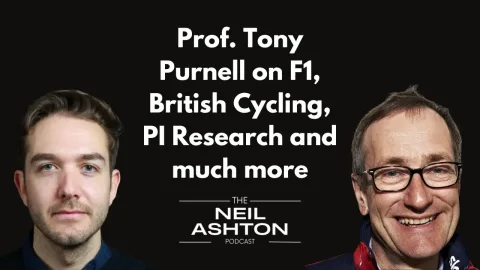
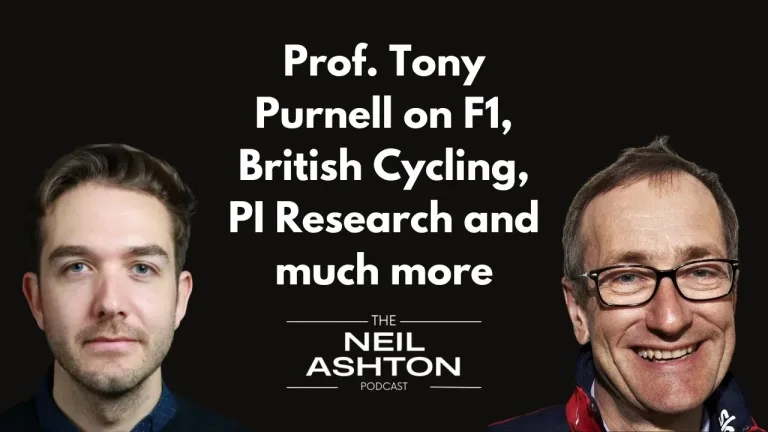
Prof. Tony Purnell — Formula 1, British Cycling, and PI Research
Watch on YouTube
Prof. Tony Purnell — Formula 1, British Cycling, and PI Research
YouTube video
Watch this episode
YouTube is contacted only after you choose to play the video, keeping this page fast and private by default.
Listen to the audio
Episode overview
Professor Tony Purnell discusses his journey from a passion for motor racing and engineering in his youth to founding and leading Pi Research, a company specializing in race car electronics. He shares his experiences at university, including a Kennedy Scholarship to MIT, and his early career in the motor racing industry. Tony also explains how Pi Research expanded into the automotive industry and eventually caught the attention of Ford, leading to the company's acquisition.
His story highlights the importance of passion, perseverance, and seizing opportunities in pursuing a successful career. Tony shares his experiences in the world of Formula One, from Ford's interest in buying the team to his role in restructuring the Aero department at Jaguar. He discusses the challenges he faced and the politics and dishonesty he encountered in the industry.
Tony also reflects on the stress and burnout he experienced and the difficulties he had working with Red Bull. He highlights the contrasting views of Max Mosley and Bernie Ecclestone on the future of Formula One and the changes that occurred under Liberty Media's ownership. In this conversation, Tony discusses his experiences in Formula One and British Cycling.
He talks about the challenges of managing Formula One and the difficulties faced by organizations like Toyota in adapting to the sport. He also shares his reasons for leaving the FIA, including the Max Mosley sex scandal. He highlights the innovations he contributed to Formula One, such as the introduction of adjustable ride height and the DRS system.
He discusses the politics and paranoia in Formula One and the importance of working with manufacturers. He then transitions to his role in British Cycling, where he emphasizes the impact of engineering on the sport. Tony expresses his concerns about the increasing technicality of cycling and the need to balance technology with talent.
He concludes by offering advice for aspiring engineers, emphasizing the importance of following dreams. Enjoy!
Transcript
This transcript was created from the corrected YouTube captions, with names and technical terminology reviewed. Download the corrected SRT file.
hi and welcome to the Neil Ashton podcast. In each episode, we explained some of the fascinating ways that science and engineering are changing the world around us. We talk to leading engineers from elite level sports like cycling and Formula One to some of the world's top academics. To understand how fluid dynamics, machine learning and supercomputing are bringing in a new era of discovery, we also hear some of their life stories, their career advice and lessons they've learned on the way that I hope will be helpful to you too. So sit back and enjoy this episode. So this episode it's a bit different than the previous one.
The previous one was with Dr Florian Menter, and it was really a deep dive into computational fluid dynamics. CFD, that is, uh, obviously my background area and a core part a core part of engineering. Today's episode is something um, that I mentioned in the intro would be a theme of this podcast, which is Formula One, cycling and the link with that to engineering. And I can't think of really a better person that has done all those than Professor Tony Purnell. So we actually, even though this is a long episode. This may be one that you may take a few attempts to get through. It's just over two hours, but I really he's had such an interesting life
story that I didn't want to cut it short. I wanted to have the the full thing. I even didn't play the tricks of trying to speed it up. You know, when you edit, you can change the the speed And I tried it and it it just didn't seem natural. So I I wanted to keep the whole thing pretty much unedited so you could hear the whole life story as a as a credit as a credit to Tony. Um, So Tony and I actually met through British cycling, and we actually don't talk about it that much. Part of the reason I think there is still, you know, NDAs and a bit of secrecy, I think, until the next Olympics is over. So maybe we'll try and do, uh,
an episode again when we can really get into the details of the work that was done to to develop the bike for the last Olympics. Which was sort of how I I got to know Tony. And then I started to hear so many interesting stories because as you'll hear, I guess I won't spoil too much of it, but just to give you a sense of his achievements. He started off in sort of the early days of motorsport and arguably was one of the people who brought new technology to the way that wind tunnel testing was done to aerodynamics. But he rose up to be the technical director and lead of what was the Jaguar Racing team and how it transitioned into the Red Bull team.
And I think hearing that story of how that happened, maybe it's the first time it's been spoken about publicly. I'm not sure, but it's very interesting to hear about that, to hear about the journey, that he went through the challenges and what Formula One was like in the time of Bernie Ecclestone and Max Mosley. So really interesting on that. And then he talks about how he transitioned out of being in a Pacific Formula One team to working for the FIA to going into IndyCar. And of course, he started actually earlier on, uh in IndyCar as well, and then we start to talk a little bit about going into the British cycling time, and we actually missed out so much.
I mean, he's a professor at Cambridge University. He's arguably been a supervisor and helped many people now who have sort of made it in the sport. And so he deserves a lot of credit for for what he's done. But I I like this episode because from a motivation point of view, it shows how you can. You may think you're going to do one thing at the beginning of your life or your career, but it's amazing the turns that you take and the opportunities that you can make for yourself and I I Certainly when I hear his story, I'm motivated. When I look at sort of my future career in engineering and science and and when you think that maybe you're just gonna stay in the same job for a while and you
and then you hear these stories like what Tony has, where he's moved around and done so many exciting things, it just gives you a lot of motivation. Um, at least personally, anyway, So, I, I hope you, uh I hope you enjoy this this episode. We we it is like I said, a a sort of a build up, I guess, of going through the early days hearing the motivations. And I think a lot of that makes sense, as you then get towards the end of the episode and you understand why, uh, certain things, uh, certain things happen as I mentioned the previous one. Put my hands up. If you listen to this, you can't see my hands being up, but
the audio is probably not as good as I'd like it to be. This was actually one of the first recordings that I did And, um, didn't have this microphone I'm talking to you on now and just kind of still learning the ropes. I guess of this podcasting. So, please, please, bear bear with me. And if you want to see the the video interview, you can go onto the YouTube channel, uh, to watch that. So, yeah, sit back and enjoy this episode with Professor Tony Purnell. Yeah, you You've had a pretty impressive career, I must say. And I think it's something that I'd like more people to sort of know about. Cos I think you've done a really interesting
journey of moving all around the place and like Formula One, cycling, owning your own business. Automotive? Um, yeah. Where? Where do you want to start? Well, I suppose the first thing is is that I do I do think I've had an utterly privileged life and, uh, you know, done a lot of the things that I kind of dreamt I'd like to do when I was a schoolboy. So, um, uh, while I would never have predicted the way things turned out, I've been pretty happy with it. It's, uh what did you want to do?
Um, yeah. Like when you were growing up. I think the earliest thing I can remember was getting a scale electric set for Christmas. Uh, a huge box, second hand, uh, masses and masses of track loads of cars. But absolutely nothing worked. And I was so thrilled with the thing that I was determined to get it to work. I guess I would have been about 10. Um, and, uh, it took me forever. I mean, not not days, months and months of trying to figure this stuff out. Uh, cleaning.
You know, there was a lot of cleaning involved. I remember that, uh, and, you know, sort of thinking. Oh, this was broken. It's probably best to fix it again. And then waiting for a birthday where I asked for a soldering arm, this sort of thing. Um, and, uh, I think that's when I first became really enamoured with motor racing. Uh, and by the age of 14, I had the most enormous electrics track in the bedroom and was building my own cars. Um uh, getting parts from America where slot car racing was a thing,
Um, and doing crazy things, uh, to break the lap record. I always remember I. I had to make the lap record significant so that it would be like, 50 laps. It had to be, you know, because they were, like, 10, 22nd laps. Pretty, pretty short. Um, and then I remember doubling up the transformers to pump 24 volts down there and the cars burn very quickly and then burning out, Uh uh, and then the the eureka moment. When when I put, um uh, uh cycle repair, uh, latex rubber on the tyres.
Just allowed them to dry off a little bit. Set the car and the the extra grip that, um, rubber cement gave for a minute or so was unbelievable. So, uh, yeah, yeah, that's it's all down to scale electrics. So you were Really? Was that the thing? Then when you were a teenager, you were like, I want to get into motor. That Is that what drove me then to what? To pick at university et cetera. No. Funnily enough, I think that that made me want to be an engineer. Um, I think that a career in motor racing
was secondary to wanting to become an engineer. It's hard to hard to be sure, but, um, yeah, I was really If you'd asked me at 14 what I wanted to be it was to be an engineer. Um, and I think, by 16 or 17, I thought, oh, an engineer in motor racing would be really nice. Um, so you know, I did kind of combine the things um, but I I also race my bike like a madman at that age, so yeah. So what? Sort of like road road racing? I do in the summer. I do three races a week.
Um, I cycled everywhere, cycled around the motor racing circuit at Crystal Palace. Um, I went round Herne Hill one day a week, and then I'd do a time trial or a road race at the weekends. And, uh, you know, I absolutely love that. And so now I see the cycling connect. Um, we'll come to that later, but I didn't realise. So you were very keen. Like an amateur cyclist. Basically, right. You were competing? Um, very, very keen. Yeah. Yeah. II. I was O OK at cross country and long distance running. Um, but they struck me as all pain. Um,
not very interesting. Whereas cycle racing was like a cross between, uh, moto GP cross country and chess Because there's this huge, uh, tactical element which isn't apparent to the general public. Um, and that makes it possible for somebody with, uh, not enough talent to to win, um, by just getting it right. Where is cross country race? The best guy wins every time. You know, I, I can remember, um, running around Hyde Park for, uh, Manchester University
in the cross country team. And, um, it was several laps of Hyde Park and Sebastian Coe went by me at a Su It struck me as somebody sprinting past, You know, he he But it wasn't just that he lapped me. It was like he his weight would have blown me off course and sucked me back in again. So, you know, there was little talent. I never had any of that. But cycle racing even always gives you a chance, which really appealed to me. So you, um So you went to Manchester University? So was this. I think you may have told me. Was this the unionist then? Or was it Manchester? Which, to be honest, uh,
I left school and went to work in a steel works in Cardiff. Uh, not intending to go university. Um, and, uh, that was, uh, really traumatic. Uh, I was, uh, employed as a, uh, apprentice fitter in this big Welsh steelworks, And, uh, the other apprentices just called me English. And, uh um, you know, we were treated very strictly, and, um, it absolutely, totally made me think, Oh, my God.
Uh, this is what work is like unless I get, uh, some qualifications. So, uh, I got to Manchester. Super motivated by fear. Yeah. Yeah. It wasn't the modern day. You know encouragement. It was Oh, my God. I would not want to go and work in a factory. Uh, and clock in, You know, they had these cards to clock in, and yeah, yeah, it was horrible. Well, well, I should say, is a a smaller side, I. I grew up in North Wales, so I've been in Wales, you know? And, uh, just like many other countries in the United Kingdom, there is a healthy or unhealthy,
depending on the respect of sort of universal hatred of the English. I think so. Unfortunately, I think you may have been on the the end of, uh, end of that definitely was. I definitely was. OK, so you were. So you went up to Manchester, as you said, highly motivated. And you picked engineering. That was right. Actually, I did a, uh, a joint honours degree in engineering and mythology. Um, I don't really know why. It's just that I was enamoured by material science at the time, and I thought this course looked really good. Um, and
it it was really good, actually. Although it only did sort of 60% of the engineering course and 60% of the materials, and they always emphasised how this course that was 20% more work, you know, than the other courses. Um, maybe true. Maybe not. But I certainly enjoyed it at Manchester and III. I was so convinced that, um, I was way behind the other students that I probably worked twice as hard. And then, uh, II I came out top of the exams at the first year at the end of the first year, and
I thought, Oh, blimey, you know, And then I didn't want to go backwards, so I just carried on working. And where was that in Manchester? Which, um, which building was this In the Sackville Street sort of area. Or you missed then the Department of Mechanical Engineering or the Baker building? George Begg. I think George Beck. Yeah, well, you know, like, this is kind of why I always like talking to you, because it's kind of like like that's why I went to university and that Sackville Street and the George Beg it's kind of, um it's interesting to see who's gone. It probably was like a newer building then because when when I went to it, it felt,
but I guess it was probably built, Um, in the what? Seventies eighties? Not Sackville Street, but maybe the whole campus, I think, went up in the seventies. Um, I was there in 80. Yeah, 8081 I think somewhere around there. And yeah, it was it was all modern state of the art. Yeah. So that was your Manchester thing? What? So did you. What, then was your feeling? Was it still Hey, I want to be a motor sport, Get into motorsport or more Just general engineering, then. No, I think when I was at Manchester, I was
kind of I wanted to go on in academia. Actually, I just didn't want to go back to work. And, uh, I remember walking along and seeing a a little poster for what was called Kennedy Scholarships to MIT. And, uh, I'd spent two summers, uh, hitchhiking and greyhound busing around America and really like the idea of, um, of of going to university in America. Uh, so I remember there were several adverts on this notice board and I applied to McGill
and to, uh, MIT, uh, and and the Kennedy Scholarship. And, um, amazingly, I got the Kennedy Scholarship and I really was amazed because, uh, I remember the interview. Um, everybody else was from Oxford and Cambridge, I think. I think literally everybody else. Uh, so I thought, you know, you've not a hope here. Um, And then, uh, I got, uh, uh a scholarship with my McGill application. So, uh, I remember I had a crazy week where I suddenly had
a scholarship to McGill and a scholarship to MIT. Uh, wow. The people listening II. I remember looking a while back Kennedy that that's a very prestigious thing to get. Now, Kennedy Scott is seen as one of the most prestigious things. So And I guess back then, the how should I say it? The inequality of Oxbridge versus the rest was probably even stronger. It was a mega deal. Um, the, um you know, the things I remember was things like the, um the Kennedy family would invite the Kennedy scholars to the, um, to Hyannis Port, where the Kennedy compound was,
um And, um, we'd have, uh, you know, Lords and Sirs come and take us out to this sort of thing. Um, so you really got the impression that, uh, you know, you stumbled into something that was really, really desirable, and and it it really was, You know, it's, uh it's really leans towards, uh, politics. Um, but every year they they seem to give a nod to an engineer or a scientist. And do you think that was a pivotal moment to you? Then? Do you think if you hadn't have got that, your life would have turned very different?
Absolutely. The Kennedy scholarship was the number one best thing that ever happened to me. Um, you know, it was absolutely fantastic. I, I you know, I went to university. That is usually, uh, you know, very, very expensive for people to attend. And I had all my fees paid. And on top of that, I had a stipend. So I had money in my pocket. And, um, I loved MIT. You know, it was, um They say it's like drinking from a far hydrant, you know, rush of knowledge.
And, um, I. I took as many courses as I could I because over in the states, you elect what you want to do. Um, as long as you tick some boxes to get your, you know, chosen degree, Um, and I ignored all the advice and took more than I I was advised to do. Um, and I actually found it difficult, because I'm not really very good at analysis in the way that I see, you know, a real Cambridge professor. They're just awesome. And I'm not like that,
but I really enjoyed the wide range of courses. So because I could elect what to do I. I took things that I wanted to do, and I wanted to learn about electronics and software. Um, And you you, you know, early eighties, these things were brand spanking new digital. Uh, and I learned about things called microprocessors, which were absolute bleeding edge. At the time, I learned that digital electronics was actually pretty simple. Kind of like Lego. Um, and you could interface it with mechanical things.
Um, I took a number of design courses, and one of the, uh, projects we had to do was to build a little robot. Um, and you know, it was a it was pivotal to my career because I came out of MIT thinking, uh, anything with computers or microprocessors holds no fear, and yeah, uh, I think people who saw what you could do, and you showed it to them. They thought you were some sort of frigging genius. Uh, but But actually, you don't have to be a genius to be to do that stuff.
And Neil, the other thing that MIT gave me was the choice of Master's thesis. Your master's thesis was a big part of your degree, and I chose to write one on aerodynamic aspects of Formula One design. Um, I wrote this very sort of, uh, step back systems view of a race car, and, um, during the holidays, I remember I went to a race at Brands Hatch Formula One race, but I think in those days it was a
non championship one. Anyway, I managed to get in by bluff. I think I certainly didn't have any and I went to Peter Warr at Lotus. You know, I just in those days you could just walk in to the garret or the paddock. And I said, Hey, I'm doing this thesis at MIT. I've got a scholarship. I could do it for you and he kind of said, uh, away child, he was not at all encouraging in any way.
And then the team next door was called Ensign Racing, which was like at the back of the grid. Um, and, uh, I knocked on their door, and their technical director was a guy called Nigel Bennett. And he said, Wow, that sounds fantastic. Come up on Monday. So I drove up to Lichfield, uh, to ensign world headquarters, uh, knocked on the door of their Portakabin. The glamour. Next thing you know, I had a holiday job, and I was kind of working, you know, with Nigel on my project.
Um, and, uh, Nigel was very, very encouraging. And, uh, funny enough, II. I still see, uh, Nigel fairly regularly. He's fairly elderly. Now, um, you know, he gave me a lot of encouragement, and then, uh, that was my sort of first taste. And then I finished my thesis and got a scholarship to Cambridge to do a PhD. Uh, and I was jogging along with that, um, and Nigel gave my, uh, thesis to somebody at Newman/Haas,
uh, because he he left Ensign go in the car, and, uh, he was the designer of the Lola Indy car. And, uh, Newman/Haas had bought this, uh, electronic engine management system from Bosch, which was apparently utterly revolutionary, and they needed somebody to run it. And, uh, Nigel knew that I could do electronics. And, uh, it was part of my thesis, actually, um, I mentioned a little data acquisition system that I'd built.
And, uh, next thing you know, I'm in Chicago working for Newman/Haas running the Bosch management system. And to tell you how crazy life is So a young guy, um, I've sort of turned my back on the academia to take this job. Um, I'm working with the Bosch engineers. Uh, and we go to a dynamometer in Midland, Texas, debunk the thing, get it all working. It comes to the great day when Mario Andretti is going to drive. The Newman/Haas car with the Bosch fuel management system. Carl Haas, who owned the team, had spent
absolute a mint on this system. And, um, Carl used to bless the car with his hands before a race on the grid. It was very superstitious. And the year before, the car was sponsored by Beatrix Foods, um, and the the sponsor of change car. And Carl was just beside himself with nerves. Cos Mario stuck it on Paul. Um, and somehow Carl blessed the car in fifth place on the grid
because it had last year's colours on sense. And somebody tapped Carl on the shoulder and pointed it out the error and can just went into just complete depression. Well, we've lost now, you know, it's, uh it's all over. And then we had this, um, team. Do you know, debrief and, um, Nigel says to the Bosch engineers, pretty good. E first time out were on pole, and, uh, the Bosch engineer goes, but of course, left,
left. Everybody sort of, um, you know, and needless to say, the race started. Mario shot off to the lead, had an enormous lead, and then about two thirds of the way there, the Bosch fuel management system melted. And guess who? Guess who won Bobby Ray Bless anyway, the, um So I'm back in the shop, You know, when the car comes back and everything. Uh, and, um, I go in there on the Wednesday or Thursday to look at the car
for the next race, and it's all been removed from the car. The mechanics are preparing it, and there's no Bosch system and the chief mechanic goes, uh oh. We were told to put it in a cardboard box and leave it in stores. So I go and see my boss, a guy called Ray Wardell, and Ray goes, Oh, yeah, Carl's decided to scrap it. We're not running it anymore, Tony. And I thought, Oh, shit. Wow. That's what I'm employed to do. Uh, unfortunately, Ray and Nigel immediately got me seconded into the wind tunnel.
And suddenly I was an aerodynamicist, um, for the team, because Carl had done a deal with Cranfield, um, to use their rolling road wind tunnel. And, um, that, uh, that kind of led to, you know, my future with my own company because, uh, I got to this wind tunnel, and it was one of these old mechanical balances with weights that you screwed to get a virtual centre balance going. Anyway, an experiment took forever, and we couldn't repeat
because, you know, I'd come from the scientific background. I was super keen on repeats. Nigel Bennett was as well, and I just couldn't get it to repeat a result, uh, within an acceptable range. So I contacted, uh, Carl has and you know, when you're young, you can be unbelievably naive. I. I, uh this wind tunnel you've you've signed a contract for, uh, it's unusable. We we have to change because there's no way we can get any proper work done in this place. And that phone call, uh, resulted in a small mushroom cloud going off in Chicago.
So I was, uh I got an extremely grumpy phone call, uh, from a guy called Teddy Mayer, Uh, who was one of the directors who pretty much told me to figure it out. And, um uh, So I got on an aeroplane and schemed out, uh, a complete replacement using electronics for the wind tunnel. Uh, to automate the data acquisition. I put the car on struts so it could go up and down and pitch. Um, and I built all that for Lola.
Uh, got it to work. Um, it was incredibly hard work, Uh, because I didn't understand about electronic noise. And, uh, it turns out that a wind tunnel, uh, the rolling road acts as a Van de Graaff generator Back in those days, you, If you turned all the lights off, you could see little bolts of lightning between the model and the car. And, you know, people are on top of these problems today. But all that was new. So we had tremendous difficulties with the electronics.
And fortunately, I remembered a few things from the lectures at MIT. And, uh, we we we solved all the issues, got it to work, and then the productivity gain was phenomenal. Uh, just having the the car on struts to to move it up so that you could change the model and then go through a sweep of pitch changes that was just utterly revolutionary. Um, which is the standard now, right to do it, Because back then, I guess it it wasn't the Yeah, Yeah, No one had done anything like that before. Uh, so, you know, Lola thought it was great.
And then, uh, I started to get involved in the testing of the car and I. I remember we went out with, uh, the actually the first exposure to car testing was a guy called Brian Henton, a team Ensign. And there was just a stopwatch. And what Brian thought of the car and I realised that, you know, Brian struck me as a very good talker. and he seemed to talk in incredible detail about every nuance of the car. But there was absolutely no evidence,
you know, there was nothing but a stopwatch. And so when I got to Lola and went testing with Newman/Haas it was the same. Just a stopwatch. And instead of Brian Henton and Mario Andretti, uh, Mario was actually, I thought much more believable, you know, he was less expansive. Um, but, um, you know, then I suggested to my immediate boss, Ray Wardell, who was the team manager. Look, the way you test these cars is just, uh, nuts. Uh, i'll build some electronics so I can record what goes on,
and Ray went Wow. Uh, and Nigel was very, very enthused by the idea. Um and so I built it all on my desk at Newman House. I built a dashboard and a data logger, uh, that downloaded to one of the, uh, very, very first lable computers. Oh, they were, like, the size of a suitcase. Literally. Uh, and, um, I we we we we we tried it all. And it actually worked amazingly,
Um, and then, uh, Ray was very, very pleased and got me to show it to Carl Haas and co hats goes, How much did this cost? Tony and I said, Oh, Ray gave me a budget of $7000 and I did it for 7200 you know, So a bit of an overrun and Carl went absolutely berserk. Uh, why did you allow this, Ray? It's my money. Why are we wasting on on on on this kind of stuff? It's crazy, You know, you should come to me. We don't want this kind of stuff, you know? And he he ranted. He absolutely ranted.
And I came away, you know, just absolutely deflated. Ray was red faced with rage, and it's quite a long story. But six weeks later, we'd all agreed to resign and start a new company. Um, and, uh, it's a bit complicated, but eventually Ray said, right, Tony, you are starting your own company. You've got to you've got to make wind tunnel systems like you did for Lola, but make it much better, and then you can do a car system. And so that was the start of my own company. It was never really my own house. This
so this was pie. Pirate research. Was that the name? Yeah. OK, so that how did did you then move back to the UK for that? Or were you still jumping between the US and the UK? So I resigned from human Earth, Um, went back to the UK, but still had a very good relationship with Lola. Um, And then, um, Ray and Nigel ended up with Team Penske, and they they just said, Look, designing new wind tunnel system that you're going to sell to everybody. And then they invited me down to Penske cars,
and I gave this sort of presentation to, um, actually to Teddy Mayer, who was then the chief of, um Penske cars. And, um apparently, when they asked me how much I I said, Oh, it's 6 $60,000. And apparently I looked at the carpet and went red in embarrassment. Um, I. I heard this years, decades later that they sent me out the room, uh, laugh to themselves, uh, that he'll be back for at least double that,
but no worry. Uh, he he can do it. Um, and then they, uh they sort of, uh, uh had a debate Whether they should toy with me or just say and so they Anyway, I got the contract, and actually, I didn't go back and ask for more money, But I definitely asked for more time. Um, project planning, uh, wasn't his lamentable. Yeah, Yeah, I won. I won comment on that. Always too ambitious. Um, but anyway, we delivered
the wind tunnel system. I employed some people, uh, some great people, actually. And, um, we we did that. And then Ray said right now, uh, why don't you build a really nice, uh, instrumentation system for an IndyCar, because they'll they'll all buy it. Tony. So I did that. We did a deal with Lola. Uh, that, as it happens, was a year late. Um, and, uh, just about worked. Um, we we probably worked 70% of the time
and crashed the other 30% but fortunately, the information it gave the customers, uh, it it just it found the fastest lap and gave a printout of boost speed. R, PM. I think that was it. And then it had a rev counter and alarms. If the oil pressure went or temperature and the, um, the customers absolutely loved it uh, and I probably realised how much they loved it by experience,
their emotion when it went wrong. Yeah, like thrusting me against the wall. You've got to go over the next three years or so, Every year we came out with better and better products, they slowly became more and more reliable. Um, we went away from printers to, uh, computers. Then laptops came along. And, um, you know, within five years, we were pretty much the dominant force in race car electronics, which was pretty nice. And then, um,
I was well aware that motor racing was feast famine. And, you know, I was very conscious that we had the whole field, uh, in Indy car, and we were beginning to get the whole field in places like Formula Three. We were making inroads into Formula One. Um, and I was very nervous about the business because I thought Bosch or the new McLaren Electronics company TAG, uh, they were all subsidised, and I felt that they could blow us away overnight. So I went to Roger Penske to thank him for his custom, and, uh, I thought we I thought I was going to get my ears chewed off
because we'd had more than a few reliability problems with Penske. And instead he was, uh, bouncing up and down saying, Oh, you've you've revolutionised the way we work, you know, it's fantastic. Hey, you got to come down to this new company I've bought called Detroit Diesel and and do stuff with them. So I I turned up at Detroit Diesel. They made, uh, engines for Lorries, and, um, uh, they needed a new electronic controller for the diesel Lorries. And so we We gave a proposal to Roger Penske,
and I remember it was for $2.2 million I think, and I think our turnover was $1 million at the time. So this was so it was really big. And, um, uh, they asked lots of questions. Quite tough. But at the end, I remember my last slide. I think in those days they were acetates rather than power. Uh, but anyway, uh, the last one said, Let's go. And Roger who's, you know, pretty gung ho sort of bloke, uh, once they'd gone through questions, just leaned back on his chair and said, Yep, let's go.
And, uh, suddenly we're in. We were in automotive. And, uh, it turned out that that engine controller, um, in the end, uh, powered about one in 41 in three trucks in North America. So you know it. It really sort of parachuted us into the serious world of of automotive electronics. Um, and that led to Ford taking an interest. We became Ford's, um, preferred supplier for safety, Critical code. And then, um, that led to Ford buying us out in 1999.
So, uh, you know, it's all sort of Everything's connected to everything. Um, but that was a so that was quite a big rise then from going to sort of embarrassingly asking for 60 K to being bought out by one of the large automotive companies. That's kind of quite a right. Yeah, well, it did take 12 years. Um and, uh, you know, I did. I did things. Uh, like, uh, I employed this guy from the nuclear industry to write leader safety, critical, embedded code. Uh, and, you know, that was quite a brave move at the time. Uh, especially as his methods were so pedantic
compared to you know, what we were used to, um And you know, I got some managers in who understood things like quality. Uh, and then we split the company because the motor racing people didn't sit well with the, um, with the automotive people. Really? Because the automotive people insisted on process. Whereas, you know what it's like with motor races? Let's go. And they Yeah, they think process is a dirty word. Yes. So, what happened then? So you sold it to Ford. What was the next thing
it was? You know, that was kind of an incredible year, because we we were pretty well established by then. Uh, we were supplying lots of Formula One teams with telemetry and wind tunnel stuff. Um, huge presence in motor racing And this, um, fast establishing relationship with Ford. And then, um uh, mhm. Stewart Grand Prix got bought out by Ford. Ford were, you know, uh, sort of committed to a Formula One campaign. Um, and they got from two sides.
Pie from the, um uh, engine controls people, uh, within the team. They said, Oh, you know, pie are pretty pretty good at that stuff now, um, and then from Ford's electronics company, who are called Visteon. Uh, they were hearing. Uh, we we absolutely rely on them for, uh, uh, uh. Some of our code and Visteon thought it was unsustainable to have a subcontract to do something that was so critical. Um, you know, again, you have to go back. In the past, electronics and software was
just startling everybody every year. Um and so Ford was sort of who we got to get into this stuff. Uh, and then the the Formula One team Jaguar was Oh, we need an electronics partner. And one day this guy called, uh, George Joseph turned up. We weren't real sure why he'd come. And he came into the office, unclicked his briefcase and turned around and said, Ford have decided to buy your company. And, uh, I sort of, uh, wasn't it a suitcase full of cash? Was it?
No. No. Uh, well, that that came later, I guess. But, um, I kind of remember saying, Oh, I'm not sure that the company is for sale, you know, um, but maybe, you know, we could forge a nice partnership, uh, with the Formula One, because Formula One was going ballistic. Uh, and the cost of development was way beyond our means. You know, every year you needed a major major development project, and you had to bet the farm on it, and I knew that was unsustainable. Um, but George Joseph made it pretty clear that Ford wanted to buy us out.
And some of the other directors who were in the room sort of muscled me out the room and said, Oh, it's very I don't know. Four months later, they bought us out. Um, and I was the majority shareholder, so it was very good for me. Um, and then, um, I quite liked working for Ford. Um, so, uh, I sort of jogged around running pie, and then they asked me to get involved with Jaguar. Uh, and then Nicky Lauder contacted me and said,
uh, we we we need somebody to sort our aerodynamics out. Could you have a look at it? So I did a big project with a very good guy who used to be a management consultant and was used to that sort of thing. And the two of us are really restructured the, uh, aero department completely, um, because it it evolved into something that was essentially dysfunctional, wasn't kind of anybody's fault. It was just that they they'd made micro decisions without stepping back and looking at the big picture just for people listening. So when you say the Jaguar team,
um, where was that based then? Was that Milton Keynes back then, where was OK and, um, owned by Ford? Because Ford owned, uh, Jaguar and Volvo and Aston Martin at the time. And, uh, there was a for director who was poached from BMW called Wolfgang Reitzle. And it was actually Wolfgang who suggested to Nicky that, uh, I should sort of help him. And the aerodynamic stuff worked really well. Really Well, um, and, uh, the the success of that led to,
uh, writing a report on how to better manage the whole team. And, uh, I wrote this and put, you know, a really big effort into it. And then I presented it to Nicky Lauder and Gunther Steiner. And unfortunately, I think they read it as kind of personal criticism rather than, um, you know, something constructive, which, which really wasn't wasn't the intention. Um,
and it's quite a long story, but they really disliked it really disliked it. And, um, there was a new Ford director Wolfgang had left a guy called Richard Parry. Jones came along and Richard read it. And, um, Richard really liked it. Um, And then, um, Nicky, uh, basically fired me. Um wow. But Richard said, well, he can't fire you because you work for Ford.
Um, so you work information now? Um, And then, um, Richard did his own deep dive into Jaguar and realised that, um, there was just no, uh, manage managerial discipline there. And they Yeah, it it it had gone to motor racing. It was kind of if we can conceive it, we should do it. Uh, you know, and the only demand from Ford was we need more money. Um, and Nicky,
who had a great reputation that Nicky could be very off the wall, and you know his idea. So what was his What was his position at the team then? Then he was He was principal at the time. He was the big Yeah. Yeah, and Nicky just didn't get how complicated, uh, Formula One cars had become. And he he didn't get that. You can't change the real wing without changing all the aerodynamics. You know, you'd understand that, But Nicky didn't, um and there was this sort of silver bullet mentality.
You know, if if we could do this or if we could have the Ferrari front wing or the McLaren rear wing, a magic wand would be waved. And, uh, you know, I was much more of this. The thought that you needed systems and structure to make things work, which, you know, to be honest, was not my my natural environment. Uh, you know, I'm a bit more of a racer at heart, but I, I absolutely realised that that's what they needed because it was a big organisation. You know, it wasn't like 10 people in a garage making something, you know, four or 500 people.
Um, and, uh, I'd come across this absolutely brilliant man manager called David pitch forth and, um, David, uh, completely enamoured Richard Perry Jones with his, um, you know, zeal for good management. And then Richard suddenly took the decision to, uh, fire Nicky and, um, bring Dave and I in to run the company, Uh, and to run cosworth. Um, so that was That was a bold move, right? I guess for him to do that
to Nicky, I guess at the time must have sent sort of reverberations around the very much so, you know, because Nicky was a big hero to people. And, um, Nicky had some fine attributes, but he was really mu much more an an entrepreneur than any kind of CEO. You know, he he just wanted the the big picture, the big idea. Um, whereas Parry Jones totally understood the complexity of making a good machine, and so we were much more aligned, but, yeah, it caused a lot of controversy.
And, um, it wasn't sort of helped by the the sort of whisper that Ford's, uh, trading was going downhill and that Formula One was an expensive trinket. So it was a poison chalice as a job. And, you know, if I look back, I did did make some, um, some big mistakes. Really? Um, one of one mistake was, uh I found Jackie Stewart very difficult as a character. Um, because he he was de facto smartest on any given subject.
You know, he was three times world champion, so he was expert absolutely everything. And actually, he was really, really good with sponsors, and, uh, I. I failed to fully realise that, uh, you just had to take the rough with the smooth with Jackie. Um, and, you know, stick to what was brilliant. And he's done, I guess that I mean, I don't know too much, but from my understanding, that's what he's been doing, You know, over the past 1020 years has been the guy who would go now and go and meet the guests and the VIP S and sort of, you know, world champion driver socialise.
Yeah. Yeah. And the guy is brilliant at that. And by the way, he's also the most brilliant driver. OK, I guess I know that. You know, I was, um I was exposed once or twice to just how great a driver he is, Uh, one where he tested a Ford car. A Ford. The Ford car? Yeah. Yeah, the little the little one. Yeah, that was my first car. That was my first ever car. And Jackie had the ability to, uh, transform himself into a housewife
or a granny, and he noticed every little annoyance. You know, if a lorry went past and it wandered on the road, he he was really, really good at testing road cars in the way that no one would ever imagine because he wasn't interested in racing. He he just every little nuance, the incredible sense of liberty that, um, that Ford car, remember, was like a little go kart car because it was so light. It was kind of I don't know if that was his input, but it always felt like so nimble. And there was no red metre. I seem to remember, so you could kind of rag it.
Well, I remember that Parry Jones wanted something that had really good vehicle dynamics, really good handling. And, you know, I think they delivered that on on that the car, the focus, the fiesta, they they want to drive. Um, anyway, you know, so so and and and just ask you, Tony, like at that moment, though. So you've just essentially become de facto running a Formula One team. Did you have, like, a moment of realisation? You know, remembering being in that steel mine having you know, did you have those moments of reflection how far you'd come? Because I guess to a lot of people listening to this, like running a Formula One team
that's kind of the Yeah. Did it feel normal or out of body experience? Ever? Yeah, it was. It was very full. Blimey. You know, this is this is the big time sort of thing. Um and, you know, I've got mixed feelings about it. Um, on the one hand, I, I thought Dave and I, you know, particularly Dave were building something pretty good, actually. Um, and restructuring it Dave was a great man manager. Um, and the whole approach was becoming
much better coordinated and rational. Um, so that was the kind of good side, the bad, And and II, I think I think I did that reasonably well. The sort of piranha club of Bernie Ecclestone. And, uh, you know, the characters around that table. Uh, I definitely would say that's That's not my forte, I. I was never prepared for the degree of dishonesty. Uh, at that level. Um, So you were doing those you were part of those discuss.
So is it like, now where you see total wolf and you see Horner and the people like is that essentially What? Yeah. What was it like having to deal with those people? I was, you know, vaguely traumatic. Uh, to be honest, um, I remember a journalist who I thought was pretty nice guy saying, uh, Tony, you got to wake up a little bit. Um, people lie in Formula One, and they lie a lot. You know, uh, I wouldn't say I'm great at detecting people lying, um,
you know, and that sort of wheeler dealer? Um, yeah, II. I don't think I'm particularly good at that. And, um, yeah, I was I was very uncomfortable there. Not that it mattered that much. Uh, you know, there's a lot of smoke and mirrors with anything, and you imagine that all those meetings, you know, with the team bosses. Oh, they must be pivotal. And you have to get those right. And actually, all that matters is that you've got a fast car.
Nothing else really matters. So, you know, conceding a bit on something to John Todd who was unbelievably awkward at those meetings. Uh, you know, they were actually of very little consequence, but they felt very important. Um, and I, I think it I think I might have adapted, but I honestly I. I don't think that that's where I'm best deployed. If you like, um and actually, the
the way the Formula One thing worked was, you know, I had this new train set for Christmas, if you like, uh, when I was appointed, um, and the first year, I think we went OK, We we wouldn't have made any visible progress, but we made a lot of progress inside the team. And then at the beginning of the year, too, I was taken aside, uh, sworn to secrecy and told that it was pretty unlikely that Ford would continue in Formula One. And I had to find a buyer of the team and the engine company,
or maybe a partner. But there was no way Ford was staying in with these costs. Uh, and I had to keep that to myself, so that was a bit awkward. There must be a lot of stress then to hold that responsibility. Yeah, that was like, uh, I think that year probably aged me 10 years. I was gonna say So, um, I did it kind of deal with Dave that I would just work on finding a a partner, the team and he would concentrate on running it. Uh, and that that was great. because Dave
100% trustworthy and very good at running the team. And I ran around the world trying to find a a partner. Then Ford went public with it, and then the stress cranked up beyond the imagination. Uh, I was told by Ford to work with HSBC to sell the company. That was just a complete waste of time. Um and the the problem was, is that people thought that it was a business that Formula One having a Formula One team was somehow a good thing financially,
an investment. What's the joke with Formula One, Isn't it like, what's that joke? People say you begin as the fastest way to become a millionaire is to begin. And you know, I thought the only thing that I could see that you got with the Formula One was, uh, you know, it's like having an extremely exciting company. And the only aspect of it you got was the tax bill. You didn't get any of the profits or anything else. You just got an annual tax and people, you know, HSBC was saying, Oh, well, let's look at the balance sheet and the profit and loss
and it just It was so wearing to tell all these people that unless you sink gazillions in, it will go bust. And there's no prospect whatsoever of making any money out of it. You know, that was the honest, which you could, but, you know, and so very fast it was in my mind, the only people we were going to sell to was somebody who had an interest in sponsoring a formal one team. And I I'd always been a huge believer that the name of the team is the most valuable asset. Painting your decals on the side of the the car
struck me as vastly overvalued. Um, And so, uh, there were one or two people around who did seem to have a a fundamental reason for buying a Formula One team. And by far the best was Red Bull. No question at all. Um, but there was also the Shanghai local government, believe it or not, uh, because they they'd arranged the Chinese Grand Prix, and they were interested in having a Chinese Formula One team. So I spent a fair amount of time in China. Uh, and then there was, uh, uh,
Midland Group who eventually brought Jordan. And they were, um they were in the Russian. I don't know why I laugh. It just just doesn't sound like the sort of company that would buy. Maybe I'm thinking now, in modern day Midland Group. Um, but, uh, yeah, well, it was a Russian oligarch. You know, in today's parlance, it was a Russian oligarch. Although it was a Canadian based Russian Canadian company. Well, they were the three sort of big contenders, but, um, we we got to the stage where Sir Nick Scheele, who's president of Ford and Dietrich Mateschitz,
uh, myself, uh, kind of agreed heads of agreement on a 5050 partnership, and that was very exciting. That was kind of mid season. Uh, we even made a wind tunnel model, which I've got, Which stars for Red Bull. Um wow. Uh, so that very cool that that was that a one of a kind, Very exciting. And everything looked good. Ford were happy because it dropped their costs by 50%. They agreed to do the engine. Red Bull would do the car.
It would be a long term partnership. And then, um uh, we were told, you know, we couldn't announce it because the announcement had to be prepared through the PR guys blah, blah, blah, blah, blah. And while we were working kind of just to get that ready, I was summoned to Detroit and I walked into the the top floor of Ford, and I knew the moment I walked. There's something wrong here. Uh, I was grilled. How long would it take for this partnership to win the world championship? And I said, Oh, at least five years. You know, um,
it's really tough to win in Formula One. It needs tremendous commitment where you're gonna have that from the race team with Red Bull. But it also needs tremendous commitment on the engine because you can't have a weak link. Uh, how much does a competitive engine cost? Blah blah, blah, blah, blah, blah, blah, blah, blah. Uh, could you leave the room? Tony, wait an hour. Summon back. We decided we are exiting Formula One 100%. It is. Uh, so, uh, and then I had a deadline. If you haven't sold the team by November, the 21st or something like that,
we're shutting it down. Everybody's redundant. Both Cosworth and, um uh Jaguar. So that focused the mind a little bit. Mind a bit. Um, jeez, because we, um we kind of pulled out of the agreement with Red Bull. They went frosty. And the the relationship was pretty broken. What day tracked? Um, but I I just tried everything known to man to wheedle myself back in there. Uh, including a proposal for two teams, Uh, that it would actually make sense for Red Bull,
um, to exploit a loophole in the the rules where you could have two teams. Uh ah. This is an idea. They were quite interested in that. Um, And then suddenly, towards the end, I realised that this wasn't a business decision for Dietrich. It was an emotional decision. And Helmut Marko was saying, Helmut, you've always wanted your own Formula One team. This is it. You know, this is a good team. The facilities are good. It's set up nicely.
It's now or never. And I I kind of sense that Dietrich wanted it. And so it all came together at the last moment. Uh, and suddenly we were Red Bull. So, uh, uh, they asked me to stay on as team principal. Um, although it was a bit of a vague commitment, You know, it's like while we sort out what we want to do. And so we did. And I'd say immediately, uh, we, uh, fell out with Red Bull.
Dave and I, um, they wouldn't give us a budget. They they had some some crazy ideas, because don't forget that they were really a marketing company. Yeah, and the one team is really an engineering company, and so they were feeling their way. And one of the first things they did was order the most biblical motorhome known to man, uh, at unbelievable cost without any reference to anybody in the team. And we started getting some bills for this thing. You know, Dave couldn't cope with that.
That caused a lot of stress. Um, we began to fall out over drivers. Uh, they wanted to bring in a guy called Tonio Liuzzi. Um, we'd had, uh, pretty challenging year with their, um the driver. I'm having a senior moment. I can't remember his name. An Austrian driver, Um, who Who struggled in the car. And so, you know, we wanted to keep keep Mark Webber If we could that wasn't on, then safe pair of shoes in David
Coulthard. But, um II I can't really remember the details, but they were really annoyed that we should, you know, be part of the discussion on drivers, you know, we were just so it was a bit of a power struggle. You mean they wanted to sort of not just own but to run as well. Yeah. Helmut Marco wanted to be the boss without being the boss. He wanted to make all the big calls, which which actually would have been OK if they just said, that's the way it's gonna be And you know, but but it was a much bigger stress over budget,
you know, they wouldn't really give us a budget. And it was also wishy washy. Um, and that didn't sit well with Dave because Dave likes to know where he is. Yorkshireman, you know, and things got increasingly, uh, acrimonious. And the other thing, to be honest, I was completely burnt out. Absolutely. I was just about to say you must all that stress building up. It must have reached a point when you the glamour and the sort of you'd sold your business I guess you had a, you know, a bit of bit of cash from that. So was there a point of view just going Why am I doing this?
No, no, never. Never. No. I was more like a guy who lost all sense of perspective. And I just had to sell the company I had. There was no way I could, uh, allow mass redundancy and the whole thing to clap. So you felt like a personal responsibility. You mean by that? And and it really cost me. You know, um, I you know, I didn't I didn't fall out with my wife, but I hardly ever saw her. Uh, the Children were young, and,
you know, I remember the Children changed from when I was team principal to kind of running out to see me when I arrived home each weekend. Um, and now, after two years of that, you know, they were, uh, sort of disinterested because I was always on the mobile phone anyway, um, and, uh, I never knew what time zone I was in. Uh, you know, And then, uh, there was some, uh, really bad press about the way we run the team. in in a sort of rogue magazine called Business Formula One. That that did enormous damage,
Um, and, uh, and was, you know, sort of root. Cause of that was that all I was doing was trying to sell the team I. I kind of had no no involvement with the team anymore. I was just the salesman trying to flog it. Um, so, you know, life was very, very difficult. Um, other people will tell you that things like this, but I remember waking up in a hotel room trying to figure out where I was and what I was doing. And, you know, it sort of took a while before I Oh, yeah, yeah, yeah. I mean, I don't know, Shanghai,
Uh, you know, I was just burnt out now, so, um, And since when we were fired from Red Bull, Um, there was kind of, uh, something. There was a blessing about it. You know, I think many people would say, Oh, you know, that was a disaster. And I was super angry about it. Super angry. But actually, I think it was a blessing because I needed a break. I probably wasn't right for that role. anyway.
Uh, certainly not in the the the Wheeler dealer days of of Bernie Ecclestone. And, um uh, I think my my family would have broken up if I'd stayed there, because it is just so demanding. Um, so in a way, it was It was a good thing, and and I I'm sure Christian was much better for rebel, you know, Um, and it probably needed that young, enthusiastic, uh, you know, fresh face. Um, and actually, it it It almost immediately led to me working for the FIA.
Uh and I did enjoy the FIA. So I guess the question is, was that a Did you ever consider working for another F? One team, you know, was there Was there an opportunity and you thought I don't want to do that anymore? Or was it more that you felt I want to be the the rule maker, You know, rather than the people trying to break the rules. There was a, uh, small chance of, um, running a McLaren B team. So, uh, this idea of, uh, you you you know that you could buy the best bits of a Formula One car and run it as a kind of associate team
was coming into fashion there. Uh, Ron Dennis understood that. And then we had this, uh, guy from Japan, I think who was a billionaire want, who wanted to do it. We kind of all got it together, But, um, it was the contract that McLaren came out with, I couldn't support. That was so one sided. Uh, and I couldn't hand on heart recommend to this guy that he do it because it it was such a huge proportion of his wealth. Uh, with his family's wealth, Um, you know, it wasn't like Lawrence Stroll who's, you know,
it's 5% or something like that. You know, this was a big proportion, and, um, it it came to nothing. Um, and actually, I think I did more to destroy that deal in the end and try and make it work because I was uncomfortable with it. So yeah, we had a chance, and Dave was Dave was behind that, um, but then, uh, the FIA came along and Boeing came along for David and, um, you know, to to to show you how good David was. Uh, he he he in? No, time at all became the president of Boeing. Uh, defence,
that's that's a mega. And the money there make Formula One look like, you know, crumbs on the table. And yet, you know, the the Red Bull people. And actually, uh, Jackie Stewart could see no value in the guy. Um, so, you know, I was always sort of proud that the guy kind of partnered with, uh was, you know, you know, I. I got that right. He he he he was. And he is a real mega star. Um, so So that was good. He went off to Boeing, and I joined the FIA and I worked with Max,
and frankly, it was a blast. I loved working for Max and Peter Wright and Charlie Whiting. And, um, it wasn't really like work. It was just great fun. So what was it like, though At that time, though, Because the impression you get is like, Formula One was this Wild West with lots of sort of, you know, underhand deals going on and agreements which are not written down and sort of Was there a sense of that? Um I don't know, Wild West a little bit Or was it more? I thought I thought it was more like the Mafia. You know, uh, you know, completely devoid of ethics.
Uh, you know, wheeler dealers larger than life characters. Side deals that no one noticed. You know, uh, disingenuous activities left, right? And centre. Um, but the FIA were a bit divorced from that, so I was much more comfortable with the FAA. But there was a lot of politics between the FIA and the teams. Um, because Max ma was when? When I joined Max had two things that he really believed in.
He believed that this general subject of sustainability was going to be a huge deal in the future. And Formula One needed to align itself with technology for a cleaner, better world and away from a celebration of waste, which, uh, was an expression. We used a lot, you know, engines that lasted an hour. Uh, ours that lasted, you know, a lap. Uh, Max thought all that was going to be unacceptable in the future world. Um, and the next thing he thought was that the kind of cartel
of just a few teams at the top and bugger everybody else wasn't sustainable and that we had to have a better construct for involvement in Formula One. And he was very aware that if we couldn't get the sustainability thing right and get a sort of overlap with what the car companies wanted, the car companies would all leave. And the car companies also needed to feel that there was a much sounder financial basis for involvement. So Max was very keen on that.
Bernie, on the other hand, just didn't agree. Um, you know, Bernie's view was, um don't worry about teams leaving, Uh, in fact, he I remember. He said to me, Tony, why are you so worried about the team's, you know, at the bottom half of the grid? They're owned by billionaires. They'll spend more money than they ever dreamt possible. And then they'll leave and then another billionaire will come along. It's never been a problem. Don't worry about it. You know, I'd give this sort of who you've got to give them hope. You've got to give them belief that they can compete one day with Ferrari.
Uh, no, Tony, we only need Ferrari and then a contender. Nothing else really matters. And the races have always been boring. So why you keep going on about better racing? I don't understand. So he was he like, Was it basically in his mind for the glamour, for the sort of rich people? What? You know what was what was driving Formula One then? Was it just billionaires? Cos what you're saying sounds more logical. And what, Max like an eye to the future that you have to have the car companies interested there has to be sustainable. But his view was different. His view was different. His view was it was the glamour that attracted
money to Formula One. Uh, there'd always be enough money. Um, you know, because it was so glamorous and and it would it would always attract billionaires and that all that really mattered was that, uh, there were two teams in the public eye each year with two drivers competing against each other. And as long as that happened every year with a, uh, a grid of 20 other cars that for all he cared, could be painted grey. Um, you know, they had to be there. Yeah, for sure. And they had to provide the old crash. But you know they didn't really matter. What mattered was
just the top of the pile. And that's what the public related to. And that's what, uh, built superheroes, and, you know, he wasn't wrong. But Bernie was he is he He is still staggeringly bright. And he had a real vision for Formula One and which he delivered on. And I think that when I joined the FIA in, uh, 20 06. I think, uh, it was peak Burnie, and, you know, it was sort of all beginning to
lose its way. Um, and then it was kind of reinvented by liberty media when they bought it out. Uh, all all for the better. So, you know, Bernie was a creature of his time, but I always felt that the way Bernie operated was unnecessary. Um, he he he he he could have been much more straightforward, shall we say? Um, because he used to, um, you know, I used to watch interviews. Um, when I was kind of growing up or in the whenever, however old I was and it looked like the journalists were scared to speak to, were scared to ask him a difficult question.
It looked like they genuinely were, like, fearful. And like you said, it almost did seem like, uh, yeah, like a fear a feared character. Was Was that how you saw that? People were genuinely sort of didn't want to push him too far. Definitely. Definitely. You. You know, Bernie wanted to Formula One to be kind of his extended family. In a way, um, and you didn't cross him because he was the godfather. Um, if you if you went with him, you know, he could be a pretty good godfather, and he'd look after you. Um and so
people like Toyota Super professional, You know, corporate. They were absolutely. They couldn't get their heads around the way Formula One was run. Um, you know, and they they they'd send these directors to team meetings and team meetings. I remember 11 chap from Toyota big shaking his head with just horror the way the meeting was being conducted. So, yeah, back then it was a little as you say, a little bit wild. Westy. Um And, um,
how long were you there for then? At the FIA. I left. You move on from the FA, so basically it was the Max Mosley sex scandal. Um, you know, and, uh, you know, John Todd came and replaced Max. Um, well, Max and I, I thought I had quite a good rapport. Um, I think Max liked my off the wall ideas. Um, uh, Jean Todd had no time for me at all. It was clearly just a nonstarter
for me working with John. Um, so, yeah, that that was that, Um, So I remember the sex scandal, the news of the world thing and thinking Oh, God. You know, it's time to move on. This hasn't gone away too well, so but it it was a shame because, uh, Charlie Whiting I had a load of time for it was very good to work with. And very sharp, very sharp. You know, we we had all these meetings about how to make, um, they're racing more competitive. And I said, Well, you've got to compensate for the lack of down force.
So my solution was to allow, uh, adjustable ride height. If you were in the wake of another car and then all the calculations said you should be able to keep up, and then you lost that when you were overtaking, but Charlie, you know, was was, was was much more tuned in. And he Oh, we can't have that, Tony, because people won't be able to see the difference. And so I think it was Charlie who came up with Why don't we flick the real wing the low drag? Because the public can see it. And then there's no mystery about the rules. You know, we we can be seen to be fair,
and and he came up with the Three Sectors idea. I mean, these came out of meetings. It's wrong to say it was one person's idea, but Charlie absolutely understood that that was an acceptable overtaking mechanism for the fans. And very importantly, the teams, you know, because the teams view the FIA with deep suspicion. Um, and you know, they still do. I think you remember traction control and things like that. All those disputes Well, you know, But do you think the, um does that paranoia that I see them still have?
Is that because you think of the sort of Bernie Ecclestone core era where there was these sort of side deals going on so they never really knew if that rule was being Do you think this it harks back to that era. Do you think when the Yeah, they So the nature of the thing at the top was the piranha club. You know, um, bite or be bitten. Um, and that sort of diffused a bit to the engineers as well. A little bit. And there was a real ruthless about everything and total mistrust, Total mistrust of everybody and everything. Um, so yeah, yeah. Um,
but, you know, we we we did the DRS, uh, hats off to Charlie. There. We we schemed up the new engine, which was designed to try and bring in, uh, this electric element to it and scavenging all the energy one could to to be put back into the, uh, the electric system. And Max was very keen on that, and we wrote the rules. But, you know, here's the skullduggery of it because, uh, we were quite enamoured by going smaller with the engines, much less power and reintroducing a bit of down force,
you know, by freeing up the underside of the car. And we spoke a lot with people like Paul Shady, and they were absolutely clear that they wanted a big overlap with the major problems that they faced. Going forward with the road cars, Mr. Ferrari Mhm. They, uh, they realised that, uh, the last thing they wanted was, uh, people like Porsche Audi to come in with new sets of rules which Ferrari didn't understand. And, you know, the way Ferrari would
use their politics to get the engine rules changed to something that they thought was OK was, uh, you know, quite an eye opener. Um uh, and so you moved then. Then we did the budget cap and which was big, which was a huge project for us. And, uh, I remember Ferrari taking me aside and telling me in no uncertain terms that Ferrari would never support a budget cap and would do everything they could to stop it. Um, because it was their advantage. So, you know. Yeah,
that that's incredible. So you, um So you ended up having to leave the FIA essentially again, uh, what seems to be a thing in Formula One, Sort of. If you have personalities, don't match or, you know, like in the, um, the example of, uh, in your early earlier time. You know, when you said people came in at, you know, Jaguar or others So I guess you could have stayed around Formula One. But at that time, were you kind of wanting a change at that point? Do you think so? I think, yes. I wanted to change for sure. I think that, um actually,
I was working with Max and Peter That enabled me to make a contribution, because you know where I'm politically naive. Max was politically a supreme. Um, Peter Wright was very, very good as well. Charlie as well, you know, all that sort of exploding, um, made me kind of question if I wanted to be there and whether if I had a real role anymore. And also, uh, I felt that Formula One had become transparent. Um, I thought that it could have been this fabulous sport,
the ultimate sport, where everybody had a same wad of money, lots of money. And you had to be brilliant at management, brilliant at engineering, have a brilliant driver all within that management policing that is forced by a budget. It's very idealistic, Neil, but I think that that's like the ultimate sport bringing together people from all different walks of life to to play the game. And you could have 10 teams, you know, kind of on an equal footing. But, uh, yeah, that sort of naivety need somebody like Max to,
you know, say, Oh, yeah, OK, but we can't do that. That's a decade long programme, Not a one year thing. So yeah, I, I think it was the right time to leave. Yeah. And so what did you go on to next? I guess you had many options. You could have gone in different ways. I. I just think I've had a blessed life because, you know, the FIA thing was all exploding. And, um, John John didn't want me. That was crystal clear. Um, And then the phone rang, and it’s Chris Boardman. Mhm.
You know, being a cycling nut in my youth. Uh, and, uh, actually, having restarted, uh, cycling when, um uh I I left Red Bull. I started cycling again. Um, I'm racing again. Um, Chris said, Oh, you know, I've heard about this guy who's racing his bike, uh, races every weekend. And, um, you know, comes from Formula One and I'm the technical leader at British cycling and we you know, I. I think I've I'm out of ideas. It needs somebody new.
Um, So I met a couple of times with Chris, and we arranged it for 2012, just after the London Olympics that I joined as the sort of technical it was called the Secret Secret Squirrel Club back in those days, and articles were written about this sort of crazed bunch who used engineering to make the cycling team quicker, and that really appealed to me And the complete divorce from Formula One. Um, which I I was getting a bit cynical about, um, was was good for for me. And so I jumped into that,
and I was Yeah, really glad I did, uh, took me a year or so to realise how different it was from Formula One. You know, the the athletes were unbelievably dedicated and talented. Um, and you know, people like Formula One, they're in it for passion. Um, but what I didn't get was how human it is compared to Formula One. You know, in Formula One, the driver is just, like, bolted in, and no one ever doubts the engineering. It's like if the engineers say it's quicker,
you know, get on and drive it, so to speak. It's just not like that. Cycling. When I first joined, there was a lot of doubt Whether aerodynamics was was actually as important as Tony seems to think, think it is. And, you know, I was kind of ranted at a few times saying, Uh, I just didn't understand what it was like to be a professional cyclist. And the things that we were asking them to do for aerodynamic game was like crazy. Um, but, you know, we once the penny dropped and it took a year for the penny to drop, I guess. Then
I got into it more and more, and I think that's when we started working together. And I think I was absolutely stunned by the difference engineering could make to an Olympic sport. Uh, you know, I kind of thought, Yeah, I believed in the Marginal Gains dream, you know? Oh, it's not that we do anything Well, it's just small increments, you know. And then I got into the engineering side and thought, Blimey, it's not small increments. It's great. Whopping, huge increments. And that was a big, um, important time, then, wasn't it? Like what? How, um
what was the overlap? I'm guessing for people listening. The interest. British, You know, British cycling. You know, the the performance at the Olympics was globally, you know, it was transformative for sport, but also the biking industry. But what about then? The rise of Team Sky and people like Dave Brailsford? How How How would these sequence of events were? Were they completely separate? Was there quite a large overlap? No. So when I joined, I thought I'd be working with Dave Brailsford. I. I thought, uh, basically I'd be his sort of right hand man on the technical side. And almost immediately it was clear that there was a conflict of
interests with him forming Team Sky as a professional team and him staying on with a government supported national governing body. Um and so it happened quite quickly and quietly that Dave was kind of spirited away from the BRI British team and they the any connection with Team Sky was separated and that was driven by UK Sport, saying it was just unacceptable for, you know, that conflict. That was a great shame because Dave is, uh, he can he He did teach me, uh, about sales.
Uh, I thought I'd seen some great salesmen. Dave Brailsford's selling to UK Sport was beyond an eye opener. He was really, really good at stating his case. In a way, I'd never seen anyone do before. Um, so at least I had a tiny overlap with Dave, uh, going into Rio? Uh, yeah, three years before Rio. Um, and then Dave disappeared, and, um, I just worked a little bit of an overlap with Chris Boardman. And then Chris, uh, stepped away completely.
Um uh, but enough of an overlap for me to to go. Wow. Engineering really works for this sport. Um, and I, I used to quote regularly the world record for the 1500 metres, which had improved a second in 25 years and then the world record at the time for a four minute event kind of equivalent team pursuit. And that had dropped by, uh, 15 seconds or something even more. It it dropped again and again and got to 23 seconds. And then, uh, you know, I think it's it's beyond that. Well, well beyond that After Tokyo.
Um, so, um yeah, you know, And it it was fooling yourself to think that coaching had improved that much in cycling, and not that not at all. In athletics, it was clear as day technology. But what was it like, the difference? Um, you know, obviously working Formula One and the FIA and then you had to deal with the the UCI. How much of a difference was there with working? You know, under the rules, the technical regulations, the sporting regulations of Formula One, and then to the UCI was Was it similar? Was it was it different? I think my experience with the FIA really helped, actually because, um,
any, uh, relationship we had with the FIA with the UCI. I approached, like the good guys in Formula One, Uh, who told us what they were doing. Said, How do you think about this? What's your email? Um, so I That's the That's the approach I took with the UCI. And I thought they were pretty good. Actually. I thought the guys that we dealt with tried to understand where we were coming from. Um gave their points of view and we tried to show them stuff early.
Um, I have to say that I don't think they were very switched on going into Rio because the complexities of aerodynamics was just sort of catching up with people. But after Rio, I think they were super switched on and, you know, wanted to do right by the sport. Uh, and so working with them was the only way. If you tried to pull a fast one with them, you you were gonna come a cropper. Um, so and And the great thing was, is that they thought that the technology that the
national bodies created on the track was fundamentally good for the sport because it attracted interest, technical interest. It attracted the manufacturers. And the manufacturers were very important to everybody's financing. Uh, and so they had this belief that fresh technology, uh, was good for the sport. New bikes, new skin suits, new helmets. They didn't want it to become like Indy car, you know, all standard equipment. Nothing interesting. Uh, that would have chased away the manufacturers. So there we go. It it is amazing to see, though, isn't it that
from the work that you did? And I guess Chris did as well. If you look now and you watch GCN or or you watch, like, professional, not track cycling, but road cycling, aerodynamics, you know it's everything, isn't it? The skin suits like if you go out there just in a normal bike or even on the most expensive bike, but not a skin suit, you're gonna lose the TT. It doesn't matter how good your rider is, isn't it? It's like I do. You see that link? Do you see now, looking back, how kind of the work that you did, you know, influence what we see now? I think I feel vaguely guilty about it. Well, I didn't I was wondering,
you know, um because I kind of don't think it's the right thing for sport to have that extreme of technology. Um, so and, you know, I had my own experience, you know, I was a racing cyclist. I never took time trial seriously at all. I got this job in 2020 12. I knew it was coming. I thought, Oh, I better take aerodynamics seriously. Myself and I, you know, the classic event in Britain is 25 mile time trial. I dreamt of beating the hour, you know?
And I think I'd done a 102 or something. And I thought, Well, you know, I'm just not that good, you know? And then I started taking an interest in the aerodynamics and honest to God for the same power. Almost to the what? I went from well over to well over an hour to 53 minutes dead, and that was 100%. That's a massive, massive, massive. And when I realised how naive I was, uh, during the time trials before I got the job,
uh, it's almost embarrassing, you know, because I knew all about aerodynamics, but I just didn't sort it in the right way. And, um and, you know, I now realise that I could have gone a lot further because I didn't have a fancy skin suit to to do that time. And as you know, you know, they're worth a lot. So, um, I, I do think that the era of being involved with British cycling changed cycling. Fundamentally, I think, at the pro level for the road racing, it's been kind of good, I think, for the track,
it's helped keep track alive. in a way, um, but I think it's just gone too far. So I changed the rules to having skin suits which were basically, uh, you you you'd have to have lumps or something which would make them never work. You know, they'd be guaranteed to be like an old school skin suit. Um, I'd also change the rules on positioning because, uh, I wrecked my back, Uh, by trying to get into a time trial position. You know,
the Dan Bigham has taken it to the stage where he’s trained himself not not to look where he's going. He just looks down because it's a couple of percent less drag. You know, I think that's nuts. Uh, and the sport should move to outlaw some of that stuff. Um, and you know, aerodynamics will always be important. There'll always be stuff for the technical guys to do, but you don't want to make it. So you know, you've got a generation of wrecked backs, and, uh, and more, particularly people say it's too expensive. I can't afford that stuff,
But do you think cycling in very recently, there's been the big announcement of Red Bull with the borrow hands grave team. Do you see that cycling is now rather than this being the sort of most technical it gets? Do you see that? Actually, there's another step to go with. Big companies come in. More sponsorship. Cycling is getting even more thing. Do you see it getting even more technical and and bigger budgets? No, no, I don't, Uh, I think I mean, it might get bigger budgets, but, um, at the end of the day, the most important thing is the talent of the rider. OK, you can pervert it a little bit
on a a time trial, you know, on flat or windy day, that technology is never gonna make, uh, a domestic win the Tour de France. You know, um, the talent of those guys is super duper special. So we're in Formula One. You can get a B grade driver, win the world championship. If he's in the right car, you will never get a B grade cyclist to win the Tour de France or the so called monuments or the Cyclocross championship. Um, there's no doubt technology
will give marginal gains, but the difference that technology now can offer, um, against the difference in talent, It will always be on the margins. So we've seen this big. Oh, my God. Engineering works and big step up. Uh, and now people realise what's important, but, uh, you won't do that in life sciences. So when we were working together, it was about engineering things that you can measure. And you just absolutely know that if you do this, you'll go faster when it comes to life sciences, training a human being,
working to make an athlete a little bit better That is not deterministic like engineering is. And you'll never get the gains that we've seen, you know, sort of double digit percentage drops in drag over the years. You'll you'll never get 10% more power out of a mature, professional athlete. Uh, the only way is to scour the world for a better one. Yeah, Yeah, which is probably a good thing, in a way. I mean, um, I feel we could probably keep talking for hours on this, But one question I wanted to ask you across the whole career starting from sounds like
a challenging transition into academia. Are there any sort of advice you would give or lessons to put to others who, you know, want to go into Formula One or want to be an engineer or want to try and, you know, achieve things. What? What? What's been your kind of key life lessons? I guess, in a way. Difficult question. So I think there's something in following your dreams. You know, I, I really do. Um But I also think that you you've got to be realistic. So if I look back at my career yeah, as a schoolboy, even my school report said I was daydreaming the whole time.
And, uh, you know, I thought, Oh, it would be great if I was in Formula One and that sort of thing. But at the end of the day, it was doing really well at university That got me into Formula One and studying for years and being mindlessly determined, Um, and being very resourceful, you know? So, yeah, You want to be a dreamer? Yeah, that's good. Chase your dreams, but don't Don't be silly about it. Try and keep realism of what's achievable. And, uh, you know, always always understand that, uh, learning stuff
learning, uh, stuff that's difficult. And engineering is difficult. You you know that, uh, becoming competent in things really, uh, is a superpower that no dream will ever compensate for. Uh, and, you know, I funny enough, I I'm always, uh, sort of struck by how many amateurs in motor racing or informal or in cycling will come up to you and say, I got this great idea, you know, I will be great, you know? And you think, Well, you've got that great idea because you've never gone through
the rigour of being a scientist or an engineer. And you realise that, you know, you're miles off thinking straight and that that's different people, but, you know, so mix going for it with learning and training and and respect people who are good at things. Yeah, and it it's never ever anything but a team effort. So choose who you work with. Well, yep. Well, on that. Thank you so much. I personally, you know, I love working with you, and I can say everyone I speak to says exactly the same thing.
Um and yeah, thanks for Thanks for speaking. And I hope people have learned a lot. A lot. I know. We've I feel bad. There's so many topics we haven't discussed. Um, and, uh, like Cambridge University. You're a professor at Cambridge University. We completely missed that one off, but, um, yeah, yeah. I think when you reach my age, you can talk about the old times and infinite, but you have to become more skilled at keeping things on track if you want to cover any. Yeah, Thank you so much. My pleasure. And, uh, yeah, I enjoyed it. Thank you very much, Neil. OK, cheers.
Yes.