The Neil Ashton Podcast
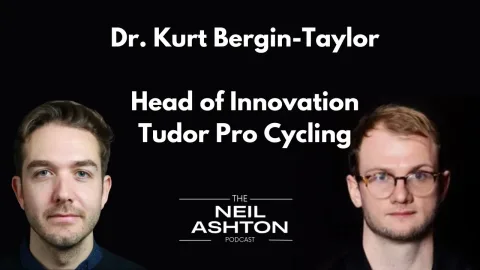
Dr. Kurt Bergin-Taylor — Head of Innovation, Tudor Pro Cycling
Watch on YouTube
Dr. Kurt Bergin-Taylor — Head of Innovation, Tudor Pro Cycling
YouTube video
Watch this episode
YouTube is contacted only after you choose to play the video, keeping this page fast and private by default.
Listen to the audio
Episode overview
In this episode of the Neil Ashton podcast, Neil discusses the intersection of cycling and engineering with Kurt Bergin-Taylor, head of innovation at Tudor Pro Cycling. They explore how technology and science are transforming cycling into a more competitive and innovative sport, akin to Formula One. The conversation covers various aspects of cycling, including the importance of aerodynamics, nutrition, and the holistic approach to rider performance.
Kurt shares insights from his academic background and experiences in professional cycling, emphasizing the need for tailored training and the integration of technology in enhancing performance. They discuss the future of cycling innovation, emphasizing the importance of individualization in gear, collaborative relationships with partners, and the evolving mindset of young cyclists. Kurt highlights the significance of data and AI in optimizing performance and strategies in cycling, while also addressing the need for viewer engagement in the sport.
Finally Kurt shares valuable advice for aspiring engineers looking to enter the cycling industry, stressing the importance of mentorship and practical experience.
Chapters
- 00:00 Introduction to the Podcast and Themes
- 04:55 Kurt Bergin-Taylor: Background and Role at Tudor Pro Cycling
- 10:08 The Structure and Dynamics of a Pro Cycling Team
- 12:59 Innovation in Cycling: Aerodynamics, Thermal Management, and Safety
- 19:14 Nutrition, Training, and Performance in Cycling
- 29:18 Future Innovations in Cycling Equipment and Systems
- 30:42 Understanding Individualization in Cycling Gear
- 34:30 Collaborative Innovation in Cycling Equipment
- 38:20 The Evolving Mindset of Young Cyclists
- 42:28 Enhancing Viewer Engagement in Cycling
- 46:24 The Future of Data and AI in Cycling
Transcript
This transcript was created from the corrected YouTube captions, with names and technical terminology reviewed. Download the corrected SRT file.
Hi, and welcome to the Neil Ashton Podcast. In each episode, we explained some of the fascinating ways that science and engineering are changing the world around us. We talked to leading engineers from elite level sports like cycling and Formula One to some of the world's top academics to understand how fluid dynamics, machine learning and supercomputing are bringing in a new era of discovery. We also hear some of their life stories, their career advice, the lessons they've learned on the way that I hope will be helpful to you too. So sit back and enjoy this episode. Hi and welcome back to the Neil Ashton podcast today. Super excited about this, this
episode. I'm a big fan of cycling. I'm a big fan of the use of engineering within sports, hence my love of Formula One. And I couldn't think of a better person and team to speak to, to help people to understand what cycling is all about and why engineering and technology is such an important thing for the sport. And in some ways, cycling is becoming, in my opinion, and growing to become more like Formula One in being not only a human sport, but one where technology is really making a difference with really exciting innovations that that then make their way to to you and I, you know, the, the, the public. And so today I'm speaking to to Kurt, Kurt Bergin-Taylor, who's
the head of innovation at Tudor Pro Cycling. And I kind of say in a way that if you're in the know, you're a bit obsessed with with cycling like I am. I think it's pretty universally accepted that Tudor are actually one of the up and coming teams who I think have a very good chance in the next sort of two to five years of winning Grand Tours and some of the biggest races. As you'll find from the conversation today, you'll see they are taking really an amazing long term view of how to take technology and, and really, yeah, build up a team and a process and science to to really extract the maximum performance
out of their riders. And of course the equipment based in based in Switzerland with a very famous owner in Fabian Cancellara, who of course is one of the world's most famous cyclist with amazing palmares and and Tudor obviously is one of the world's sort of top, top watch brands. It's a, it's a very interesting company, but really what we're talking about today is about what what is cycling, I suppose a little bit just to start off with. That's how we started the conversation. But really diving into the areas where technology makes a difference, where science makes a difference, and ultimately where there is innovation potential, which is the whole
point of of Kurt's job. So we go through, you know, things like nutrition, thermal, so how the human body reacts to heat and cold. We talk about some of the influence of aerodynamics around the development. You hear some of the stuff they're doing, their use of CFD in terms of, you know, mannequin pedalling mannequins, how the strategy happens. You hear some about the number of race days that they have, the logistical challenges, hopefully all just to give you a better sense of why I again, I perceive now cycling as being, if you're into Formula One, I always say get into cycling because I really do think it's great human
and technological sport. But at the end we talk about something that again, you, you know, it's a common theme of these podcasts is advice for people wanting to get into to the sport of cycling. But I'd say just in general advice for people wanting to do well in engineering and science and in any of the sort of sports engineering side. So, yeah, I, I, I really enjoyed this conversation. I, I actually learned some things from it and I was even more motivated with all the latest technological advances. So I, I hope you are too. I'm going to put some links in the chat about Tudor and so you can learn a little bit more
about the team because again, I do think it's interesting and hopefully from there you'll make your way to learning a little bit also about the sport if you're not so familiar with Pro Cycling. So yeah, today sit back and enjoy this episode with Kurt Bergin-Taylor of Tudor Pro Cycling. Maybe you could tell a little bit more about yourself and Tudor Pro Cycling. Some people listening are probably really into cycling and proper geeks and know about the different teams. But maybe just to level set everybody, maybe you could just say a little bit about you, what you do at Tudor and who are Tudor Pro Cycling. Yeah, absolutely, Neil.
So really my background comes from from academic. So rather than some people in cycling who've come from kind of being a professional athlete themselves, mine's more from from an academic background. Did a master's and then a PhD at Loughborough University in the UK and that was really around kind of physiology and nutrition around cycling really. So understanding kind of from a human component and that really kind of enticed me into wanting to work within, within cycling. I was really fortunate at that point in time to be able to work with people on the track. So people like Dan Bigham, who's kind of a performance engineer now working within cycling and
also and, and doing some really interesting things about that human equipment interaction and, and looking at how to move forward, performance forward. And, and it attracts a really nice environment for that because it's, it's measured, you know, it's controlled. It's like a science experiment every time you go on the boards. So it's really has this culture for for innovation and that was something that I enjoyed so much. I really then decided I wanted to work within within cycling. And then I had the opportunity to go to Canada. So I worked for the Canadian federation on the track towards the Tokyo Olympic Games.
And that was a really amazing experience in this kind of performance scientist role. So sitting in between the human, the equipment, the whole system innovation really and looking at that as a as a system and that was such a great experience towards that games. And yeah, really had a positive impact on on where I saw myself moving forward. Then COVID hit and yeah, the whole world kind of changed. So that was really a point where we decided that we had to come back to Europe and then had an opportunity to work within a professional cycling team more as a coach, which was Team DSM at the time. I worked there for two years,
mainly in that physiological kind of coaching role. And then the opportunity with Tudor Pro Cycling came up to kind of sit back in that more holistic kind of space. So working with the physical and technical components of cycling, which is where I kind of see myself really as as a scientist, like not as a as an engineer, not as a physiologist, but really as a scientist. You can kind of, you know, make experiments, understand A versus B, and then find the right people with the expertise and knowledge to kind of drive things forward. In terms of the team, it's a really, it's a really interesting story. It was really born out of a team called Swiss Racing
Academy. So there was a team in the past, a continental level team, which is like the third tier basically of cycling that was there to encourage Swiss riders to be able to make it professional basically. So it was a team that was made, so they had basic conditions to race, to have a salary, to have bikes, and that has been there for many years and was really kind of a successful pathway for Swiss riders to get into professional cycling. And in 2022, essentially that was going to close. So they struggled to gain their funding and it happened at a really difficult point in terms of timing. And basically, the guys who were left on that team were not going
to be able to find another team because all the teams were full. And then the owner of our team, Fabian, Fabian Cancellara, who's a very famous and successful cyclist from, from Switzerland, really saw this opportunity as really saving, you know, the opportunity and careers of these, these young Swiss riders. And he put himself in their shoes and said, well, if I don't step in and, and give them this chance to, to ride, like what's going to happen to their career? And that's really the, the start of that process. Then he found out pretty quickly, you need sponsorship, you need help, you need support. And that's where Tudor came in.
Tudor being the, the watch brand, part of the Hans Wilsdorf foundation with Rolex as the main sponsor of, of the team. And that started in 2022. And now we're we're going into our third year of being a Tudor Pro Cycling really, which is it's gone from strength to strength. We're a pro team, so second tier technically, but with like a world tour mindset. So we really see ourselves growing towards being one of the biggest teams in the world. And we're investing now in the kind of future of the team. We have a really long term vision. We invest in the staff, we invest in the people, we invest in the science really because we know long term that's what's
going to make us at the highest level in the sport great. Yeah, and I suppose at least from, from myself watching it, Tudor's definitely seen as one of the top teams that potentially will get, you know, promoted, I guess, you know, in the in the coming years and gets the invitations to the to the sort of Grand Tours. So I guess to many people who are not deep into sport, you may people may not know the difference between the second tier and the top tier because Tudor tends to be in actually quite a few of the big races anyway. But you know, before maybe we get into some of the more detailed topics, what you know,
what's it like working for a team? I imagine it's a bit like Formula One where there's a difference between, you know, the races, you know, the Lewis Hamiltons and the Julian Alaphilippes now and the team behind. So what what does it look like to to work for a pro team? You know, like a typical week, you know, how much are you at the races versus back at testing places in factories, just to give a sense. Yeah, yeah. No, I'd say the first thing is it's not very typical. So it's, it's one of them industries where especially my role kind of as as head of innovation, it really sits across, you know, many different disciplines and, and yeah, with with the first thing really with
cyclists, the season is so, so big. So we race from the middle of January until the end of October. So we can be racing at three races on the same day all across Europe and even across the world. So it's a big logistical challenge first of all, where where everything occurs. We race roughly around 250 days a year in that period. So it's quite a lot of time on the ground that's obviously without the preparation before, after logistics and things like that. So that during that period really most of the time is focused on delivery of race delivery of performance delivery. So a lot of my support then is about optimization of setups,
making sure that all the work we've done is executed. We, we have a really big push on, on the application of innovation. which I think is really important because we can do a lot of, you know, really cool things, but actually to get them to be applied at the right time with the right people in the right races is massive when you can have 3 or 4 races going on on the same day. So that's a big push during the season. We still have our innovation team that runs basically 24/7 throughout the season as well. So we have a setup based in Silverstone. We have 4 full time engineers, we have a PhD student, we have an industrial designer, all
working on technological development. So we look at all the strands which we can approach really and we move them forward. And we have 3 strategic themes with all our innovation. So we look from aerodynamics because we know that's the biggest force that we overcome as a cyclist. We look from thermal because we know thermal challenges are really, really important. And then we look from safety. So everything that we do, we always try and say, can we make it faster or economically, can we understand the thermal properties and can we ultimately make it safer for the riders going into race and competition. And that can be if we're in the wind tunnel testing, it can be
if we're doing fabric testing in the wind tunnel, whole system testing. How are we doing bike development? How are we doing CFD simulations? Are we doing velodrome testing? Are we in the field, doing in-field measurements of rolling resistance or tire development? Are we working with academic or industry partners on different projects? So it's really varied depending on what we have going on at that point in time. Yeah, I always find this fascinating, and I guess This is why so many people I know have this love of cycling who also tend to be into things like Formula One, because the technology is such an interesting part of it. But you mentioned something
about the thermal side and that's something that I personally wasn't as familiar with until I personally did the Étape du Tour in like very hot temperatures. I was like, OK, thermal does actually make a lot of difference. So maybe could you explain a little bit more because I think this may actually be useful for day-to-day cyclists who are doing things. What sort of technology or learnings do you get about cycling in sort of more extreme conditions over, you know, very hot or very, very cold? But how does that influence the performance of a cyclist? Yeah, it's a really good question and it's something we see more and more is integral to
the performance. I think that too are very different, you know, scenarios and situations. If we look at hot weather, we know that in Europe, from probably May until the end of August, it can be 35–40°C in some races, which we know is a really extreme environment. And we also know that the riders are getting fitter and stronger, which means they're putting out more power outputs, which ultimately means they're putting out more heat as well. Because yeah, what you see on the pedals is actually probably only 1/4 of the energy that's actually produced. The other 3/4 of that is thermal energy as well. So we know that you have these guys sitting in really hot
environments making a lot of thermal energy, and something has to give. And ultimately that is performance. You know, we see more and more that it can be so critical to performance. If you overheat, things start to shut down, your body protects you from that and ultimately performance is part of a consequence of that. So we try and do a lot of research around heat. We do probably a few different strands. So we do kind of prevention and preparation. I would say so. We train the riders to tolerate heat demands. We know that that is a trainable stimulus like getting fitter. You can also tolerate heat better. You get changes with your sweat response, you get changes with
plasma volume, you get these physiological changes which allow you to to basically deal better with the heat. So we do a lot of that preparation and we've seen more and more in cycling. That is probably the thing that's really increased a lot in the last year's research around that area, understanding of that area, understanding the transient responses that can be done there. And then we also see we do a lot of prevention stuff. So we look at precooling. Can we bring down the temperature prior or even during exercise? Can we create a bigger thermal sink so that we know there's just more room to drive heat into? And there's lots of great researchers in that area.
We work with partners quite a lot on on that. We do a lot of work around fabrics and helmet design and things like that to understand convective cooling and, and material components and properties to really help with with that. And we're doing a lot of work around UV radiation because we know also this, you know, the radiative effect of sun as well and things like that. So there's definitely a lot of work to be done from a heat perspective to really allow athletes to perform in hot conditions. But like you said, also in the cold, it's something we see more and more. You know, some of the biggest one day races in the world,
they're in Belgium in the middle of March and April. And I can tell you now from being there first hand, you want every layer of clothing you have on possible because the conditions can be really quite harsh. And that's something we also know if riders get cold, if they get wet, it also has a massive detriment on their performance. So it's something we work on quite a lot to also understand what can we do from a material perspective, from an intervention perspective, How do we do the logistics around that? You know, there's so many things that ultimately come back to logistics. How do you make sure you potentially have hot bottles that are available on the course
when the whole peloton is strung out over over a few kilometres or doing clothing development to understand how to, you know, improve breathability or insulation in a harsh environment. So yeah, we really try and do quite a lot of work around that to understand what's going on. And I think on top of that, just something we've generally been doing with the team is we do a lot of work to understand real world conditions. So it's something that's been a big project that we do around everything is we have all these tools and techniques to, you know, to simulate in science. We try and take out the variables to to get answers, but
we're trying to also understand how we tune them variables to understand things moving forward. So thermal being a massive piece, but yeah, wind, turbulence intensities, all these different things we're trying to understand so we can really make more informed decisions with the tools we use and the data that we drive out through our through our techniques. And maybe linked to that then, So what about, you know, we've seen a lot of people now tracking and I think there's some brand names that are shown on certain TV show commentary, you know, where they talk about their recovery, their sleep recovery and nutrition, things like that.
How much of that do you think has contributed or maybe here's the big, here's the big question. You look at the current riders and look at them breaking records and and seeming to go faster and faster. How much of that do you think is down to bike technology? So aerodynamics, how much of it is down to training and how much of it is down to things like nutrition and sleep? Like what? Do you see them all equal or do you think some are more important than others? Yeah, I think they've all played their part in improving cycling
over the last kind of 10 years, I would say. I mean, taking them individually, nutrition has been a massive driver for sure. If you look at where cycling was 10 years ago and where it is now in terms of definitely all the research around carbohydrate intake, how to increase uptake, how to understand fueling, that's dramatically changed. And that we really know has helped drive performance forward. Because if you can have more carbohydrate availability and you can oxidize more carbohydrate, you can generate more energy. And I think that has been a, a big push with performance. And I think you see now that the training volumes that are able
to be sustained the the physical level within racing and and just what you see mainly under fatigue. I think that's the biggest thing that we've really seen a shift is. Not only the fresh capacity of riders, but what they can do after four or five, six hours, what they can do after days, weeks of stage racing. I think that a lot of that is down to really optimizing nutrition. And you can see even since I've been working in professional cycling, the investment from teams around the area. You know, we have two nutritionists, we have 4 chefs, we have a food truck, we have nutrition sponsors, we have nutrition partners, we have
academic nutrition partners. We have data scientists that look at all the data that we generate around nutrition. Actually, you know, we measure hydration status. We look at energy expenditure to make sure that we match on a day on day, on a meal, on meal basis across, you know, a Grand Tour for instance. And a lot of that has really helped drive performance forward. We see riders can train more, get sick less and perform much better, especially under fatigue. And a lot of that I think is down to nutrition over the last 10 years, definitely aerodynamics and equipment development has moved forward a lot. You know, I think there was some teams early on that kind of
clicked this. And I think, yeah, you know, it started really on the track. I think if you look at equipment development and where you see performance, I think British Cycling were kind of the the real front runners of that from probably 2004–2008 onwards on the track. And then they're starting to understand the physics involved. And as you know, there's such massive potential there. The rider is, you know, 80% of probably the drag in the system. And then what you wrap the rider in is a big part of that as well. So it's there's a lot of opportunities there that are now starting to be more and more understood. And we just see that the peloton
just goes faster and faster. And for me, knowing the relationship between power and speed is, is cubic. It can't all come from power. You know, it's not that riders are all of a sudden getting to the, you know, to the cube more powerful, but actually the, you know, the, the demands are coming down as well because we're getting more aerodynamic. We're understanding that speed relationship. So that's been a big driver moving forward. And I'd say because of that, that's why as a team we're really, really focused on the safety part as well, because we just do so much, so many innovations to make our riders faster, fit and stronger, but we're also then putting them at
more risk. You know, if you can go down, if you can go down climbs 10 kilometres per hour faster now, if you can take corners faster, if you can do this faster, that faster, we should also look after the riders more. So that's really why every innovation we do, we also take on that responsibility to make sure that we try and keep them safe as well. And I think, yeah, every team should do that. But we take that really seriously at Tudor Pro Cycling. Yeah, that's a very, yeah. There's definitely a sort of hot topic, isn't it, on the equipment versus the rider versus everything. It's, yeah, one I guess you could dedicate an entire
conversation to. But one thing I did on that point of maybe training, I was listening to Geraint Thomas on, you know, on his podcast and I think he was talking with Pavel Sivakov about like the different training and they were talking about the sort of Team Sky where they basically just starved themselves and and went out comparing to now Pavel was talking about the sort of zone 2. But I always thought it was surprising because I assume that, OK, all the team do that anyway. But it it sort of made clear that he was describing that there was they spent a lot of junk miles that people would just go out. And because they're chatting
with mates and they're drafting and they're so strong, the riders that they were probably only in zone 1 where now they're trying. And he says he was, he almost starts just training on his own because it's it's impossible to do. Is that something that you've seen as well as a very recent shift towards this more rigorous focus on extracting the maximum amount of all the time you're on the bike? Yeah, it's really interesting with training methodologies, there's, there's many ways to do it. And I think the longer I've worked in professional cycling, the more I've realized that it's really tailoring it to each individual rider.
That's the most important thing. And the reason I say that is it's, you know, they have the same demands, you know, relative. I mean, a sprinter's obviously different to a climber or a classics rider, but they're endurance cyclists first of all. So there's this key kind of physiological underpinning of what you're trying to achieve to and then you've got these specific components on top. But I think we're a lot of or where maybe even when I was younger, people see training as is, is as you're training the machine, you know, you have these inputs and you have an output. And what we know now more and more and what I know working with with humans is that the
input you put in doesn't always necessarily end up being the output. And the reason being is that, you know, training is the one lever we can adjust as a coach or as someone working within cycling. But what we can't adjust is the stress on their on their everyday life, their family, did they sleep well? What's their nutrition like? Are they happy? Are they depressed? There's all these different factors that go into a human being. And that what we understand more is that humans are very complicated systems. They're not just, they're not just individual inputs, but they have all this, these inputs actually interact with each other as well.
And I think it's more about, I find tailoring the training relative to that. So you have your idea, you have your plan, you have your overall vision and goals and periodization, things like that. But it's been able to to tweak and tailor that relative to what's going on within that rider's life. Because, you know, you might have the best plan in the world, but if they're not eating properly or they're stressed at home, or, you know, they're running a second business on the side that you don't know about, then actually your optimal training might not be correct. Because, yeah, it's good on paper and it moves forward.
And I would say every training methodology can have its benefits. It's something that I really reflected on quite a lot. Now, working in different environments and different teams, you see lots of different ways of achieving success. And ultimately I've seen things that, you know, maybe I wouldn't actually have done, but I've also seen them be very successful. And I've also started to, to, to learn and understand from, from them experiences that you can do things in many different ways. And yeah, some teams have certain philosophies and, and some riders go really, really well for them philosophies and other riders don't. And my philosophy is always to
try and make the individual rider better. So I and I think when I look at kind of successful coaches or, or people that I really respect, it's the ones that make all their riders better, not just one. And I think that's where that individualisation, that communication with a rider, that understanding of where they're at and tailoring their training to them is stronger rather than just saying, OK, this is my training philosophy, we do it or or you don't. Yeah, that's a good point. And I guess this is what's, I guess maybe to people listening or to watching this who are into cycling. It's always the tricky thing because we there's always a
temptation to follow a specific guide because you hear that somebody else does it, but you don't know whether should you just follow it and you just need to suck it up and just, you know, deal with the suffering, or is it just not well suited to you and you would be better doing something else? It's, you know, there's so much not misinformation, but there's so many different theories out there, isn't there, that it's hard for an amateur cyclist to really know what to follow. It's it's. Yeah, definitely. Sensationalized as well. I think so, especially when you, you know, you have a full time job and a family and and
everything else and you're trying to do this as on the side, it is really difficult. You want to try and extract as much as you can out of it. And that's where I think it can be difficult because professional riders, they ride the bike, that's their full time job. And actually the other thing they can do is they can recover professionally. And a lot of amateurs can't do that. And I think that's the the challenge is you want to do what the pros are doing, but actually you can't do the recovery part. And we know that adaptations, they don't actually occur when you're on the bike. The stress happens then, but the adaptations happen afterwards.
And if you can't have the adaptive processes, then maybe the training doesn't fulfill what you want it to achieve because you can't do the other proportion of that. Yeah, no, that, that makes complete sense. So what maybe going a little bit more into the, you know, the bike side of things. Where do you see the the sort of big performance areas nowadays? You know, is it, you know, in the bike, the fabric, you know, the tyre choice, you know, where some of the maybe interesting areas that that you think have led to some gains and maybe where are sort of future areas that people are starting to to explore now? I think the biggest thing you can look at really is, is the
whole system approach. Like for me this is really critical looking at the rider and all their equipment as a whole system. The more kind of information or, or testing I've done, what you see is if you change one component of it, it's a cascade and everything else is interacting with that. And if you can't just say this helmet is fast, this skinsuit is fast, this bike is fast. It's in what context with what rider, with what demands. I think that that's the really kind of where I really see the innovation happening now on that individualized level, you know, because there is just such different demands on on them individual user cases. So, for instance, a sprinter,
you know, we know sprinters go 70–80 kilometres an hour in the final and we know they have to have very aggressive positions to try and put their heads in certain places. And we know because of all that, that we need to understand certain flow structures, certain stiffness, aerodynamics, we need to understand vision, we need to understand how all that interacts with each other. And we need to understand fabrics relative to that rider at them speeds. Whereas that is completely different. If you look at a climber, for instance, you know, the demands of a climber are going up, the climber probably coming down, the climber on the other side. And if we look at the whole
system, the position, the orientation they're in, it's a completely different system. So one helmet is not going to be perfect for both. One skinsuit's not going to be perfect for both. One bike's not going to be perfect for both. So I think what we'll see in the industry of cycling is long term is this individualization development. So can we build stuff on an individualized basis? Can manufacture methods cope with that? You know, can we find ways to really individualize it? And I think that's where we see real benefit in terms of the performance moving forward. Yeah, that is so interesting. I, I must admit that that sort of aligns to some of the
findings that I found, you know, when I was working on some of the British Cycling stuff. It's almost an unbelievably complicated optimization problem because you know that the, the bike, the rider, the wheel, the helmet and you, what you really want to do is test every combination with every other combination. And then whereas I guess a lot of the time because of commercial reasons, partnership reasons, you're like, hey, helmet manufacturer independently just give me a good helmet, but you haven't been involved in that. So with that, what you're trying to say that you're trying to be more involved with the partners
so they can, so you're not just buying off the shelf something they've made, but potentially it's a little bit more aligned to your needs and how that interacts with the other bits you have. Yeah, 100%. It's something we've really driven forward in the last years and it's still a continual process. But we have what we call like reciprocal relationships with our partners. So we really make sure that when we select our partners, their partners that want to go on this innovation process with us because it's not easy, you know, it costs money, time, effort and we're really, you know demanding of what we want. But we're also, which I think is
quite unique, we also have the capacities in house to actually put time and resource towards them problems. So it's not that we just knock on the door of our partner and say, OK, we want a new bike or a new helmet. We say no, we want to go on this project with you. We understand the demands that we're aiming towards. Let's do it in a collaboration. So, you know, a perfect example could be when we were developing a new helmet and we were developing a new helmet with a, with a new partner and we had wind tunnel trips happening in, in, in their location. Wind tunnel trips with our, with ourselves in the UK. We had riders there, we had 3D pedalling mannequins.
We did simulation, we did all these collaboration approaches, thermal fit development over over over a long period of time to really make sure that the initial product we had was as evolved as possible in the time we had. And yeah, and we continue to try and do that across all the things you said, the bike, the tires, the wheels, the clothing. It's something that we're taking ownership of internally as a cycling team. And I think that's quite different to maybe many other cycling teams is we invest resource in that. You know, we have engineers, we have an industrial designer, we have fabric experts in house that complement the expertise of our partners to really make sure
that there's investment from our side to to tailor the products to exactly what we need. So we really start to understand that and move it forward and we see that that will really be our way of moving forward and, and being at the forefront and it takes time, but I think it's the right way to do it. Investing in that innovation process is where we see really critical to to our performances in the future. And how easy or difficult is it or a barrier to get the riders involved because you've said at the same time they're off doing 60–70 race days or however long some of them do, How easy is it to get them to come, you know, to a test or to go?
Is that a limiting factor sometimes? Yeah, there's a few things to that. I think the first thing we do is whenever we speak to new riders, we always tell them about our process, that we're, you know, we're an innovative team, that we take risks, that we push the boundaries on these things. And that ultimately that requires investment of time as well. And you know, for some riders, maybe that's not what they want from their cycling team. And therefore it's a conversation to have early on to set expectations. But we've also realized as we move forward that still it's, you know, it's impractical to expect riders to be available
24/7 for the, for these learnings. So what we really try and do is we try and leverage methodologies that allow us to do a lot of the stuff beforehand. So we do a lot of simulation. We have 3D scans of the majority of our riders. So we can do a lot of digitalization. So we can do a lot of CFD computation. We can do a lot of clothing optimization fit, we can do a lot of understanding external to them even being needed. We also create mannequins and we have mannequins of, you know, our higher priority riders pedalling mannequins that allow us to go to the wind tunnel and test things without them being there. So we have really high
repeatability methods. You know, it's also what we find is with riders, I'm sure anyone working with humans and doing testing, as you see that it's really difficult to get reliable data because naturally you're a human, you get tired, you get hungry. Whereas if you have a mannequin, you can run them for 10 hours a day and get ready for repeatability and not have to feed them. So it gives you a lot more scope and capacity to do that work. But there always needs to be a validation step and that's really important. We always make sure that all the work we're doing loops back to either field testing or some kind of simulation tool, be it wind tunnel track testing in the
field to validate the findings that we find from doing all this kind of in-depth research. And for sure that costs time from the riders. But we try and educate our riders on why we're doing that. We, we empower them, we show them their data. You know, I think we're really open from that perspective. We, we give them that information so they understand, OK, we're asking you to do this and we've provided you this and this is the consequence. And for the majority of riders we work with, they're really involved in that process and they really understand it. I think it's one of the nice things with cycling. It's such a data rich sport that actually a lot of the cyclists
understand watts; they understand watt savings, they understand speed gain. You know, they're even some of them, you know, they understand aerodynamics and they can quote you the equation for XYZ. And yeah, it's definitely something that's really powerful in cycling that that you can have that conversation and they know how hard they train to try and gain 10 watts. So when you can tell them you can find it from something else that they're usually quite grateful and willing to invest that time in. It and do you see a shift between the younger riders who were just coming through from the development squads and the older riders?
Is there a has has has all of this changed? The past 5–10 years meant that the younger riders are far more educated than maybe the the older generation are. Yeah, it's, that's a really, really good question. It's something that we we see quite a lot in many different ways. So I think generally the younger generation are a lot more, like you said, maybe educated on it and, and, and thoughtful of it, but I'd say sometimes also obsessed with it, which can be quite interesting. You know, it's sometimes they think it's a, it's a PlayStation game and, and you know, it's a laboratory and, and, and it's, you know, it's only this equation of numbers and, and,
and clothing and equipment and things like that. And what you actually see is, you know, you've also got to make decisions within a race. You've also got to be able to tactically and technically be able to execute on a bike. And there are things that sometimes are often overlooked, you know, with the younger generation that that that's what also wins your bike races. It's not just all this physics, but actually there's a it's a sport and there's decisions and it just we had some really interesting talks with with Julian. Julian has joined the team recently and historically, you know, he's not a man who's obsessed with data or insights, something like
that. He's a guy who wants to race his bike, but he also understands the value of it and he trusts that if we say, OK, we're going to do XYZ, we're going to try to prove it, that we're working on that in the background, you know, and he's really open to that. But that was one of the things that was really important when he joined the team that we do this stuff. But he also has that passion about racing your bike and, you know, and educating the younger riders on tactics, technical positioning. There are things that we also know are super important as well. So it's definitely an interesting time in cycling from that regard. Yeah.
And I think that's a really good point actually, because I feel in some ways that, you know, Team Sky arguably were the one that really heralded this shift to a more like marginal gains obviously data-driven, but I would argue that potentially it turned. Maybe it was the personalities who were in the team, but he was a little bit mechanical, a little bit the emotion maybe went out of it a little bit, which led to a bit of a backlash almost on some of that. And but now you've got people like Tadej who clearly do a lot of the data stuff where you, you know, he does a lot of training and the team. But it it it's perceivably seems
more impulsive and more emotional, a bit like Julian Alaphilippe. So I guess the sport has to balance both, doesn't it? If it becomes too obsessed with all the data and sort of mechanical stuff, then the human side and what we love of seeing riders may sort of lose that as well. So I guess maybe that's the the balance isn't? It definitely, it's storytelling, you know, it's people, it's, it's, and I think the same thing happened with F1, you know, it's, it's, it's finding a way for people to to build them emotional relationships, to tell these stories, these experiences. That's just as important as all the tech that allows for them
things to happen, you know. So it's definitely this, this balance for sure. Yeah, One thing that I would love to see, and I, I assume it's been discussed and maybe it's just not happened for various reasons, is I find the riders are so good at masking their pain that it's, you don't always know. And as a sort of more geeky person, I would love, and I know they've started to do this a little bit, but I would love to have their like body temperature, their heart rate, their power, like in real time. So I could sort of see how much they're suffering almost, you know, because sometimes you see somebody and you think they're
doing great and then they suddenly just go and you think, surely, you know, he's felt that for a while, but he's just hidden it, you know? Do you know what I'm talking about? I don't know. The data could be. Used to make the sport more interactive in a way. It's a really good point and it's something, you know, as a, as Tudor and, and people I speak to have thought about a lot. It's, it's how do you improve that viewer engagement? You know, can you give more insights to allow, to allow for a better experience? And I think it's something that F1 did over the last, you know, 5 or 10 years with cameras and, and having more of the, the
radio on on on the TV and things like that. I think them things are that they're the really nice insights that you gather and you think, oh, OK, yeah, that, you know, I have this unique insight on what's happening in the F1 car. And I think cycling can, can definitely move forward. There are there are some initiatives, there's initiative called Velon, which is kind of a set a separate company that kind of is attached to certain races and they have like more data insights and they share certain insights they have in, you know, in video footage of the races. But apart from that, it's quite controlled from the UCI. So it's not something a team
could do individually. You know, it's not like we could put cameras on every bike and release it to the world. It's very restrictive from that perspective. So it would take a from a UCI level from an organization to, to kind of take it forward. But for me, it's something that should definitely be done. And if it's done on a level playing field, there's no negative consequence of that. If everyone has to have a camera, then it's the same, you know, and then you get all these insights. So no, I will be definitely for that. So maybe one you, you mentioned a little bit and maybe this is tying a little bit to some of the AI or machine learning side
of things, but maybe first on the strategy side. So you've talked a lot about nutrition, bike design, how much data can be used to optimize strategy? You know, when someone should try, because sometimes I watch a race and I see somebody try to break away and I think surely there's an optimum power for them to just get that break, you know, to get the elastic to go. And you think, oh, if they could have just gone for another 10 seconds, maybe they would have actually made it. Is there any way that you can look at that sort of more strategy side of things with the data-driven sport as it is now? Yeah, it's something I think a
lot of teams are are trying to do and excited about. Like I said, cycling's a very data-rich sport. So we have a lot of data. You know, we have second by second data on all our riders for maybe 1000 hours of training a year for many, many years. So we have a lot of data there and I think people are now starting to harness it. We definitely have quite a few projects that we look at, you know, we try and look at certain riders. Can they make it in certain races, you know, maybe sprinters for instance, can they pass certain climbs? What's the probability of chances of success to get to a certain point? Yeah. Do we expect a breakaway or not? I think it's quite an
interesting one. Do we expect it to to succeed? Should we should we participate in that on certain stages? I think there's, there's lots of things that can be done. There's a lot of stuff around race choice and, and picking certain races for certain riders, understanding where their kind of potential is, you know, for, for results. So yeah, there's definitely a lot of optimization for, for those kind of data insights from data that's driven there. And then I think also with AI and, and the other kind of emerging techniques, there's, there's lots of stuff to be done around, around all the CFD computation stuff that we do.
We've found that really in the early processes of that, but every time we run a simulation, every time we generate some data, we know that there could be long term potential insights in that data. So it's really about understanding how to sequence, to store, to evolve to know that maybe, you know, maybe not now, but in one year, 2 year, five years, there's, there's insights that can be gathered from that. And I think it's, yeah, making sure you're in the the right place now to set them things up so that in the future it is definitely a possibility, that's for sure. So would it be fair to say that probably cycling has for the past, you know, 2-3, four years
been moving far more to a data-driven approach, But we're, we're only just entering now the age of really AI for it. That would it be fair to say that most of cycling is probably always just now really getting into potential. So that could be something in the coming years that that could be used because as we talked about that sort of design optimization, you know, you've got so many different choices that seems or even logistics, I guess AI is a classic tool for optimizing things. Yeah, yeah, it definitely is something that I think we'll see more and more of. I think the sport itself is getting more professional, more
funding. It's having, you know, more people like myself working in sport, you know, kind of sitting in between the lines of of scientists that are kind of integrated. And yeah, I'd say most of the highest level teams now are starting to understand that and invest some of their resource in that and not just in better riders or, you know, or things like that. So what how about for for Tudor in particular, what does the, the sort of future hold? What, what's the big target, I guess this year and the coming years that that is driving all this towards? Do you have some very specific things that the team is trying to, you know, focus on and and
and succeed? Yeah, I think as a team, I mean we have, we have quite a lot of strategy. I think in terms of where we want to go. We're we're really fortunate that we're a long term team. We have a long term vision and and a sustainable long term vision, which I think is quite unique in cycling. I think the first priority of the team is really to be in a position to allow us to have the full race calendar. So for people who don't understand cycling, if you're not a World Tour team, if you aren't one of the top 18 teams, then essentially you're kind of at the will of the race organizers to invite you to the biggest races.
So we know if we achieve a certain rating every year, being one of what's called the top 2 pro teams, then that will allow us to have a full race calendar. And then once we have a full race calendar, it then opens up all the opportunities in terms of where we want to go and how we want to do stuff at the moment. Because we're a brand new team, we have to rely on them invitations, which can make planning and strategy quite challenging sometimes. So that's our first real goal. And really the long term goal, especially from my perspective is around the innovation team is really to just be a world leading innovation team with
regards to performance. So safety, aerodynamics, thermal from all the opportunities, having this whole system, individualized approach around key riders, looking at them as a whole system is really where the next, you know, 5–10 years look like. And we can really do that ultimately, because we have a sustainable platform to launch from. You know, it's, I can imagine it's quite hard if you're in a team that's unstable to think, you know, I'm going to do this now and it might not pay off in five years, but we, we're in a real good place that we can do that. And I think that really allows us to be a front runner in the future and really invest in this
kind of data-driven science driven approach. So maybe turning maybe towards the end of the of this chat, towards the topic that, I think is I personally am always interested in which is the advice for people and engineers wanting to get into the sport. You know, you, you came through the PhD route and then you, you know, you sort of work towards, you say like different sports, then track and then team, you know, looking back, what sort of advice? Maybe let's break it down from a is it? Yeah, well, first of all, high level advice and then maybe we can pick apart some stuff. Yeah, I think about this a lot. I I really try and, yeah, take responsibility on myself to, to
look back at, you know, when I was younger and what were the reasons why I, I'm in the fortunate position I am now. And I really try and give back to that because for me, some of the things I really reflect on is I had really good mentors. Like I had people who went through that process and really allowed me to connect, to discuss, to learn, to evolve, grow. And I think that was fundamental to where I am today, having them mentorships. If it's just having a coffee, picking the phone up, what do you think about this? Oh, I have a friend who does this. You know, why don't you have some conversations? I think that I'd really
encourage that spirit of, you know, mentorship is really important and I think it's responsible both for young practitioners, but also for experienced practitioners like myself to, to also give back, I think is really important. I think the other thing is work ethic and, and, and doing your time like it's something that I really, you know, pride myself on and was something that really allowed me to move forward. You know, I was the first person to say yes to a volunteer opportunity to fill up bottles on the side of a rugby pitch, you know, or if it was to go to a swim meet in, in, you know, wherever and at 6:00 AM in the morning, just to, to be embedded
within sport opportunities. And I didn't, and I really tried to take on as many opportunities as I could when I was younger just to see and feel and understand why I wanted to work in professional sport. And that goes a long way because when people see you're just willing to, to say yes and, and to, to understand and learn, I think can be really valuable. And, and that's a trait that I really look for in people. I look for that kind of willing spirit. I think a lot of people in my experience, you can train them for the, for the skills that you need, but actually the, the character and personality of someone is kind of ingrained.
And I think if you can show that, you know, you're willing to, to work, to, to listen to, to put, to put effort in, to be passionate about something. I, I go for that any day over someone who has, you know, five years experience of doing the job already, You know, I really look for, for that. So that would be some of the things I would say mentorship really and and that kind of spirit of just willing to, to do. And what about from a practical point of view? What sort of are you looking more for like engineers, more for sports science, more for like data science? Is there certain sort of skill sets and maybe degrees that put you, I guess traditionally
sports science would have been the route in to a sport. Is that still the case or do you think it's more about like engineering and data science now? I'd say historically you're correct. It was sports science and, and really probably was, yeah, the first investment I'd say from professionals, at least in cycling was sports science and understanding sports derived things, physiologists. And what you saw is then people generally then sat like myself across many spectrums. You know, we did data science, we did performance analysis. We kind of did the bits that we did some nutrition, maybe we did different things to really allow performance to move forward and
having that generalized skill set was probably the way in. I'd say, you know, 5 or 10 years ago, I'd say now sport within cycling in particular, there's enough investment and understanding that these really specified roles are coming in and become really important. And I think for people who have them specific skills and their passion for sport, there's some really unique opportunities growing. So for instance, data science, you know, I, I know a bit of, of data science, but not to the level of a data scientist. And I think if you can come in with them skills, but also the conceptual understanding of cycling, you, there's massive
potential for that in the future. And the same with engineers, you know, having aerodynamic engineers, design engineers, Mechanical Engineers that have this desire to work in cycling and this conceptual understanding of cycling, I see more and more opportunities for them either within professional teams or within partners that work with teams. And you see that's definitely a growing field now really that high level science within, within sport and particularly with cycling, it's more and more opportunities. And is there are there any recommendations? You know, when people sometimes ask me about Formula One, sometimes I say, OK, well if you
can't get into Formula One, try and do with a lower quote-unquote quote, lower formula first just to get a practice spin. Is that something people can do with cycling? Or is that a slight almost gap that you know, it's either you've done a university course or you work for a cycling team, but how do you get the experience to know? Is there any things that you're aware of that people can clue themselves up on? Cycling-specific knowledge. Yeah, yes, it's definitely difficult to make that bridge like you said, I'd say 1 The thing that I've seen successful people do is using the opportunities they have through their time as a student to allow for opportunities to interact
with with professional sports. So, you know, if you're an undergraduate or a master's student and you know, you have to do a placement or you have to do a final year project, trying to drive that final year project in a direction where you can interact with a professional team is a really nice way. Because if you can approach them and say, you know, I need to do 200 hours of X, Y, Z. I need to do simulation, I need to do wind-tunnel tests, I need to do in the field research on this topic. And I think it's really interesting for you and we can shape the question to answer your problems. They're the kind of things that would get me really excited, you
know, students that have that initiative, that have that capacity to drive to drive this thing forward. And it's a, you know, it can be a three month interview. And even within our team, we have one member that came directly from that kind of process. You know, he showed initiative, stepped through it as a as a master's student and really secured an opportunity straight from graduating in, in professional sport because he showed that initiative to yeah on, on how to move, move himself forward. So I'd say really try and shape the experiences you have towards sport and, and bring a question and a solution rather than just, you know, asking for
experience. I think that's something that's can really help you break into professional sport and, and also don't worry when you get a no, you know, I think if I remember my initial period, I applied for so many job opportunities and, and yeah, and, and sometimes it's not the right time, the right place and, and that's completely fine. And, and I really believe they shape you to the person you are, you know, and, and yeah, don't, don't give up when it, when it becomes difficult. I think that's just something that really allows you to to break into difficult industry. No, that's, that's a great piece of advice. And no, I, I actually, I mean the big picture, I always, and I
guess the reason why I, we're so keen to speak to you and, and generally talk about cycling is I feel like engineering or sort of sports side of engineering almost is some people turn away from engineering because it's almost perceived as not being exciting or it's not being fun and they see football or whatever or cycling as being fun. And I suppose one of the things I've always been a fan of is that if you can link those two things, then it's like you have the pleasure of working on something that you actually like. And I think Formula One was traditionally always that thing. But I think it's it, it has, it's just hard to get into. That's just the one.
And there are so many aerodynamicists working in a team 50, I don't know, maybe 70 that you're just working on, you know, the equivalent of optimizing a spoke on a wheel, let's say, where I guess if they work for someone like your company, they're going to be working the whole thing probably. So it's like it's more rewarding maybe actually to sort of go into a cycling thing maybe than Formula One in a way. So it's almost, maybe I'm encouraging if there's people listening to maybe consider getting into the sort of cycling side of engineering because it could be more fulfilling potentially than your traditional Formula One. Yeah, it definitely offers that
opportunity to go through the whole process as well. You know, it is a sport. We, you know, we're much less budget, we're more, you know, agile with our resource. And yeah, if you're in aero analysis within cycling, you work everything from, you know, conceptual CFD all the way to to real world validation with a human being. And you're you get to have all them touch points across that that piece. And I think it makes you a much better practitioner when it's like that, you know, when you can understand from really complex kind of, you know, fundamentals all the way down to convincing a human being of the work you're doing and getting their feedback and having a
holistic approach. That to me is what gets me out of bed every day. You know, I get to do this really complex science, but actually apply it and then ultimately seeing it in in competition and, you know, watching it on TV or be there in person. And, you know, having your heart rate at 180 beats a minute when when they're going into a final and thinking, yeah, I've played a small part in that. That's, that's a really nice feeling. And I would definitely encourage people who are interested to, yeah, to reach out and and to look at opportunities inside because it's definitely a growing space moving forward. Great. Well, yeah, thanks so much Kurt, for for for chatting today.
I'm hoping people, you know, got the same that I have this, which is just this excitement, I guess for for cycling and you know, For Tudor, I think it's great when there's these new relatively new teams coming in trying to sort of shake it up. And I think it's it's good because it makes the more established teams aware they've got to shake up and it. And it's good also for people who wanted to get into the sport, that there's more companies, more jobs. So yeah, thank you so much for speaking and educating us all on on what it's like to be a Pro Cycling team. Perfect. Thanks, Neil.